


What your wrist sensor reveals about HRV and stress

TL;DR:
- Wrist sensors measure pulse rate variability, which is less precise than ECG-derived HRV.
- Combining wrist devices with chest straps or smart rings enhances accuracy and trend analysis.
- Proper baseline tracking and lifestyle notes improve interpretation of stress and recovery data.
Your wrist sensor flashes a stress score, and you glance down, curious. But here’s what most people don’t realize: that number is not clinical HRV. It’s a calculated estimate built on pulse intervals, not the electrical signals your heart actually produces. For health-conscious collectors in their 40s and 50s who already track resting heart rate and recovery, understanding this distinction is the difference between acting on useful data and chasing a number that a single espresso just corrupted. This guide breaks down exactly what wrist sensors measure, where they are trustworthy, and how to build a monitoring setup that never forces you to leave your Vacheron or your Breitling in the drawer.
Table of Contents
- How wrist sensors detect HRV and stress
- Comparing wrist sensors, chest straps, and smart rings
- What your wrist sensor gets right, and what it misses
- How to get the most reliable HRV and stress readings with your setup
- Our take: What most luxury watch wearers miss about HRV and stress scores
- The best of both worlds: Health tracking without sacrificing your style
Key Takeaways
| Point | Details |
|---|---|
| Wrist sensors track trends | Wrist wearables excel at monitoring your HRV and stress trends, but their absolute numbers can miss clinical precision. |
| Compare device options | Chest straps and smart rings offer higher accuracy for spot checks or all-night monitoring while keeping wrist style intact. |
| Understand limitations | Lifestyle factors, device method, and sensor type all affect stress accuracy, so interpret your data in context. |
| Combine tools smartly | Pairing wrist sensors with occasional precision devices gives you actionable insights without sacrificing your classic watch. |
How wrist sensors detect HRV and stress
With the basics in mind, let’s examine what those blinking green LEDs are actually picking up from your wrist.
Wrist sensors rely on photoplethysmography, or PPG. A green LED shines into your skin, and a photodetector measures how much light bounces back. Blood absorbs more light when the heart beats and less between beats, so the sensor tracks pulse timing. What it cannot do is read the heart’s electrical activity directly. That’s an ECG’s job.
Because of this, your device calculates pulse rate variability (PRV), not true heart rate variability. The distinction matters. PPG measures pulse rate variability, not ECG-derived HRV, and that gap affects the precision of your readings. PRV tends to underestimate key metrics like rMSSD, SDNN, and pNN50 compared to ECG gold-standard measurements.
Let’s clarify rMSSD quickly, since it appears on many apps. rMSSD stands for root mean square of successive differences between heartbeat intervals. It reflects how much your beat-to-beat timing varies, which is the core signal your nervous system uses to communicate recovery and stress. A higher rMSSD generally means your parasympathetic (rest-and-digest) nervous system is active. A lower rMSSD suggests your body is under load. It’s calculated from those same pulse intervals PPG captures, which is why wrist devices can approximate it, but not perfectly replicate it.
Here is where wrist sensors perform well and where they fall short:
- Trend tracking over days and weeks: Very useful. Relative changes in your PRV baseline are meaningful even if the absolute numbers drift from clinical ECG values.
- Acute stress detection: Moderate accuracy, particularly when multiple sensors (temperature, accelerometer, respiration) combine their signals.
- Single-session precision: Less reliable. Movement artifacts, skin tone, cold temperatures, and wrist position can all skew a single reading.
- Clinical diagnosis: Not appropriate. Wrist devices are consumer wellness tools, not medical instruments.
Pro Tip: Don’t judge your health by a single score. Set a 7-day minimum baseline window on your device before trusting any trend. Any gap in wearing corrupts the trend line and forces you to restart your baseline from scratch.
For a deeper look at integrating HRV with mechanical watches, the key insight is continuous wear. And that’s exactly where the challenge begins for collectors.
Understanding how HRV stress detection works at the sensor level helps you interpret your app’s output with appropriate confidence rather than blind trust.
Comparing wrist sensors, chest straps, and smart rings
Now that you know how wrist sensors measure HRV, it’s time to put them side by side with other popular tools.
Chest straps like the Polar H10 outperform PPG wrist sensors in HRV accuracy because they sit directly over the heart and read electrical signals, not optical pulse reflections. For a precision morning HRV check, a chest strap is the gold standard. But you won’t wear it to a board meeting or a gallery opening.
| Feature | Wrist sensor (PPG) | Chest strap (ECG) |
|---|---|---|
| Signal type | Optical pulse | Electrical cardiac |
| Precision | Moderate | High |
| Latency | Low (continuous) | Low (session-based) |
| Cost | $200 to $500+ | $80 to $150 |
| All-day wearability | Yes | No |
| Style compatibility | Limited with luxury watches | Poor |
Smart rings occupy a useful middle ground. Nocturnal HRV accuracy from Oura, Garmin, and Polar devices is meaningfully better during sleep than active daytime PPG, because movement artifacts drop to near zero. A ring on one finger and your Patek on your wrist is a clean, unobtrusive solution for overnight tracking.
For luxury watch collectors, the practical options look like this:
- Chest strap: Use 2 to 3 times per week for high-precision morning snapshots.
- Smart ring: Wear nightly for passive, jewelry-compatible sleep HRV tracking.
- Wrist sensor: Keep for real-time context, daytime trend monitoring, and activity correlation.
“Trends matter more than single scores for most users. The value of consumer wearables is in the consistency of the data pattern, not any individual number.”
If you already own a Garmin Venu, wearing it on the Smartlet bracelet lets you run that wrist sensor alongside your dress watch without choosing between them. The same logic applies to blending Apple Watch tracking with a Cartier Tank for collectors who want both aesthetics and data continuity.
What your wrist sensor gets right, and what it misses
Armed with a clear comparison, let’s break down what you can actually trust from those wrist scores.
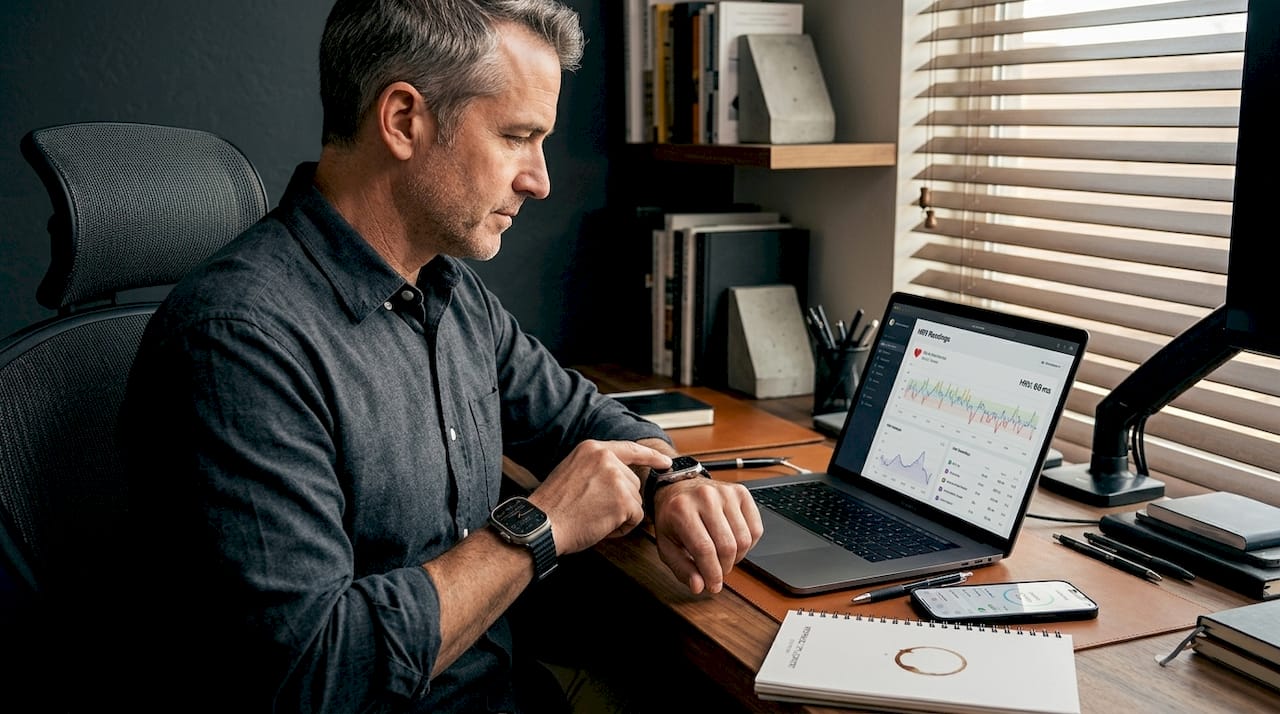
Multi-sensor fusion improves anxiety detection accuracy to around 80% on modern wrist devices. That’s a meaningful number. Combining heart rate, skin temperature, accelerometer data, and respiration estimates, current smartwatch platforms are genuinely useful for identifying stress patterns across a week.
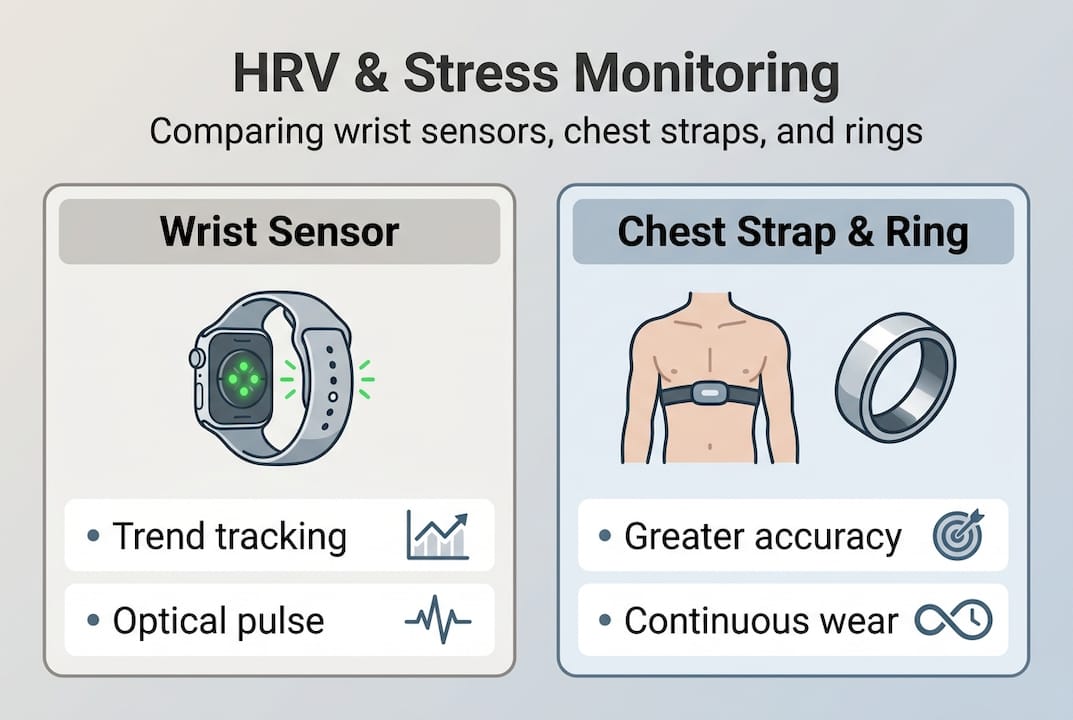
Here’s a quick breakdown of what wrist sensors handle well versus what requires context:
| What wrist sensors get right | What requires caution |
|---|---|
| Weekly HRV trend direction | Single-day absolute scores |
| Sleep quality correlation | Diagnosing stress disorders |
| Activity-linked recovery | Post-caffeine or post-alcohol readings |
| Real-time elevated heart rate | Comparing scores across different devices |
False positives are common. A morning espresso, a glass of wine the night before, mild dehydration, or a late-night meal can all suppress your HRV reading without any real stress event occurring. Your device doesn’t know you stayed up to watch a match. It just sees a low number.
- Caffeine: Can lower HRV readings for several hours after consumption.
- Alcohol: Significantly suppresses overnight HRV even after moderate intake.
- Dehydration: Elevates heart rate and distorts pulse interval timing.
- Illness: May show as elevated stress before you feel any symptoms.
Pro Tip: Track your own baseline, not an average score. What matters is whether your personal 7-day rolling average is trending up or down, not whether your number is “good” in absolute terms.
For those pairing luxury watches with health tracking, the real gain is in this trend layer. And for collectors curious about wearing two watches on one wrist, that continuous data stream becomes possible without giving up the watch you love.
How to get the most reliable HRV and stress readings with your setup
So what should you, as a style-conscious, health-minded collector, actually do with all this information?
Here is a practical framework to get the most actionable data without gadget overload:
- Establish a 7-day baseline first. Wear your device consistently before you interpret any trend. A single day of data is context-free. Seven days gives your app enough signal to distinguish your normal from your stressed.
- Use morning snapshots for precision. Short recordings of 1 to 5 minutes are reliable for rMSSD, making a quick check-in right after waking, before coffee, a surprisingly accurate data point.
- Add a chest strap for high-stakes checks. Before a physical, after a hard workout, or during a recovery week, a brief chest strap session gives you ECG-grade accuracy. Combining wrist tracking with occasional chest strap sessions is the optimal strategy for most users who want both practicality and precision.
- Enable night tracking. Sleep is your cleanest HRV window. Movement is minimal, and your body is in recovery mode. Overnight data is the most reliable passive reading your wrist sensor will ever produce.
- Log lifestyle factors. Most platforms allow manual notes. Tag alcohol nights, travel days, or intense training sessions so you can filter out false lows from genuine recovery dips.
- Reserve your luxury watch for when data isn’t the priority. Meetings, dinners, formal events. Let your Cartier Santos or your Breitling speak for your taste. Let your smartwatch speak for your health.
Pro Tip: Activate your app’s sleep HRV mode before bed and set a 7-day trend alert rather than a daily score alert. You’ll get notified when something genuinely meaningful shifts, not every time you drank a coffee too late.
Our take: What most luxury watch wearers miss about HRV and stress scores
Here’s something most HRV guides won’t tell you: obsessing over a daily score often makes your health outcomes worse, not better. When collectors focus on chasing a perfect number, they create anxiety around a metric that is supposed to measure the absence of anxiety. That’s a trap.
What we see in practice is that the most informed collectors use wrist data the same way a good sommelier uses a wine list: not to memorize every number, but to spot patterns and act on them calmly. A week of suppressed HRV after a trade conference tells you something real. A single bad morning score tells you almost nothing.
The other thing most guides skip is the context of continuous wear. A device that’s on your wrist 18 hours a day gives you richer trend data than a device you swap out at dinner. Modern solutions like Apple Watch health tracking alongside classic style prove that data quality and aesthetic quality are no longer in conflict. The collectors who get the most from their wearables are the ones who figured out how to keep them on without compromise.
The best of both worlds: Health tracking without sacrificing your style
You’ve now got a clear picture of what your wrist sensor can and can’t deliver. The next step is making sure it stays on your wrist long enough to matter.
That’s exactly the problem the Smartlet modular strap was designed to solve. Engineered in SS316L steel and Grade 2 titanium, it takes watch adapters that seat in the lug holes of any watch with an 18 to 24mm lug width, in place of the spring bars. No modification. No permanent changes to your timepiece. Your mechanical watch and your health-tracking smartwatch share the same wrist, at the same time. Browse the full Smartlet One accessories collection or check the brand compatibility guide to see exactly which watches pair with which smartwatches. Because continuous data only matters when you’re actually wearing the device.


