


Watch strap evolution: Military leather to modern modular

Fondateur et PDG de Smartlet - Ingénieur de la CentraleSupelec - Lauréat du Concours Lepine 2025 - CES 2026
Table des matières
- From battlefield to wrist: the origins of the watch strap
- Innovations in material: leather to NATO to engineered rubber
- The modular revolution: quick-release systems and modern engineering
- Icons and innovations: how major brands shaped strap evolution
- Why the strap is the true engine of watch culture
- Explore modular options for your collection
- Questions fréquentes
Points clés à retenir
| Point | Détails |
|---|---|
| Strap innovation is crucial | The shift from military leather to modular systems shaped the evolution of both watch functionality and style. |
| Material drives user experience | From leather to NATO to rubber, every strap material brought technical and style advances for collectors. |
| Modular systems empower customization | Modern modular quick-release technologies make personalizing your watch collection simple and tool-free. |
| Major brands influence trends | Apple, Cartier, IWC, and others made modular straps a mainstream expectation for new collectors. |
Most collectors can name the movement inside their grail watch. Far fewer can tell you why the strap on their wrist exists in its current form, or how much engineering history it carries. Watch straps started as improvised military solutions, evolved through decades of material science, and have now become precision-engineered platforms for personalization. This guide traces that journey from the rigid steel bracelets of the early 1900s to today's tool-free modular systems, showing why every material shift and design breakthrough matters for the way you wear, collect, and think about watches.
From battlefield to wrist: the origins of the watch strap
The story of the watch strap is, first and foremost, a military story. Before the First World War, men wore pocket watches. Strapping a timepiece to the wrist was considered unusual, even unmasculine. That changed fast when artillery officers realized that fumbling for a pocket watch during combat cost precious seconds and sometimes lives.
Early military straps were cut from the same leather used for boots and harnesses: thick, sturdy, and functional. They did not need to be beautiful. They needed to hold a watch steady in the mud of the Somme. Riveted lugs, simple pin buckles, and double-sided straps quickly became standard issue across European armies during the First World War.
The next major leap came from military aviation. Pilots who broke or soaked a strap needed to replace it without tools, without time, and without a workbench. That field-replacement requirement became the foundation for every subsequent quick-change strap design.
Then came 1973. The British Ministry of Defence introduced a specific strap specification that collectors now call the NATO strap. It solved three problems at once.
- Durability: woven nylon that resisted water, sweat, and abrasion far better than vegetable-tanned leather. Durability:
- Security: a secondary pass-through design that held the watch to the wrist even if one spring bar failed. Security:
- Replaceability: a single strap that could fit multiple watches with minimal effort in the field. Replaceability:
"The NATO strap changed the equation for military watch wearers. It was not just a strap. It was a system."
Those military principles (utility, modularity, and reliability) echo through every major strap innovation that followed. As you explore 2026 watch strap trends, you can see how those original priorities keep resurfacing in new materials and new mechanisms. 2026 watch strap trends
Innovations in material: from leather to NATO nylon to engineered rubber
The history of strap materials is really a history of priorities: what does the wearer need most right now?
Leather: the original prestige material. Vegetable-tanned and Horween leather dominated strap making from the 1910s through most of the 20th century. Leather aged beautifully, developed patina that collectors prized, and signaled craftsmanship. But it had real weaknesses. Water degraded it fast. Sweat caused it to smell and crack. For desk wearers, leather was fine. For anyone active, it was a liability. Leather: the original prestige material.
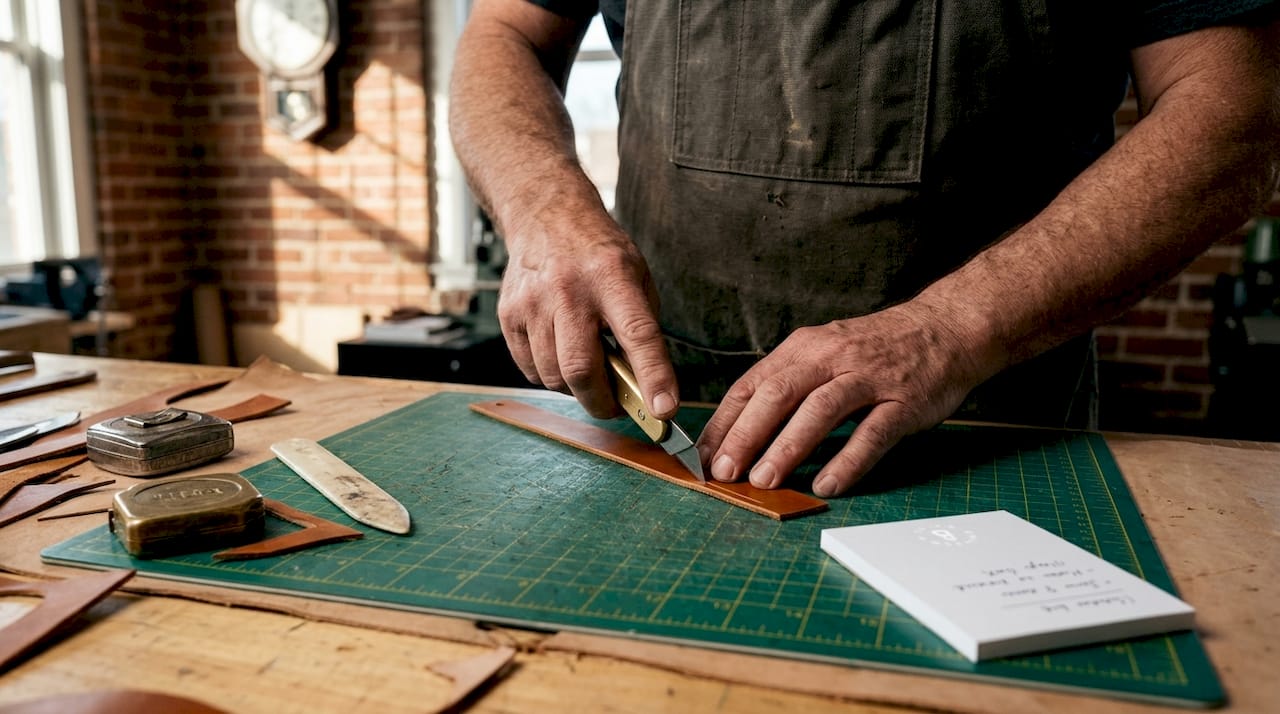
NATO nylon: the democratization of durability. The NATO strap's introduction in 1973 did not just solve a military problem. It created a new category of watch culture. Nylon webbing was cheap, washable, and tough. It also became a canvas for color, with the British MoD originally standardizing gray but enthusiasts quickly adopting a rainbow of options. Swapping a NATO strap gave a collector an almost entirely different watch for under twenty dollars. That value proposition changed the market. NATO nylon: the democratization of durability.
Rubber, silicone, and FKM: the sports era. The 1980s brought a new type of watch wearer into the market: the active professional who wanted a sports watch that could survive the gym, the pool, and the boardroom. Rubber straps, originally seen on dive watches from the 1960s, became mainstream. Then silicone arrived with better color stability and softness.
The real engineering leap came in the 2000s with FKM (fluoro elastomer), a synthetic rubber used in aerospace seals. FKM straps resist extreme temperatures, UV exposure, chemicals, and sweat while remaining soft against the skin. Brands like Rolex and Patek Philippe began offering them on sport models. Rubber, silicone, and FKM: the sports era.
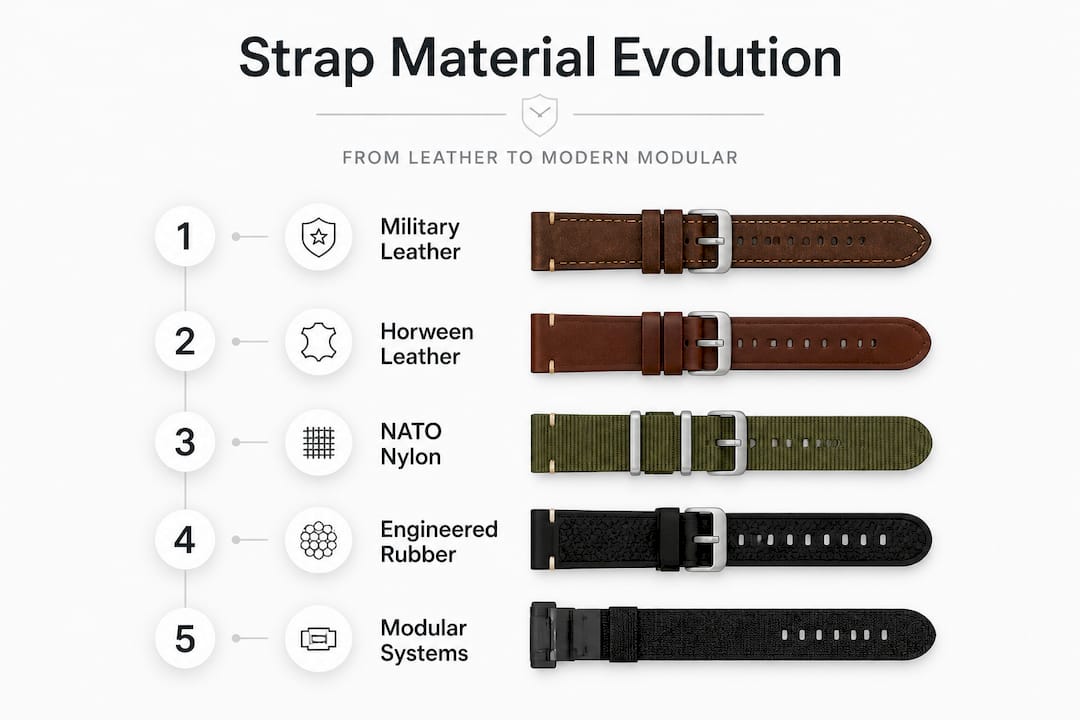
| Matériau | Decade of prominence | Dominant use |
|---|---|---|
| Rigid steel bracelet | 1900s | Dress and field watches |
| Military leather | 1910s to 1940s | Military and everyday wear |
| NATO nylon webbing | 1970s to 1980s | Military, casual, and collecting |
| Rubber and silicone | 1980s to 1990s | Sports and dive watches |
| FKM fluoro elastomer | 2000s to 2010s | High-performance sports and luxury |
| Modular quick-release | 2020s | Everyday luxury and smart integration |
Key shifts that drove each transition:
- Leather to NATO: battlefield survival and field replaceability. Leather to NATO:
- NATO to rubber: active lifestyle and waterproofing.
- Rubber to FKM: chemical resistance and long-term durability.
- All of the above to modular: personalization, digital integration, and collecting culture. All of the above to modular:
FKM is one of the safest choices for daily wearers who switch between office and athletic environments. It holds its shape, resists odors, and pairs cleanly with both casual and formal watch cases.
The modular revolution: quick-release systems and modern engineering
This is where the military DNA of the strap meets precision luxury engineering, and the results are remarkable.
For most of the 20th century, swapping a watch strap meant a spring bar tool, a steady hand, and ten minutes of patience. That changed decisively in 2015 when Apple launched the Apple Watch with a proprietary quick-release system. The mechanism was elegant: press a small button on the underside of the strap and it slides free instantly. No tools. No scratches on the case. No frustration.
Apple's approach pushed the entire industry to reconsider what a strap attachment should look like. Here is how the major modular systems compare:
| System | Brand | Mechanism | Era introduced |
|---|---|---|---|
| QuickSwitch | Cartier | Push-button side release | 2018 |
| EasX-CHANGE | IWC | Spring-loaded lever | Post-2015 |
| Strap exchange | Panerai | Push-through pin | Post-2015 |
| Overseas bracelet | Vacheron Constantin | Integrated push-button | 2016 |
| Universal spring bar | Multiple aftermarket | Barrette à ressort standard | Ongoing |
What makes these systems more than a convenience feature is the engineering precision required. A quick-release system must:
- Hold the strap absolutely secure under normal wear and activity.
- Release cleanly with deliberate, intentional pressure, not by accident.
- Withstand thousands of attachment and release cycles without wearing out the mechanism.
- Maintain visual integration with the case so the watch looks intentional, not bolted together.
That last point matters enormously to collectors. A modular system that looks cheap or industrial ruins the aesthetic of a five-figure watch. The modularity in watches conversation is really a conversation about how engineering and design work together. modularity in watches
Check the play or lateral movement when the strap is locked. Zero play means precision machining. Any wobble suggests loose tolerances that will wear unevenly over time.
The modular strap upgrade guide for 2026 shows just how wide the aftermarket has grown: from budget-friendly universal adapters to precision-machined SS316L and titanium solutions engineered to match original case quality. modular strap upgrade guide
Icons and innovations: how major brands shaped strap evolution
The story of strap evolution is also a story of brand ambition meeting wearer expectation.
Apple's 2015 Apple Watch launch did something no luxury brand had managed: it put a modular quick-release strap on the wrist of millions of people simultaneously. For a generation of wearers, the assumption that strap changes required tools simply stopped being true overnight. The cultural impact was enormous. It told the watch market that modularity was not a niche engineering feature. It was a consumer expectation.
The luxury response was swift:
- Cartier QuickSwitch: refined the push-button concept for dress watches, making it feel entirely at home on a Santos or Tank. Cartier QuickSwitch:
- IWC EasX-CHANGE: uses a spring-loaded lever that allows pilots and sports enthusiasts to swap straps quickly, true to IWC's functional heritage. IWC EasX-CHANGE:
- Panerai strap exchange: addressed the specific needs of large-case Panerai owners who routinely switch between rubber sport straps and leather dress options. Panerai strap exchange:
- Vacheron Constantin Overseas: integrated the modular system so seamlessly that the luxury quick-release mechanism became part of the watch's core design identity. Vacheron Constantin Overseas:
These releases collectively pushed aftermarket demand for quality modular solutions skyward. Collectors who owned watches without factory quick-release systems began looking for aftermarket adapters that would bring the same functionality without requiring watch modification.
The parallel trend, wearing a mechanical watch and a smartwatch together, also accelerated. The question of wearing a Rolex and Apple Watch on one wrist moved from novelty to legitimate lifestyle choice. Modular engineering made that combination practical rather than clumsy. And solutions that maximize a smartwatch with modular straps have become a distinct product category of their own. wearing a Rolex and Apple Watchmaximize a smartwatch with modular straps
The collector community responded with real enthusiasm. Forums and social platforms filled with content from enthusiasts building strap collections that rivaled their watch collections in thought and investment. A great strap collection now earns the same respect as a great deployment clasp or rotor finishing.
Why the strap is the true engine of watch culture
Here is an opinion that runs counter to most collector conversation: the strap has done more to advance the joy of collecting than almost any refinement inside the case.
Think about it honestly. The difference between a movement with thirty-five jewels and one with thirty-nine is invisible to the wearer in daily life. The difference in how a watch feels and reads when you swap a tired leather strap for a precisely machined modular solution is immediate, tangible, and joyful. The strap is where the watch touches your life.
"The strap evolved faster than the case. Military wearers got quick-release concepts decades before mainstream consumers. Sports enthusiasts got FKM rubber before most brands acknowledged collectors actually exercised."
The collectors who understand this have a genuine edge. They know that a single great watch with three carefully chosen straps creates more daily variety and pleasure than three average watches sitting in a box. Modularity multiplies the value of every piece in your collection.
The strap is also where personalization becomes philosophy. When you mix watch styles through strap choices, you are not just changing an accessory. You are expressing how you see the relationship between tradition and progress, between a mechanical movement and a connected device on the same wrist. mix watch styles
That is not a small thing. That is exactly what collecting is about.
Explore modular options for your collection
If you want to modernize your collection, today's modular strap options offer the practical combination of history and engineering progress.
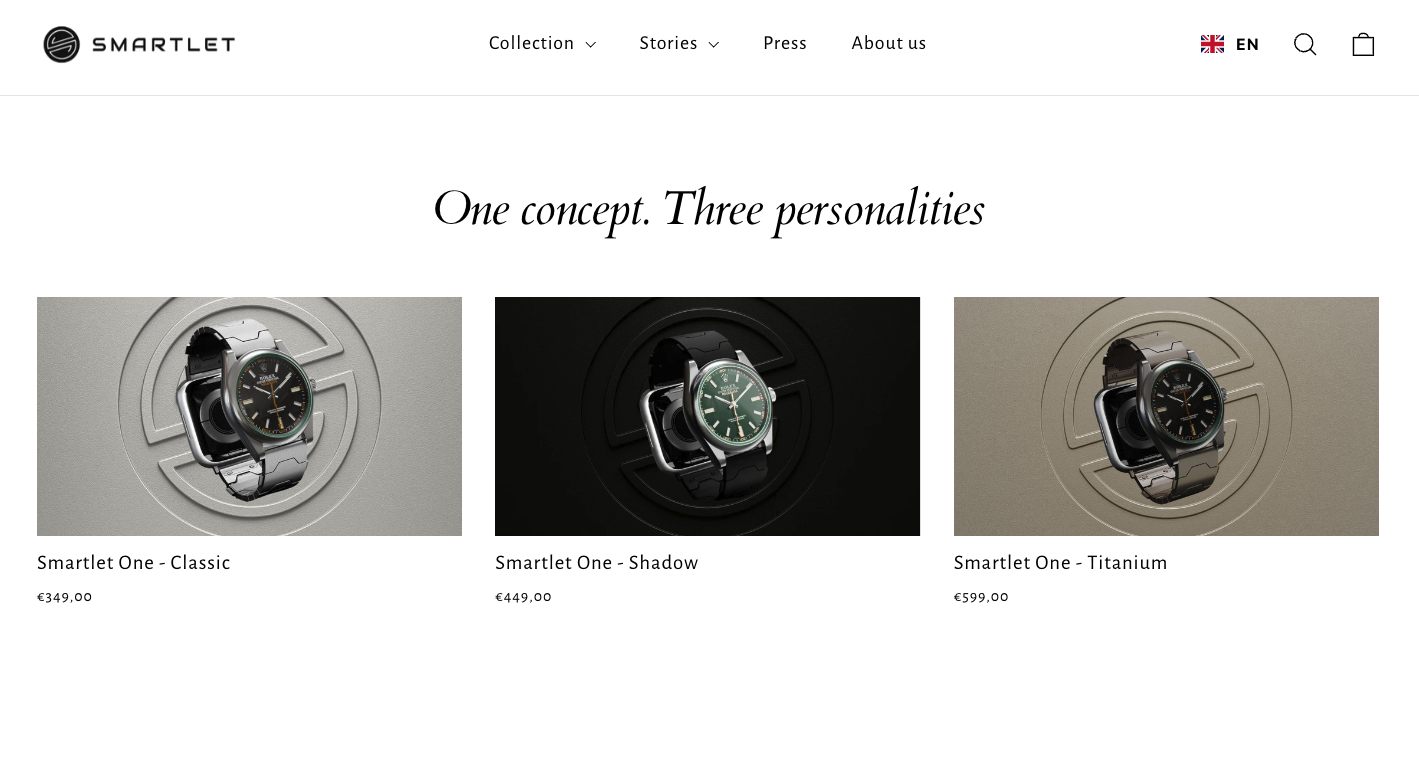
At Smartlet, we built our patented modular strap adapter precisely because this evolution demanded a next step. Engineered in brushed SS316L steel and Grade 2 titanium, it fits any watch with 18 to 24mm lug width via standard spring bar. No modification to your watch. No compromise on either timepiece. Available in three versions: Classic at 349 EUR, Shadow at 449 EUR, and Titanium at 599 EUR. Use the brand compatibility guide to confirm your watch works seamlessly with the system. ClassicShadowTitaniumbrand compatibility guide
Questions fréquentes
What is the origin of the NATO watch strap?
The NATO strap was introduced by the British Ministry of Defence in 1973 as a durable, secure, and easily replaceable option for soldiers. Its pass-through design kept the watch on the wrist even if a spring bar failed, which was a genuine field safety improvement over earlier leather straps.
How do quick-release watch straps work?
Quick-release straps use spring-loaded or push-button mechanisms so you can swap bands easily without any tools. Brands like Cartier, IWC, Panerai, and Vacheron Constantin have each developed proprietary versions of this mechanism for their luxury lines.
What are the benefits of modular watch straps for collectors?
Modular straps allow collectors to change the character of a watch instantly, matching different occasions, moods, or styles without owning multiple watches. The versatility of quick-release systems effectively multiplies the value of every piece in a collection.
Which brands pioneered modular quick-release systems?
Cartier with QuickSwitch, IWC with EasX-CHANGE, Panerai with the strap exchange system, and Vacheron Constantin with the Overseas bracelet are among the luxury brands that pioneered push-button and spring-loaded modular strap systems after Apple's 2015 launch.
Why is FKM rubber used on luxury sports watches?
FKM (fluoro elastomer) is a synthetic rubber originally engineered for aerospace seals. It resists extreme temperatures, UV exposure, chemicals, and sweat while remaining soft against the skin. These properties make it the preferred sport strap material for brands like Rolex and Patek Philippe on their sport models.
Recommandé
- Modernisez le style de votre montre grâce à des bracelets modulaires en 2026
- Pourquoi les bracelets de montre 2026 constituent la nouvelle révolution dans le monde des baskets
- Tudor Black Bay : largeur des cornes – Guide des bracelets pour collectionneurs
- Dual-wear strap materials guide
- Pourquoi la modularité est importante dans les montres : guide 2026


