


Pourquoi les montres mécaniques ont le vent en poupe : elles résistent à la concurrence du quartz et des montres connectées

Fondateur & PDG, Smartlet - Ingénieur CentraleSupelec - Concours Lépine 2025, Lauréat - CES 2026
Table des matières
- De la crise à la renaissance : la révolution du quartz et la réponse mécanique
- Redéfinir la valeur : artisanat, héritage et résonance émotionnelle
- Les montres intelligentes et la nouvelle vague : utilité versus héritage
- Harmonie des collectionneurs : intégrer le mécanique et l'intelligent au poignet
- Ce que la plupart des débats technologiques oublient : pourquoi les deux montres comptent
- Combinez sans effort la tradition mécanique et l'innovation intelligente
- Questions fréquemment posées
Points clés à retenir
| Point | Détails |
|---|---|
| L'artisanat plutôt que l'utilité | Les montres mécaniques ont survécu en devenant des symboles d'art, d'héritage et de statut, pas seulement des outils de mesure du temps. |
| Les montres intelligentes et le quartz sont différents | Le quartz a banalisé la précision tandis que les montres intelligentes ont ajouté de l'utilité, mais les deux ont poussé les mécaniques à redéfinir leur valeur durable. |
| Les collectionneurs adoptent les deux | Aujourd'hui, les passionnés combinent montres mécaniques et intelligentes pour profiter de l'héritage, de l'émotion et de la technologie moderne côte à côte. |
| Longévité et durabilité | Les montres mécaniques peuvent durer des générations et éviter les déchets électroniques, offrant une valeur qui dépasse l'obsolescence numérique. |
Les montres mécaniques auraient dû disparaître. Deux fois. D'abord, un minuscule cristal de quartz a failli effacer toute une industrie dans les années 1970. Ensuite, un écran tactile luminescent au poignet a menacé de rendre toute la catégorie obsolète. Pourtant, nous voici en 2026, et les montres mécaniques représentent 82,5 % de la valeur d'exportation suisse tout en représentant moins de 20 % des unités expédiées. Ce n'est pas une survie. C'est une réinvention complète.
De la crise à la renaissance : la révolution du quartz et la réponse mécanique
La crise du quartz n'a pas été un déclin lent. C'était un effondrement. Entre 1970 et le début des années 1980, la production suisse a chuté de 84 millions d'unités à environ 30 millions, et les deux tiers des emplois de l'horlogerie suisse ont simplement disparu. Les fabricants japonais comme Seiko et Casio pouvaient produire des mouvements à quartz bien moins chers et plus précis que n'importe quel calibre mécanique. Pour un consommateur qui voulait simplement connaître l'heure, le choix était évident.
| Caractéristique | Mécanique | Quartz |
|---|---|---|
| Précision | +/-5 à 30 sec/jour | +/-15 sec/mois |
| Coût de production | Élevé | Faible |
| Source d'énergie | Cinétique/remontage manuel | Batterie |
| Impact sur le marché (années 1970) | Quasi-effondrement | Croissance dominante |
| Maintenabilité | Indéfinie avec entretien | Limitée |
La réaction de l'industrie n'a pas été immédiate. De nombreuses maisons suisses ont fermé. Des légendes ont disparu. Mais un tournant est venu avec la formation de SMH (maintenant Swatch Group) en 1983, qui a lancé la Swatch comme un produit à quartz amusant et abordable. Ce mouvement était stratégique. En laissant Swatch absorber le marché de masse, le groupe a libéré des marques prestigieuses comme Omega et Longines pour poursuivre quelque chose que le quartz ne pouvait jamais reproduire : l'artisanat, l'histoire et le prestige.
« La crise du quartz a forcé les Suisses à se poser une question qui a tout changé : si nous ne pouvons pas rivaliser sur le prix ou la précision, qu'est-ce que nous vendons réellement ? »
La réponse a façonné les quatre décennies suivantes de l'horlogerie. Les marques suisses ont investi massivement dans la haute horlogerie, mettant en avant la décoration des mouvements visible à travers les casebacks en saphir. Les éditions limitées et les récits d'héritage de marque sont devenus des piliers du marketing. Les collectionneurs ont commencé à voir les pièces mécaniques comme des investissements, pas seulement comme des outils. Les maisons de ventes aux enchères ont vu les mécaniques vintage s'apprécier en valeur année après année.
Cette réinvention a créé une nouvelle catégorie de valeur. L'impact du bracelet à double montre sur la culture des collectionneurs d'aujourd'hui est un descendant direct de ce pivot stratégique : quand vous ne pouvez pas surpasser la concurrence en fonctionnalité, vous redéfinissez ce que la fonctionnalité signifie même.impact du bracelet à double montre
Redéfinir la valeur : artisanat, héritage et résonance émotionnelle
En 2023, les mécaniques représentaient 82,5 % de la valeur d'exportation suisse tout en représentant moins de 20 % du total des unités. Ce chiffre est remarquable. Cela signifie qu'un segment commande des prix premium qu'aucune marque de quartz axée sur le volume ne peut atteindre. La raison en est ancrée dans l'émotion, pas dans l'ingénierie.
| Dimension de valeur | Quartz | Mécanique |
|---|---|---|
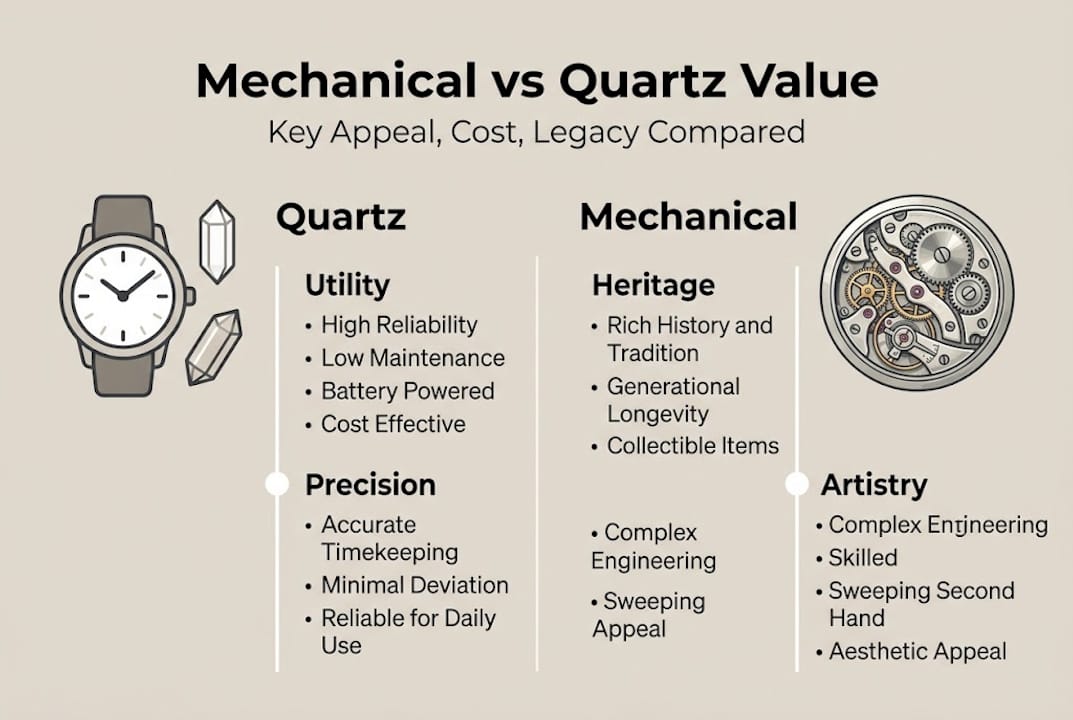
| Attrait principal | Utilité, précision | Héritage, art |
| Demande des collectionneurs | Faible à modérée | Élevée et croissante |
| Valeur de revente | Se déprécie rapidement | S'apprécie souvent |
| Connexion émotionnelle | Minimale | Profonde et personnelle |
| Réparabilité | Limitée | Indéfinie avec entretien |
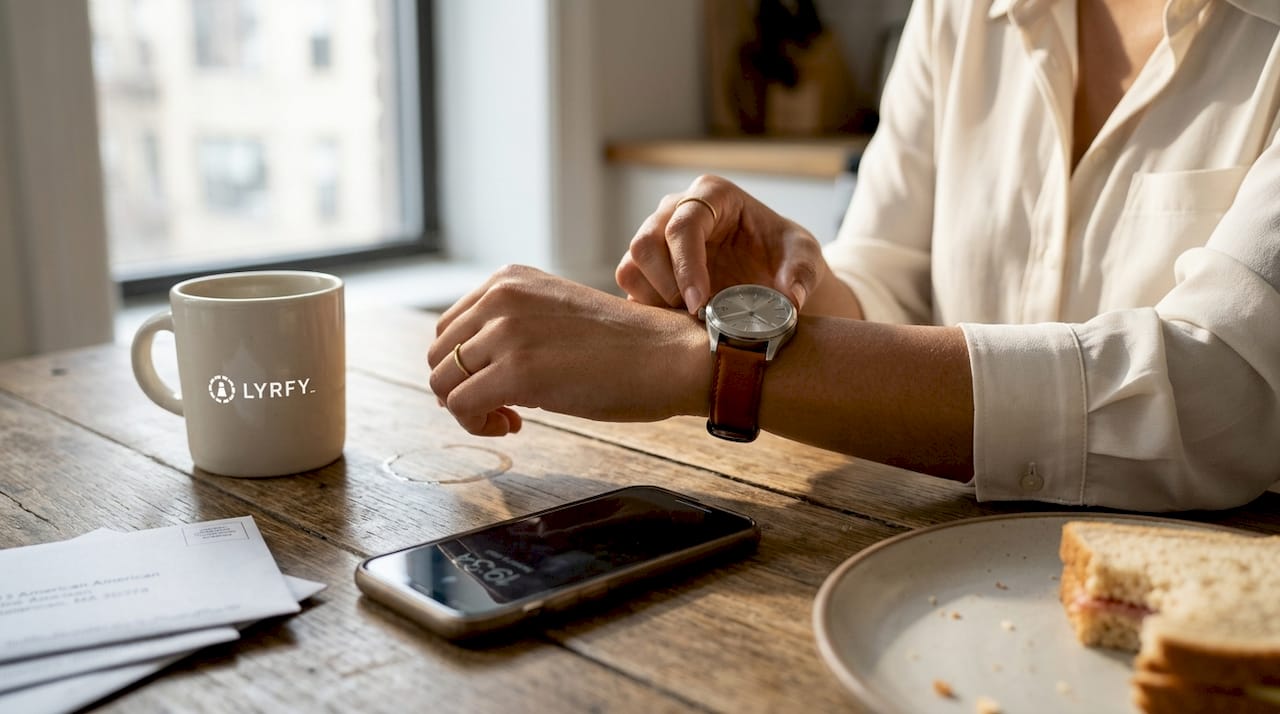
Une montre mécanique récompense la patience. La remonter, sentir le rotor tourner, regarder la trotteuse balayer plutôt que cliquer : ces rituels connectent le porteur à l'objet. Elle devient une compagne, pas un gadget. De nombreux collectionneurs décrivent l'héritage d'une automatique de grand-père comme le moment où ils sont tombés amoureux de l'horlogerie. Aucune pièce à quartz, aussi précise soit-elle, ne reproduit ce transfert émotionnel.
Lors de l'évaluation d'une montre mécanique comme achat à long terme, demandez au vendeur son historique d'entretien. Un dossier d'entretien documenté augmente à la fois la valeur sentimentale et la valeur de revente, et un mouvement bien entretenu peut véritablement durer des générations.
La célèbre campagne de Patek Philippe, « Vous ne possédez jamais vraiment une Patek Philippe, vous en prenez simplement soin pour la génération suivante », n'est pas un hasard. Elle redéfinit l'achat comme une intendance plutôt qu'une consommation. Ce cadrage, combiné à la combinaison de solutions classiques et intelligentes pour les collectionneurs modernes, montre comment le monde de la montre continue d'évoluer sans abandonner ses racines.combinaison de solutions classiques et intelligentes
Les montres intelligentes et la nouvelle vague : utilité versus héritage
Apple seul expédie environ 200 millions de montres intelligentes par an, un volume qui dépasse l'ensemble de l'industrie horlogère suisse. Pourtant, les montres mécaniques ne s'effondrent pas cette fois. Parce que les montres intelligentes et les mécaniques ne concourent pas pour la même chose.
Les montres intelligentes excellent dans la surveillance de la santé en temps réel, les notifications, la navigation et l'utilité numérique quotidienne. Les mises à jour logicielles ajoutent de nouvelles fonctionnalités au fil du temps. Les montres mécaniques offrent la longévité à travers les générations avec un entretien approprié, zéro obsolescence logicielle, une valeur sentimentale et de collection profonde, et une expérience tactile analogique qui vous ralentit de manière utile.
Une montre mécanique ressemble plus à une cathédrale qu'à une calculatrice. Elle a été construite pour durer, pour inspirer et pour porter du sens à travers le temps. Une montre intelligente est un outil quotidien puissant. Les deux méritent une place dans la vie d'un collectionneur.
Portez votre montre intelligente pendant les entraînements et les journées chargées quand les notifications et les données de santé comptent vraiment. Passez à votre mécanique pour les dîners, les voyages et les occasions où la présence et l'élégance comptent. Vous n'avez pas à choisir un camp.
Les explorateurs du débat montre intelligente ou analogique découvrent souvent la même vérité : le contexte détermine quelle montre gagne un jour donné. La conversation la plus intéressante est de savoir comment des solutions hybrides émergent pour honorer les deux impulsions à la fois.montre intelligente ou analogiquesolutions hybrides
Harmonie des collectionneurs : intégrer le mécanique et l'intelligent au poignet
L'émergence de modèles hybrides et de bracelets à double port reflète un véritable changement culturel. La Gen Z et les Millennials, qui ont grandi avec les smartphones, animent aussi une renaissance analogique passionnée. Ils écoutent de la musique en streaming et suivent leur sommeil, et ils chassent aussi les Seiko vintage et économisent pour les mécaniques suisses d'entrée de gamme. La contradiction n'en est pas une du tout. C'est de la personnalisation.
Une approche pratique pour intégrer les deux dans votre collection et votre vie quotidienne :
- Auditez vos besoins en montres par contexte. Identifiez les situations qui demandent de l'utilité par rapport à celles où l'héritage et le style prennent priorité.Auditez vos besoins en montres par contexte.
- Construisez autour d'une pièce mécanique centrale. Choisissez une mécanique qui vous touche vraiment, quelque chose dont vous seriez fier de porter pendant des décennies. Cela devient votre pièce d'ancrage.Construisez autour d'une pièce mécanique centrale.
- Sélectionnez une montre intelligente pour la pure fonction. N'essayez pas de rendre votre montre intelligente assez élégante pour remplacer votre mécanique. Laissez-la être utilitaire et excellente dans son travail.Sélectionnez une montre intelligente pour la pure fonction.
- Explorez les solutions à double port.Les adaptateurs de bracelet modulaires vous permettent maintenant de porter les deux simultanément sans aucune modification permanente à l'une ou l'autre montre.
- Engagez-vous avec les communautés de collectionneurs.Les forums, les comptes Instagram et les rencontres de montres vous connectent avec d'autres qui ont résolu le même puzzle d'intégration de manière créative.
Au-delà des étapes pratiques, l'état d'esprit du collectionneur se tourne vers la durabilité. Une montre mécanique est probablement l'un des objets de luxe les plus durables que vous puissiez posséder : réparable, améliorable et construit pour dépasser son propriétaire. Ce système de valeurs résonne profondément avec les jeunes collectionneurs qui sont conscients de la consommation. Le concept de double bracelet pionnier de Smartlet montre comment l'acte physique de porter les deux montres peut être affiné en quelque chose d'élégant plutôt que maladroit.concept de double bracelet
« Les collectionneurs les plus sophistiqués d'aujourd'hui ne sont pas ceux qui refusent les nouveaux outils. Ce sont ceux qui les intègrent à leurs propres conditions, sans modifier ce qu'ils aiment. »
Ce que la plupart des débats technologiques oublient : pourquoi les deux montres comptent
La plupart des débats encadrent cela comme une compétition. Ancien versus nouveau. Tradition versus innovation. Mais ce cadrage omet la logique émotionnelle qui anime réellement les collectionneurs. Les collectionneurs possèdent les deux, utilisant l'intelligent pour l'utilité et la mécanique pour les occasions et l'émotion. Ce comportement nous dit tout.
La crise du quartz a failli détruire l'horlogerie mécanique parce que le quartz concourait sur le même terrain : dire l'heure à bas prix. Les montres intelligentes ne font pas cette erreur. Elles offrent quelque chose d'entièrement différent, et ce faisant, elles aiguisent réellement le cas pour lequel une montre mécanique compte. Quand une montre intelligente à 500 EUR peut suivre votre santé et payer votre café, une mécanique à 5 000 EUR n'est clairement pas achetée pour l'utilité. Elle est achetée pour le sens.
L'innovation élargit l'appréciation plutôt que de la remplacer. En vous permettant de connecter vos montres sur un seul poignet sans compromis, Smartlet démontre que l'avenir de l'horlogerie n'est pas un choix binaire. La prochaine vague de collectionneurs n'abandonnera pas la tradition. Ils la composeront.connecter vos montres
Combinez sans effort la tradition mécanique et l'innovation intelligente
L'adaptateur de bracelet modulaire Smartlet est conçu en acier brossé SS316L et titane de grade 2, compatible avec toute montre entre 18 et 24 mm de largeur de cornes via barrette à ressort standard. Aucune modification à l'une ou l'autre montre. Smartlet a remporté une médaille de bronze au Concours Lépine 2025 et a été présenté au CES 2026. Trois versions : Classic (299 EUR), Shadow (399 EUR) et Titanium (549 EUR).bracelet modulaire SmartletClassicShadowTitanium
Explorez la gamme complète d'accessoires de montreou consultez leguide de compatibilité des montres intelligentespour trouver votre configuration idéale. Ne choisissez pas. Composez.
Recommandé
- Montre mécanique vs montre intelligente : portez les deux sans compromis
- Le bracelet de montre en 2026 est ce que la basket était en 1993
- Équilibrer l'ECG Apple Watch et le prestige mécanique résolu
- Montre intelligente vs bague connectée : pourquoi les écrans et les capteurs comptent
- Toutes les marques de montres mécaniques compatibles
Articles stars
No people found
We couldn’t find anything with that term. Please try again.


