


Uhrensammeln ist die neue Vinyl-Obsession in 2026

Gründer & CEO, Smartlet - CentraleSupelec-Ingenieur - Concours Lepine 2025, ausgezeichnet - CES 2026
Inhaltsverzeichnis
Wichtigste Erkenntnisse
| Punkt | Details |
|---|---|
| Analogs moderner Reiz | Uhren und Schallplatten florieren, weil Digital Natives nach authentischen, praktischen Erfahrungen sehnen. |
| Gemeinschaft und Identität | Sammler nutzen analoge Rituale, um ihre Individualität auszudrücken und sich außerhalb von Algorithmen mit anderen zu verbinden. |
| Alt mit Neu verbinden | Analoge Uhren mit moderner Technik zu kombinieren ist einfacher und akzeptierter denn je. |
| Einstiegspunkte für alle | Microbrands und der Secondhand-Markt machen es möglich, eine Sammlung mit jedem Budget zu beginnen. |
Bildschirme sind überall, doch Millionen von Menschen schnallen sich mechanische Uhren ans Handgelenk und legen Nadeln auf Schallplatten. Das ist kein Widerspruch. Uhrensammlung ist zur direkten Parallele zu Schallplatten-Renaissance geworden, angetrieben von Digital Natives, die in einer von Benachrichtigungen dominierten Welt nach greifbaren, analogen Erfahrungen sehnen. Beide Communities wachsen schnell, beide sind jünger als die meisten erwarten, und beide stellen die gleiche grundlegende Frage: Wie fühlt es sich an, etwas Echtes in der Hand zu halten?
Das Analog-Comeback: Warum jetzt?
Etwas Bemerkenswertes geschah leise, während alle über Streaming versus physische Medien stritten. Junge Menschen begannen, Plattenspieler zu kaufen. Dann begannen sie, mechanische Uhren zu kaufen. Nicht als ironische Accessoires, sondern als echte Leidenschaften, verwurzelt in Neugier, Handwerk und dem Wunsch, sich abzuheben.
Die Zahlen erzählen eine klare Geschichte. Die Nachfrage nach Dress Watches ist seit 2018 um 44 % gestiegen, angeführt von Gen Z und jüngeren Millennials, die die mechanische Uhren-Renaissance aktiv vorantreiben. Gleichzeitig sind Schallplattenverkäufe 17 Jahre in Folge gewachsen – ein Rekord, den selbst der optimistischste Plattenladen-Besitzer nicht vorhergesagt hätte, als Spotify startete.Nachfrage nach Dress Watches um 44 % gestiegenSchallplattenverkäufe sind gewachsen
44 % Anstieg der Nachfrage nach Dress Watches seit 2018, angeführt von Gen-Z-Sammlern.
Warum passiert das? Es ist nicht einfach Nostalgie. Analysten und Sammler deuten auf eine Reihe von Motivationen hin, die sich sehr 2026 anfühlen:
- Knappheit gibt Bedeutung. Eine limitierte mechanische Uhr oder eine Erstpressung eines Klassikers können nicht von einem Algorithmus repliziert werden.Knappheit und Bedeutung.
- Objekte sind greifbar und haben einen ritualistischen Charakter. Eine Uhr aufziehen oder eine Schallplatte reinigen sind bewusste, fast meditative Handlungen. Sie bremsen dich aus.Greifbarkeit und Ritual.
- Gegenkultur-Identität.In einer Welt unendlichen digitalen Inhalts signalisiert der Besitz von etwas Physischem Geschmack und Absicht.
- Anlagepotenzial. Sowohl Vintage-Uhren als auch seltene Schallplatten haben echte Werterhaltung über die Zeit gezeigt.Anlagepotenzial.
Analoge Objekte werden zunehmend als stilles Statussymbol gesehen. Eine 1960er Seiko statt einer Smartwatch zu wählen oder eine Record Store Day Pressung statt einer Playlist ist eine Aussage über deine Identität. Die Debatte, ob man analog oder Smartwatch wählt, ist nicht mehr binär. Es ist ein Gespräch über Werte.analog oder Smartwatch
Diese Analog-Obsession ist kein Rückzug aus der Moderne. Sie ist eine Reaktion darauf.
Was Uhrensammlung und Schallplatten verbindet
Auf den ersten Blick scheinen eine Rolex Submariner und eine Vintage Miles Davis Pressung Welten auseinander zu liegen. Schaut man genauer hin, ist die Sammler-DNA fast identisch. Beide Communities organisieren sich um Knappheit, Ritual, Gemeinschaft und eine gemeinsame Sprache, die Jahre zu lernen dauert.
"Mechanische Uhren verkörpern Handwerk, das Maschinen unmöglich replizieren können – die Art von Wärme und Ritual, die ein Objekt in eine Erfahrung verwandelt."
Genau diese Wärme ist es, die Schallplatten-Fans beschreiben, wenn sie über Analog-Sound sprechen. Die Unvollkommenheit ist der Punkt. Das leichte Oberflächenrauschen, der manuelle Prozess des Seitenwechsels, die großformatige Artwork. Es schafft Präsenz.
| Dimension | Uhrensammlung | Schallplattensammlung |
|---|---|---|
| Knappheit | Limitierte Auflagen, eingestellte Modelle | Seltene Pressungen, limitierte Record Store Day Drops |
| Ritual | Aufziehen, Wartung, Tragen | Reinigen, Nadel setzen, Seiten wechseln |
| Gemeinschaft | Foren, Watches and Wonders, Chrono24 | Discogs, Record Store Day, lokale Läden |
| Anlage | Heritage-Marken behalten ihren Wert | Erstpressungen steigen erheblich im Wert |
| Nachhaltigkeitsdebatte | Secondhand-Markt boomt | Gebrauchte Schallplatten reduzieren Herstellungsauswirkungen |
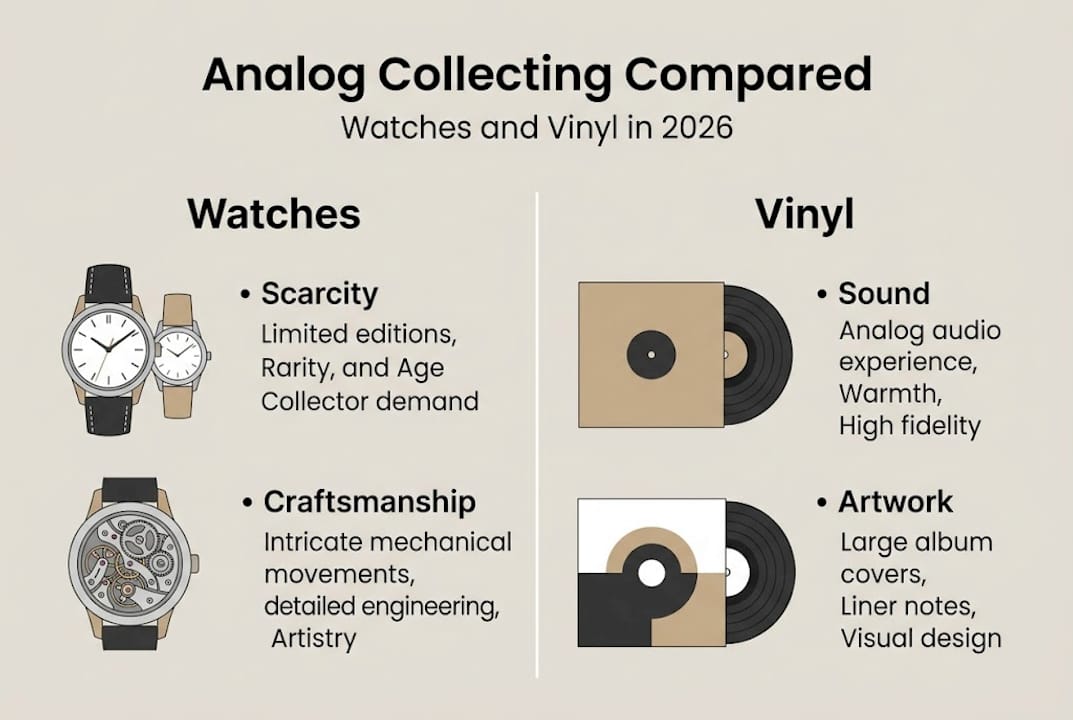
Beide Welten haben ihre Spannungen. Spekulationsblasen bei Uhren spiegeln die Art wider, wie bestimmte Schallplatten-Pressungen für ein Vielfaches des Einzelhandelspreises weitergegeben werden. Beide Communities sehen sich auch Nachhaltigkeitskritik gegenüber. Die Double-Wristing-Tradition beim Uhrensammeln ähnelt der Art, wie ernsthafte Schallplatten-Hörer mehrere Setups für verschiedene Stimmungen unterhalten. Beide Communities belohnen tiefes Wissen und persönliches Engagement über beiläufigen Konsum.Double-Wristing-Tradition
Neue Regeln: Wie sich das Sammeln verändert hat
Die Sammler-Szene von 2026 sieht sehr anders aus als vor zehn Jahren. Einstiegspunkte sind zugänglicher, das Gatekeeping hat sich gelockert, und Nachhaltigkeit ist ein echtes Motiv, nicht nur ein Marketing-Talking-Point.
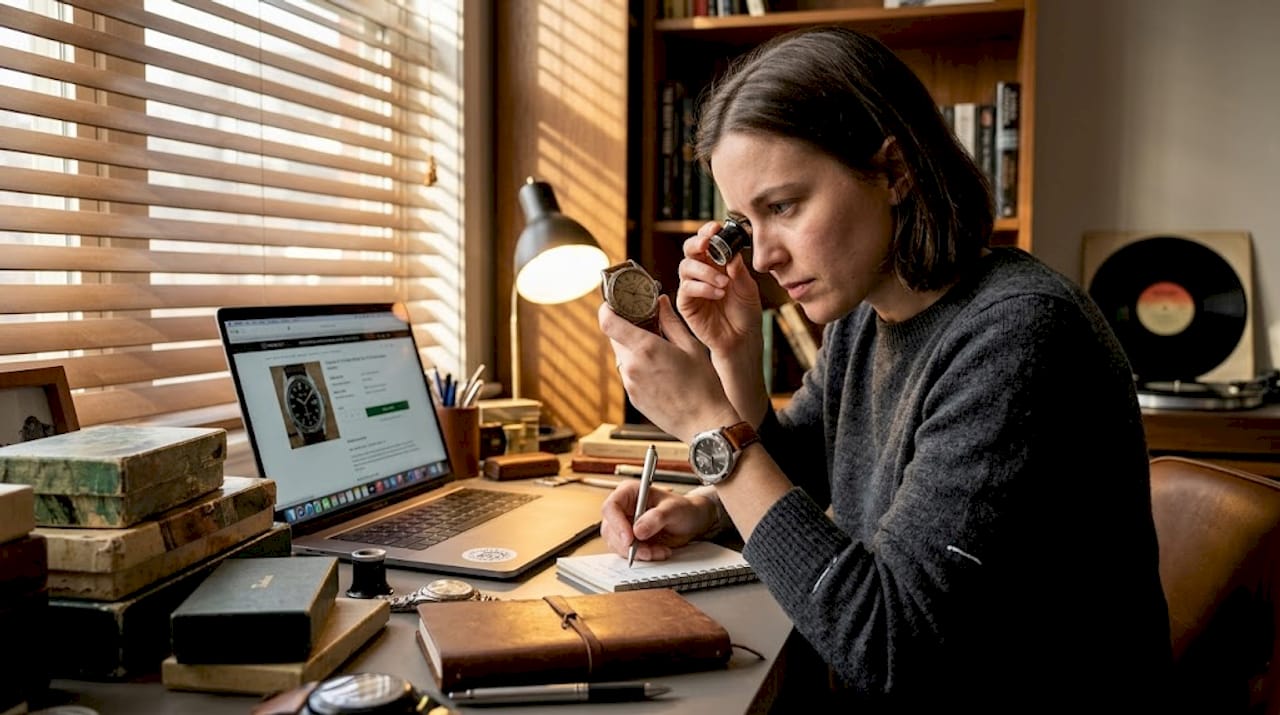
Jüngere Käufer bevorzugen zunehmend Secondhand- und Vintage-Uhren aus drei zusammenhängenden Gründen: Nachhaltigkeit, Charakter (Patina statt makellos) und Zugang über Plattformen wie Chrono24. Microbrands haben auch die mechanische Uhren-Welt geöffnet und bieten handverarbeitete Uhrwerke zu einem Bruchteil der Preise von Heritage-Marken. Auch Größenpräferenzen haben sich verschoben: Kleinere Gehäuse im Bereich von 36 bis 38 mm sind im Trend – eine direkte Reaktion gegen die Ära der übergroßen Sportuhren.
| Trend | Alter Ansatz | Neuer Ansatz |
|---|---|---|
| Einstiegspunkt | Neu, autorisiert | Secondhand, Microbrand, Vintage |
| Gehäusegröße | 42 mm+ Sportuhren | 36–38 mm Dress- und Field Watches |
| Kaufkanal | Boutique oder AD | Chrono24, Hodinkee, lokale Händler |
| Motivation | Status, Marken-Prestige | Handwerk, Nachhaltigkeit, Geschichte |
Eine praktische Roadmap für den Einstieg in diese neue Landschaft:
- Recherchiere vor dem Kauf. Foren wie WatchUSeek und YouTube-Kanäle zur Horologie geben dir kostenlose Bildung, bevor du einen Cent ausgibst.Recherchiere vor dem Kauf.
- Beginne mit Vintage oder Secondhand. Deine erste mechanische Uhr muss nicht neu sein. Eine gut getragene Seiko 5 oder Vintage Tissot lehrt dich mehr als ein Ausstellungsstück.Beginne mit Vintage oder Secondhand.
- Finde deine Gemeinschaft. Lokale Sammler-Treffen, Online-Gruppen und Events wie Watches and Wonders verbinden dich mit Menschen, die deine Leidenschaft teilen.Finde deine Gemeinschaft.
- Nutze Plattformen strategisch. Chrono24 und Discogs bieten Preishistorie-Daten, die dich vor Überzahlung schützen.Nutze Plattformen strategisch.
Beim Kauf von Vintage suche nach echter Patina statt makellosen Zustand. Ein Zifferblatt mit ehrlicher Alterung erzählt eine Geschichte und wird in vielen Fällen von ernsthaften Sammlern, die Authentizität schätzen, mit einem Aufschlag bewertet.
Für diejenigen, die bereits sammeln und darüber nachdenken,Vintage und Smartwatches zu kombinieren, ist die gute Nachricht, dassDual Wear für Sammlerbereits eine etablierte Praxis in Märkten wie Japan ist.
Analog und Digital verbinden: Beide Welten tragen
Die Annahme, dass das Lieben mechanischer Uhren die Ablehnung von Smartwatches bedeutet, ist einfach veraltet. Digital Natives adoptieren beide, und es ist wirklich aufregend zu sehen, wie sie ihre beiden Zeitmess-Geräte stylen.
Double-Wristing, das gleichzeitige Tragen von zwei Uhren, ist der sichtbarste Ausdruck dieses hybriden Ansatzes. Was als Nischen-Sammler-Gewohnheit begann, ist zu einer anerkannten Style-Aussage geworden, besonders unter jüngeren Enthusiasten, die keinen Widerspruch zwischen einer Vintage Longines und einer Apple Watch sehen.
Praktische Strategien, die Sammler nutzen, um Analog und Digital zu verbinden:
- Gestapeltes Tragen.Eine mechanische Uhr, eine Smartwatch, verschiedene Handgelenke oder das gleiche Handgelenk mit einem modularen Adapter.
- Praktische Strategien, die Sammler nutzen, um Analog und Digital zu verbinden, beinhalten das Wechseln je nach Kontext: mechanische Uhr zum Abendessen, Smartwatch im Fitnessstudio. Jedes Werkzeug in seinem richtigen Moment.Wechsel je nach Kontext.
- Smart Straps und modulare Adapter.Speziell entwickelte Accessoires, die eine zweite Uhr anbringen, ohne eines der Teile zu verändern.
- Ära-Mischung.Eine 1970er Field Watch gepaart mit einem modernen Fitness-Tracker schafft ein Gespräch, keine Verwirrung.
Beginne klein beim Aufbau einer Hybrid-Sammlung. Eine analoge Uhr, die du wirklich liebst, gepaart mit dem Smartdevice, das du bereits nutzt, ist eine stärkere Grundlage als alles auf einmal zu kaufen.
Ressourcen zum Dual-Wear-Styling und wieklassische und Smartwatches zusammenkoexistieren können, wachsen und spiegeln echte Nachfrage wider. Sogar Mainstream-Berichterstattung überdie Kombination von Analog- und SmartWearables nimmt zu – ein Zeichen, dass dies ein permanenter Wandel ist, nicht nur eine vorübergehende Neugier.
Warum die Analog-Renaissance mehr als Nostalgie ist
Die Sammler, die uns kontaktieren, versuchen nicht, der Technologie zu entkommen. Sie versuchen, sie nach ihren eigenen Bedingungen zu nutzen. Eine mechanische Uhr ist keine Ablehnung des Smartphones in deiner Tasche. Es ist eine bewusste Wahl darüber, was auf deinem Körper leben darf.
Die Analog-Obsession dreht sich wirklich um drei Dinge: persönliche Bedeutung schaffen, Ritual in den Alltag einbauen und auf Gemeinschaften zugreifen, die kein Algorithmus replizieren kann. Ein Uhrenforum oder ein Plattenladen hat eine Textur, die Reddit nicht reproduzieren kann.
Jüngere Sammler sind nicht nostalgisch. Sie sind bewusst. Sie wählen Analog, weil es ihnen etwas gibt, das Digital nicht kann: Knappheit, Greifbarkeit und eine Geschichte, die es wert ist, erzählt zu werden. Die Renaissance ist kein Blick zurück. Es ist ein intelligenterer Weg nach vorne.
Analog-Stil mit moderner Technik kombinieren
Wenn du jemals vor deiner Uhrensammlung gestanden hast und dich gefragt hast, wie du dein liebstes mechanisches Stück tragen kannst, ohne auf die Gesundheitsverfolgung und Benachrichtigungen deiner Smartwatch zu verzichten, verstehst du bereits das Problem, das Smartlet lösen sollte.
Smartlet ist ein patentierter modularer Adapter aus gebürstetem SS316L-Stahl und Grad-2-Titan, kompatibel mit jeder Uhr von 18 bis 24 mm Bandanstöße. Keine Modifikationen. Keine Kompromisse. Beide Uhren, ein Handgelenk, ein Moment. Classic (299 EUR), Shadow (399 EUR), Titanium (549 EUR).Smartlet modulares ArmbandClassicShadowTitaniumMarkenkompatibilitätsleitfadenSmartwatch-Kompatibilität
Empfohlene Artikel
No people found
We couldn’t find anything with that term. Please try again.


