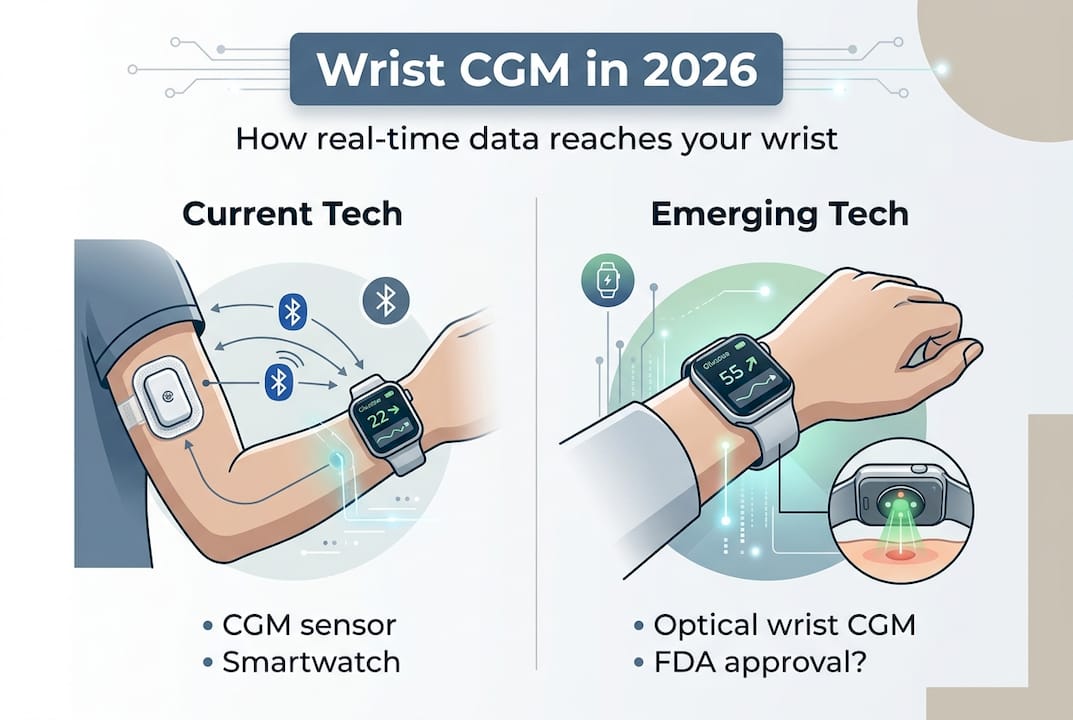
Glukoseüberwachung am Handgelenk: was 2026 real ist

Kurz gesagt:
- Kommerzielle handgelenkbasierte CGM-Sensoren sind im Jahr 2026 nicht verfügbar; Sensoren werden am Arm oder am Bauch getragen.
- Das beste aktuelle Setup kombiniert ein bewährtes CGM wie Dexcom G7 mit einer Smartwatch zur Anzeige.
- Die nicht-invasive Handgelenk-CGM-Technologie befindet sich noch in der Forschungsphase, wobei Herausforderungen hinsichtlich Genauigkeit und Zulassung bestehen.
Viele Sammler und gesundheitsbewusste Fachleute gehen davon aus, dass die kontinuierliche Glukosemessung am Handgelenk bereits Realität ist – nahtlos integriert in die Smartwatch, die sie täglich tragen. Die Wirklichkeit ist differenzierter. Kein kommerzielles CGM-System misst im Jahr 2026 Glukose direkt am Handgelenk. Was heute existiert, ist eine leistungsstarke Kombination: Sensoren, die am Arm oder Bauch getragen werden und Echtzeit-Glukosedaten an das Display Ihrer Uhr übertragen. Für Luxusuhrenkollektionäre, die gleichzeitig ihre Stoffwechselgesundheit im Blick behalten, ist das Verständnis dieses Unterschieds der erste Schritt zu einem Setup, das sowohl präzise als auch elegant ist.
Inhaltsverzeichnis
- Aktueller Stand der handgelenkbasierten Glukoseüberwachung
- Bestes praktisches Setup: CGM + Smartwatch für nahtlose Integration am Handgelenk
- Aufkommende Technologie: Nicht-invasives Handgelenk-CGM
- Uhrenintegration: CGM für Luxussammler und Profis
- Die unbequeme Wahrheit über Handgelenk-CGM für Sammler im Jahr 2026
- Nahtloser Luxus und Wellness: Nächste Schritte für integriertes Wrist-Wear
Wichtigste Erkenntnisse
| Punkt | Details |
|---|---|
| Kein direktes CGM am Handgelenk | Es gibt im Jahr 2026 kein von der FDA zugelassenes oder kommerzielles Gerät, das Glukose direkt am Handgelenk misst. |
| Beste Lösung: Sensor plus Smartwatch | Dexcom G7 mit Apple Watch oder Garmin bietet die nahtloseste und genaueste CGM-Anzeige am Handgelenk. |
| Nicht-invasive Handgelenktechnologie noch experimentell | Optische und spektroskopische CGM-Technologien am Handgelenk sind vielversprechend, aber noch nicht für den täglichen Einsatz oder die Integration in Luxusprodukte geeignet. |
| Luxuriöse Integration – heute möglich | Sammler können CGM-Smartwatches und mechanische Uhren mit modularen Armbändern für ein funktionales und stilvolles Handgelenk kombinieren. |
| Physik und Regulierung begrenzen den Fortschritt | Wissenschaftliche Hürden und FDA-Standards machen eine echte handgelenkbasierte Glukoseüberwachung zu einem langfristigen Ziel – nicht zu einer unmittelbaren Realität. |
Aktueller Stand der handgelenkbasierten Glukoseüberwachung
Die Verwirrung ist verständlich. Smartwatch-Marketing erweckt oft den Eindruck, dass der Blutzucker direkt am Handgelenk gemessen wird. Das ist nicht der Fall. Es gibt einen entscheidenden Unterschied zwischen Handgelenkdatenanzeige und Handgelenk-Sensorik, und im Jahr 2026 existiert nur Ersteres kommerziell.
Smartwatches zeigen Echtzeit-CGM-Daten an von separaten Sensoren, die am Arm oder Bauch getragen werden. Die Apple Watch Series 10, Samsung Galaxy Watch 7 Ultra und Garmin Forerunner 965 zeigen alle Glukosewerte an, aber keines dieser Geräte erfasst diese Werte selbst. Der Sensor übernimmt die Arbeit. Die Uhr ist das Display.
Zur Bewertung der CGM-Genauigkeit verwendet die Branche MARD (Mittlere absolute relative Abweichung). Ein niedrigerer MARD-Wert bedeutet eine genauere Messung. Die besten Systeme auf dem Markt liegen heute zwischen 8 % und 10 % MARD. Nicht-invasive Forschungsprototypen für das Handgelenk erreichen derzeit noch etwa 20 %, was für den klinischen Einsatz oder das tägliche Diabetesmanagement zu ungenau ist.
Hier ist ein Überblick über die aktuelle Situation:
| Gerät | CGM-Status | Handgelenk-Sensor | Notizen |
|---|---|---|---|
| Dexcom G7 + Apple Watch | Kommerziell, FDA-zugelassen | No | Arm-/Bauchsensor, Handgelenkdisplay |
| Dexcom Stelo | Gewerblich, OTC | No | Erstes OTC-CGM, koppelt mit Smartphone/Smartwatch |
| Samsung Galaxy Watch 7 Ultra | Display only | No | Kompatibel mit passenden CGM-Apps |
| Apple Watch Series 11 (gerüchteweise) | Unbestätigt | Möglicherweise | Keine offizielle Ankündigung |
| Afon / NIQS / Liom / RSP | Entwicklungs | Beabsichtigt | Nicht FDA-zugelassen |
| LinX CGM Watch | Behauptungen Handgelenk CGM | No | Erfordert weiterhin Arm-/Bauchsensor |
Wichtige Fakten, die Sie im Hinterkopf behalten sollten:
- Kein von der FDA zugelassenes Gerät misst Glukose direkt am Handgelenk ab 2026
- Samsung Galaxy Watch 7 Ultra unterstützt die Anzeige von CGM-Daten, ist jedoch auf einen separaten Sensor angewiesen
- Gerüchte über integrierte Glukosemessung bei der Apple Watch Series 11 bleiben unbestätigt
- Dexcom Stelo ist das erste rezeptfreie CGM und ermöglicht einen einfacheren Zugang für Nicht-Diabetiker
- Optisches Sensing (in Handgelenk-Prototypen eingesetzt) und elektrochemisches Sensing (in aktuellen CGMs verwendet) unterscheiden sich grundlegend: Optisches Sensing leitet Licht durch das Gewebe, um Glukose zu schätzen; elektrochemisches Sensing nutzt ein winziges Filament unter der Haut zur direkten Messung
Für Sammler auf der Suche nach Ihre Uhren verbinden Mit Gesundheitsüberwachung ist es wichtig, diese Lücke zu verstehen, bevor man in ein Setup investiert. Die gute Nachricht ist, dass Klassische und vernetzte Uhrenintegration ist bereits ein gelöstes Problem, auch wenn die Glukosemessung am Handgelenk es nicht ist.
Bestes praktisches Setup: CGM + Smartwatch für nahtlose Integration am Handgelenk
Wenn man akzeptiert, dass der Sensor am Arm oder Bauch getragen wird, stellt sich die praktische Frage: Welche Kombination bietet die genaueste, komfortabelste und ästhetisch passendste Anzeige am Handgelenk?
Die Antwort ist für die meisten gesundheitsbewussten Fachleute eindeutig. Dexcom G7 führt mit einem MARD von 8,2 % und bietet eine direkte Apple Watch-Konnektivität, was es zur nahtlosesten verfügbaren Verbindung macht. Die kürzlich zugelassene G7-Version für 15 Tage verlängert die Tragezeit erheblich und reduziert die Häufigkeit des Sensorwechsels.
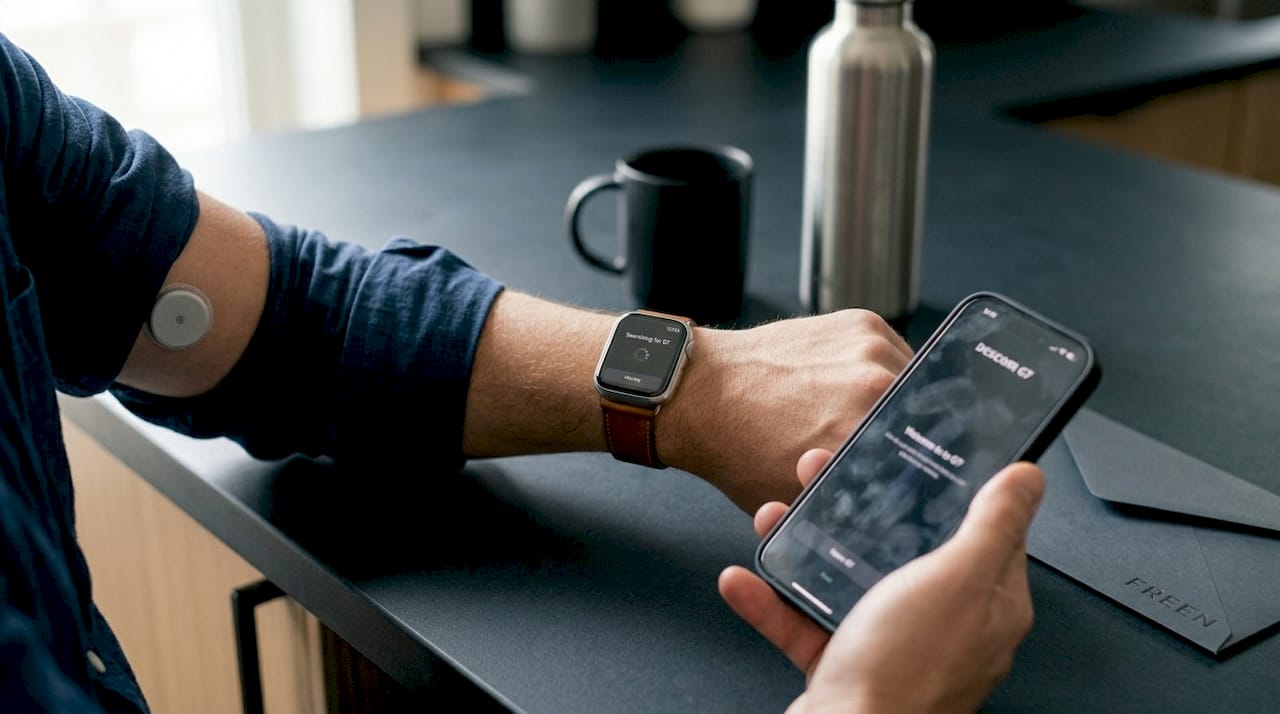
Für gesundheitsbewusste Berufstätige im Alter von 45 bis 65 Jahren, der Dexcom G7 in Kombination mit einer Apple Watch oder Garmin bleibt der Goldstandard für Genauigkeit und Zuverlässigkeit.
So richten Sie es ein:
- Wählen Sie Ihren CGM-Sensor: Dexcom G7 oder Stelo für den rezeptfreien Zugang. Tragen Sie es auf der Rückseite Ihres Oberarms oder am Bauch, niemals am Handgelenk.
- Mit Ihrer Smartwatch verbinden: Dexcom G7 verbindet sich direkt mit der Apple Watch über die Dexcom App. Garmin-Nutzer können die Dexcom Connect IQ App verwenden.
- Benachrichtigungen konfigurieren: Legen Sie hohe und niedrige Glukoseschwellenwerte fest, um diskrete haptische Benachrichtigungen an Ihrem Handgelenk zu erhalten.
- Kombinieren Sie Ihre mechanische Uhr: Nutzen Sie ein modulares Armband, um Ihre Luxusuhr zusammen mit Ihrer Smartwatch am selben Handgelenk zu tragen.
| CGM + Uhr-Kombi | MARD | Wasserdicht | Direkte Paarung | Am besten für |
|---|---|---|---|---|
| Dexcom G7 + Apple Watch | 8.2% | Ja (50m) | Ja | iOS-Nutzer, Sammler |
| Dexcom G7 + Garmin | 8.2% | Ja (50m) | Ja (Connect IQ) | Outdoor, Sport |
| Dexcom Stelo + iPhone | ~8,5% | N/A | Nur in der App | OTC, nicht-diabetisch |
| Abbott Libre 3 + Android | ~9,7 % | Ja | App-basiert | Android-Nutzer |
Profi-Tipp: Platzieren Sie Ihren CGM-Sensor immer auf der Rückseite Ihres Oberarms oder am Bauch. Die Platzierung am Handgelenk wird nicht unterstützt und liefert unzuverlässige Messwerte aufgrund von Bewegungen und Schwankungen des Blutflusses an dieser Stelle.
Für Sammler liegt die eigentliche Herausforderung nicht in der Genauigkeit. Es geht um Ästhetik. Eine Smartwatch und ein mechanisches Stück gleichzeitig zu tragen kann ohne die richtige Hardware unharmonisch wirken. Genau da Smartband-Funktionen relevant wird und warum das Konzept eines Einzelriemen für zwei Uhren hat bei Fachleuten mit doppelter Identität echten Anklang gefunden.
Aufkommende Technologie: Nicht-invasives Handgelenk-CGM
Der Traum von einem wirklich nicht-invasiven CGM am Handgelenk – keine Nadeln, keine Pflaster, nur eine Uhr, die Ihren Blutzucker misst – ist ein echtes Forschungsgebiet. Doch die Lücke zwischen Laborversprechen und kommerziellem Produkt bleibt groß.
Zwei wesentliche optische Ansätze werden derzeit untersucht. Raman-Spektroskopie Verwendet nahinfrarotes Laserlicht, um Glukosemoleküle im Gewebe zu identifizieren. Mittelinfrarot (MIR)-Spektroskopie zielt auf spezifische Glukoseabsorptionswellenlängen ab. Beide sind unter kontrollierten Laborbedingungen vielversprechend.
Das Problem ist der Körper selbst. Die Mid-IR-Spektroskopie erreicht einen MARD von etwa 20 % in der aktuellen Forschung, was der doppelten Fehlerrate heutiger kommerzieller CGMs entspricht. Diese Lücke ist enorm bedeutsam, wenn man auf Basis dieser Werte gesundheitliche Entscheidungen trifft.
Mehrere Startups arbeiten daran, diese Lücke zu schließen:
- Afon Technology (UK): Zielerfassung eines am Handgelenk getragenen Geräts mittels Mikrowellensensorik. Noch keine FDA-Zulassung, wobei die kommerzielle Markteinführung noch aussteht.
- NIQS: Nur mit Nahinfrarotspektroskopie, ausschließlich Entwicklungsphase.
- Liom: Schweizer Startup, optischer Ansatz, kein kommerzielles Produkt.
- RSP Systems: Dänisches Unternehmen, Raman-basiert, übernommen und in ein größeres Unternehmen integriert.
"Die Physik der Glukosemessung durch die Haut am Handgelenk ist wirklich anspruchsvoll. Bewegungsartefakte, Hauttonvariationen, Hydrationsniveaus und Temperatur beeinflussen alle optische Signale. Solange diese Variablen nicht zuverlässig kontrolliert werden, bleibt die Genauigkeit von Handgelenk-CGM eine Herausforderung.", Unabhängige Analyse von Herausforderungen bei der nicht-invasiven Glukosemessung
Die Einschränkungen sind real:
- Bewegungsartefakt: Hangelenkbewegungen bei alltäglichen Aktivitäten verfälschen optische Messwerte
- Hauttonvariabilität: Melanin absorbiert Licht unterschiedlich und beeinflusst die Signalinterpretation
- Flüssigkeitszufuhr und Temperatur: Beide verändern die optischen Eigenschaften des Gewebes
- Regulierungsleiste: Die FDA verlangt klinische Genauigkeit vor der Zulassung
Für Sammler, die aufmerksam verfolgen Dual-Watch-Armband-Trends, die Botschaft ist klar: Nicht-invasives Handgelenk-CGM ist eine Technologie, die man im Auge behalten sollte – noch keine, die man tragen sollte.
Uhrenintegration: CGM für Luxussammler und Profis
Wo stehen Sie also als Sammler, der sowohl eine Patek Philippe am Handgelenk als auch Echtzeit-Glukosedaten möchte? Die Antwort ist praktisch, erreichbar und eleganter als Sie vielleicht erwarten.
Die LinX CGM Watch behauptet, Echtzeit-CGM am Handgelenk zu bieten Bei näherer Betrachtung ist es jedoch auf einen separaten Arm- oder Bauchsensor angewiesen und verfügt über keine unabhängige klinische Validierung. Es handelt sich um ein Anzeigegerät mit einer überzeugenden Geschichte – kein sensorischer Durchbruch.
Die eigentliche Herausforderung für Sammler ist mechanischer Natur. Aktuelle CGMs müssen dauerhaft am Arm oder Bauch getragen werden. Ihre Smartwatch muss am Handgelenk bleiben, um Anzeigen und Benachrichtigungen zu ermöglichen. Und Ihre mechanische Uhr verdient ebenfalls ihren Platz. Das sind drei konkurrierende Anforderungen – und nur zwei Handgelenke.
So lösen es ernsthafte Sammler:
- Platzieren Sie den CGM-Sensor am Oberarm: Hält das Handgelenk für beide Uhren frei
- Nutzen Sie ein modulares Armband: Tragen Sie mechanische Uhr und Smartwatch am selben Handgelenk, ohne eine der beiden zu verändern
- Prüfen Sie die Bandanstöße: Wählen Sie ein Dual-Wear-Armband für 18 bis 24 mm Bandanstoßbreite, bei Uhren mit Standard-Federstegen
- Diskretion wahren: Matte und dunkle Oberflächen bei Adaptern bewahren die visuelle Eleganz von Luxusstücken
Profi-Tipp: Beim Smartlet sitzt die Smartwatch unter dem Handgelenk, ihre optischen Sensoren auf der Haut, während die mechanische Uhr oben bleibt. Drehen Sie das Handgelenk, um das Display der Smartwatch mit einem Blick zu lesen.
Die kombiniertes Uhrenarmband Konzept geht genau auf diesen Bedarf ein. Und für Profis, die reisen oder zwischen Uhren wechseln, ein Klassisches und vernetztes Uhrenarmband die keine dauerhafte Veränderung erfordert, ist die einzige Lösung, die sowohl die Uhr als auch den Träger respektiert.
Das Tragen rund um die Uhr ist das entscheidende Stichwort. CGM funktioniert nur, wenn es konsequent getragen wird. Das bedeutet, dass die Integrationslösung komfortabel genug sein muss, um sie den ganzen Tag, jeden Tag zu tragen.
Die unbequeme Wahrheit über Handgelenk-CGM für Sammler im Jahr 2026
Was Ihnen das Marketing nicht verrät: Der Traum von einer einzigen Luxusuhr, die auch Ihren Blutzucker misst, ist keine Geschichte für 2026. Vielleicht nicht einmal für 2028. Die physikalischen Hürden sind enorm, die regulatorischen Anforderungen hoch, und die Genauigkeitslücke zwischen optischen Prototypen und elektrochemischen CGMs ist nach wie vor erheblich.
Startups machen kühne Versprechen. Manche werden sie einhalten. Die meisten nicht – zumindest nicht nach ihrem ursprünglichen Zeitplan. Die Herausforderungen der optischen Sensorik am Handgelenk sind nach wie vor ungelöst, und kein noch so ausgefeiltes Marketing ändert etwas an der zugrundeliegenden Biologie.
Was heute tatsächlich funktioniert, ist der kombinierte Ansatz: ein bewährter CGM-Sensor am Arm, eine Smartwatch, die diese Daten am Handgelenk anzeigt, und eine mechanische Uhr, die gemeinsam damit getragen wird – mit der richtigen Hardware. Dieses Setup funktioniert bereits heute. Es ist präzise, komfortabel, und für Sammler, die sowohl Handwerkskunst als auch Gesundheit schätzen, ist es die einzig ehrliche Antwort.
Der klügere Schachzug ist nicht, auf eine Uhr zu warten, die alles kann. Es geht darum, ein Handgelenk-Setup aufzubauen, das alles gut kann – indem man seine Uhren intelligent miteinander verbindet, anstatt darauf zu hoffen, dass ein einziges Gerät alle anderen ersetzt.
Nahtloser Luxus und Wellness: Nächste Schritte für integriertes Wrist-Wear
Wenn dieser Artikel eines klargestellt hat, dann dass das beste CGM-Setup am Handgelenk im Jahr 2026 eine Kombination ist – kein einzelnes Gerät. Und das fehlende Element für die meisten Träger ist weder der Sensor noch die Smartwatch. Es ist das Zubehör, das es ermöglicht, beide Uhren ohne Abstriche gleichzeitig am selben Handgelenk zu tragen.
Smartlet's modulare Uhrenarmbänder werden aus SS316L-Stahl und Titan Grade 2 gefertigt und sind mit jeder Uhr mit einer Stegbreite von 18 bis 24 mm kompatibel. Kein Bohren, keine Modifikationen, kein Abwägen zwischen Ihrer Rolex und Ihrer Apple Watch. Bevor Sie in ein CGM-Setup investieren, prüfen Sie die Kompatibilitätsleitfaden um zu bestätigen, dass Ihre mechanische Uhr passt, und um zu entdecken Smartwatch-Kompatibilität um zu sehen, welche verbundenen Geräte nahtlos zusammenpassen. Nicht wählen. Komponieren.
Empfohlen
- Wie die Herzüberwachung durch Smartwatches Leben rettet: Fallbeispiele und globale Daten – Smartlet
- Wie Smartwatch-Sensoren funktionieren: Warum die Ausrichtung irrelevant ist und die Haut – Smartlet
- HRV-Monitoring und mechanische Uhren integrieren: 86 % Genauigkeit – Smartlet
- Rolex Submariner und Garmin Venu X1: Zwei-Uhren-Guide – Smartlet
- Meistern Sie wichtige Gesundheitsrechner für Ihr Wohlbefinden im Jahr 2026 - Dietium