


Was Ihr Handgelenk-Sensor über HRV und Stress verrät

TL;DR:
- Handgelenkssensoren messen die Pulsvariabilität, die weniger präzise ist als die ECG-abgeleitete Herzfrequenzvariabilität.
- Die Kombination von Handgelenkssensoren mit Brustgurten oder Smart Rings verbessert die Genauigkeit und Trendanalyse.
- Ordnungsgemäße Baseline-Verfolgung und Lebensstiländerungen verbessern die Interpretation von Stress- und Erholungsdaten.
Ihr Handgelenkssensor blinkt einen Stresswert auf, und Sie schauen neugierig hinunter. Aber hier ist, was die meisten Menschen nicht wissen: Diese Zahl ist keine klinische Herzfrequenzvariabilität. Es ist eine berechnete Schätzung, die auf Pulsintervallen basiert, nicht auf den elektrischen Signalen, die Ihr Herz tatsächlich erzeugt. Für gesundheitsbewusste Sammler in ihren 40ern und 50ern, die bereits Ruheherzfrequenz und Erholung verfolgen, ist das Verständnis dieses Unterschieds der Unterschied zwischen dem Handeln auf der Grundlage nützlicher Daten und dem Hinterherjagen einer Zahl, die ein einzelner Espresso gerade verdorben hat. Dieser Leitfaden erklärt genau, was Handgelenkssensoren messen, wo sie zuverlässig sind, und wie Sie ein Überwachungssystem aufbauen, das Sie nie zwingt, Ihre Vacheron oder Ihre Breitling in der Schublade zu lassen.
Inhaltsverzeichnis
- Wie Handgelenkssensoren HRV und Stress erkennen
- Vergleich von Handgelenkssensoren, Brustgurten und Smart Rings
- Was Ihr Handgelenkssensor richtig macht und was er vermisst
- So erhalten Sie die zuverlässigsten HRV- und Stressablesungen mit Ihrem Setup
- Unsere Meinung: Was die meisten Luxusuhr-Träger über HRV- und Stresswerte nicht wissen
- Das Beste aus beiden Welten: Gesundheitsverfolgung ohne Stilopfer
Wichtigste Erkenntnisse
| Punkt | Details |
|---|---|
| Handgelenkssensoren verfolgen Trends | Tragbare Handgelenkssensoren eignen sich hervorragend zur Überwachung Ihrer HRV- und Stresstrends, aber ihre absoluten Zahlen können klinische Präzision vermissen. |
| Geräteoptionen vergleichen | Brustgurte und Smart Rings bieten höhere Genauigkeit für Momentaufnahmen oder Ganznacht-Überwachung, während der Handgelenksstil erhalten bleibt. |
| Einschränkungen verstehen | Lebensstilfaktoren, Gerätemethode und Sensortyp beeinflussen alle die Stressgenauigkeit, daher interpretieren Sie Ihre Daten im Kontext. |
| Werkzeuge intelligent kombinieren | Die Kombination von Handgelenkssensoren mit gelegentlichen Präzisionsgeräten gibt Ihnen umsetzbare Erkenntnisse, ohne Ihre klassische Uhr zu opfern. |
Wie Handgelenkssensoren HRV und Stress erkennen
Mit den Grundlagen im Hinterkopf, schauen wir uns an, was diese blinkenden grünen LEDs tatsächlich von Ihrem Handgelenk aufnehmen.
Handgelenkssensoren basieren auf Photoplethysmographie oder PPG. Eine grüne LED scheint in Ihre Haut, und ein Fotodetektor misst, wie viel Licht zurückprallt. Blut absorbiert mehr Licht, wenn das Herz schlägt, und weniger zwischen den Schlägen, daher verfolgt der Sensor die Pulstimung. Was er nicht tun kann, ist die elektrische Aktivität des Herzens direkt zu lesen. Das ist die Aufgabe eines EKGs.
Aus diesem Grund berechnet Ihr Gerät Pulsvariabilität (PRV), nicht echte Herzfrequenzvariabilität. Der Unterschied ist wichtig. PPG misst Pulsvariabilität, nicht EKG-abgeleitete HRV, und diese Lücke beeinflusst die Präzision Ihrer Ablesungen. PRV neigt dazu, Schlüsselmetriken wie rMSSD, SDNN und pNN50 im Vergleich zu EKG-Goldstandard-Messungen zu unterschätzen.
Lassen Sie uns rMSSD schnell klären, da es in vielen Apps erscheint. rMSSD steht für die Quadratwurzel des Mittelwerts der Quadrate aufeinanderfolgender Unterschiede zwischen Herzschlagintervallen. Es spiegelt wider, wie sehr Ihre Schlag-zu-Schlag-Timung variiert, was das Kernsignal ist, das Ihr Nervensystem verwendet, um Erholung und Stress zu kommunizieren. Ein höheres rMSSD bedeutet im Allgemeinen, dass Ihr parasympathisches (Ruhe-und-Verdauungs-)Nervensystem aktiv ist. Ein niedrigeres rMSSD deutet darauf hin, dass Ihr Körper unter Last steht. Es wird aus denselben Pulsintervallen berechnet, die PPG erfasst, weshalb Handgelenkssensoren es annähern können, aber nicht perfekt replizieren.
Hier ist, wo Handgelenkssensoren gut funktionieren und wo sie zu kurz kommen:
- Trendverfolgung über Tage und Wochen: Sehr nützlich. Relative Änderungen in Ihrer PRV-Baseline sind aussagekräftig, auch wenn die absoluten Zahlen von klinischen EKG-Werten abweichen.
- Akute Stresserkennung: Moderate Genauigkeit, besonders wenn mehrere Sensoren (Temperatur, Beschleunigungsmesser, Atmung) ihre Signale kombinieren.
- Präzision in einer einzelnen Sitzung: Weniger zuverlässig. Bewegungsartefakte, Hautton, kalte Temperaturen und Handgelenkposition können alle eine einzelne Ablesung verfälschen.
- Klinische Diagnose: Nicht angemessen. Handgelenkssensoren sind Verbraucher-Wellness-Tools, keine medizinischen Instrumente.
Pro-Tipp: Beurteilen Sie Ihre Gesundheit nicht nach einem einzelnen Wert. Legen Sie ein Mindestfenster von 7 Tagen auf Ihrem Gerät fest, bevor Sie einem Trend vertrauen. Jede Lücke beim Tragen verdirbt die Trendlinie und zwingt Sie, Ihre Baseline von vorne zu beginnen.
Für einen tieferen Blick auf die Integration von HRV mit mechanischen Uhren, ist der Schlüssel kontinuierliches Tragen. Und genau dort beginnt die Herausforderung für Sammler.
Das Verständnis von wie HRV-Stresserkennung auf Sensorebene funktioniert, hilft Ihnen, die Ausgabe Ihrer App mit angemessenem Vertrauen statt blindem Vertrauen zu interpretieren.
Vergleich von Handgelenkssensoren, Brustgurten und Smart Rings
Jetzt, da Sie wissen, wie Handgelenkssensoren HRV messen, ist es Zeit, sie mit anderen beliebten Tools nebeneinander zu stellen.
Brustgurte wie der Polar H10 übertreffen PPG-Handgelenkssensoren in HRV-Genauigkeit, weil sie direkt über dem Herzen sitzen und elektrische Signale lesen, nicht optische Pulsreflexionen. Für eine präzise morgendliche HRV-Kontrolle ist ein Brustgurt der Goldstandard. Aber Sie werden ihn nicht zu einer Vorstandssitzung oder einer Galerieöffnung tragen.
| Funktion | Handgelenkssensor (PPG) | Brustgurt (EKG) |
|---|---|---|
| Signaltyp | Optischer Puls | Elektrisches Herzsignal |
| Präzision | Moderat | Hoch |
| Latenz | Niedrig (kontinuierlich) | Niedrig (sitzungsbasiert) |
| Kosten | $200 bis $500+ | $80 bis $150 |
| Ganztägige Tragbarkeit | Ja | Nein |
| Stilkompatibilität | Begrenzt mit Luxusuhren | Schlecht |
Smart Rings nehmen einen nützlichen Mittelweg ein. Nächtliche HRV-Genauigkeit von Oura, Garmin und Polar-Geräten ist während des Schlafs deutlich besser als tagsüber PPG, da Bewegungsartefakte nahe Null fallen. Ein Ring an einem Finger und Ihre Patek an Ihrem Handgelenk ist eine saubere, unauffällige Lösung für die nächtliche Verfolgung.
Für Luxusuhr-Sammler sehen die praktischen Optionen so aus:
- Brustgurt: Verwenden Sie 2 bis 3 Mal pro Woche für hochpräzise morgendliche Schnappschüsse.
- Smart Ring: Tragen Sie nachts für passive, schmuckkompatible Schlaf-HRV-Verfolgung.
- Handgelenkssensor: Behalten Sie für Echtzeit-Kontext, Tagestrend-Überwachung und Aktivitätskorrelation.
"Trends sind für die meisten Benutzer wichtiger als einzelne Werte. Der Wert von Verbraucher-Wearables liegt in der Konsistenz des Datenmusters, nicht in einer einzelnen Zahl."
Wenn Sie bereits eine Garmin Venu besitzen, können Sie sie am Smartlet-Armband tragen und diesen Handgelenksensor neben Ihrer Dresswatch nutzen, ohne sich entscheiden zu müssen. Dieselbe Logik gilt, wenn Sie das Tracking der Apple Watch mit einer Cartier Tank kombinieren, für Sammler, die Ästhetik und lückenlose Daten wollen.
Was Ihr Handgelenkssensor richtig macht und was er vermisst
Mit einem klaren Vergleich bewaffnet, lassen Sie uns aufschlüsseln, was Sie tatsächlich von diesen Handgelenkswerten vertrauen können.
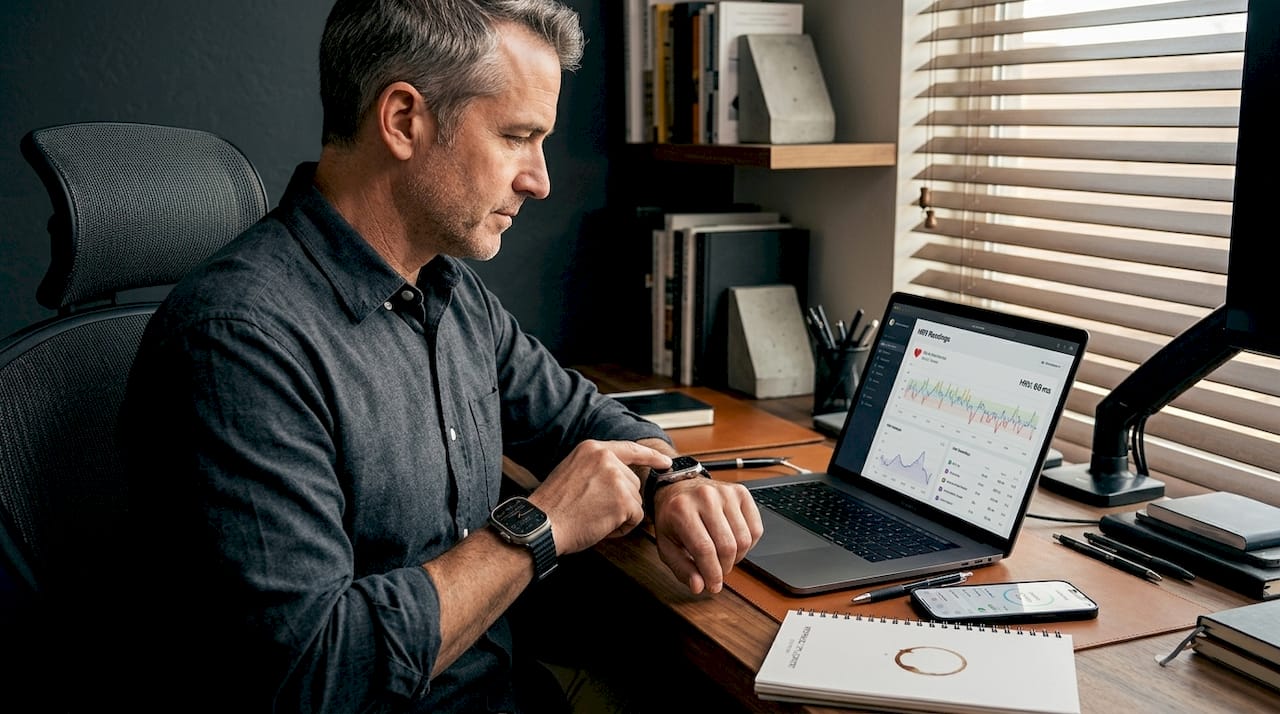
Multi-Sensor-Fusion verbessert die Angststörungserkennung auf etwa 80% bei modernen Handgelenkssensoren. Das ist eine aussagekräftige Zahl. Durch die Kombination von Herzfrequenz, Hauttemperatur, Beschleunigungsmesser-Daten und Atemschätzungen sind aktuelle Smartwatch-Plattformen wirklich nützlich, um Stressmuster über eine Woche hinweg zu identifizieren.
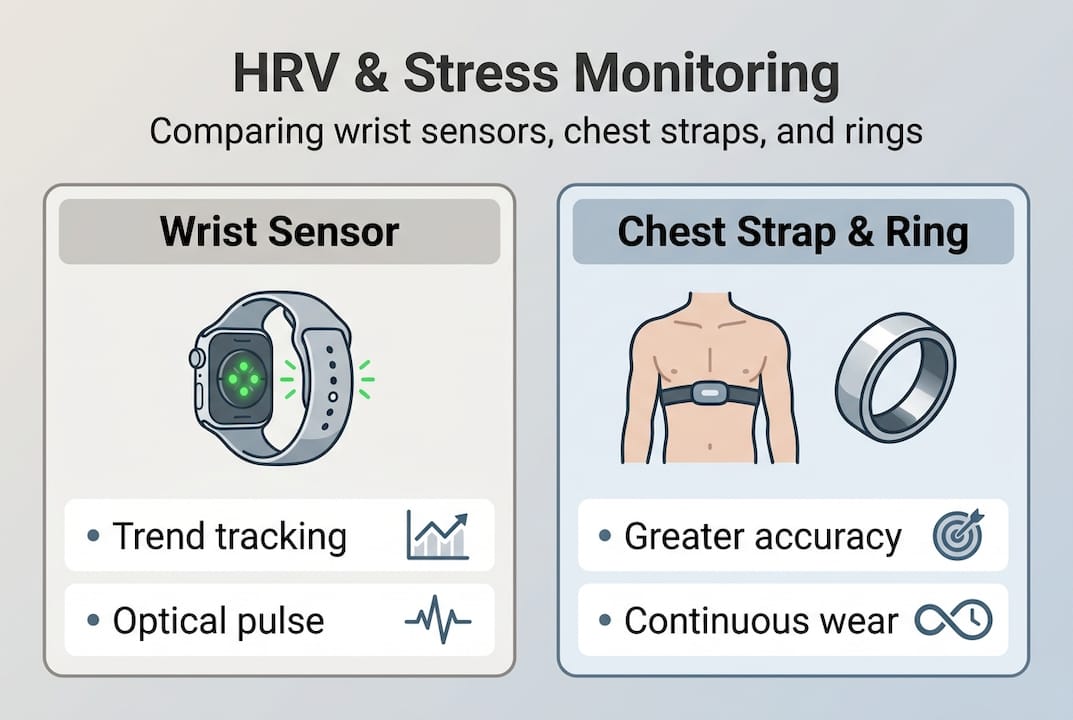
Hier ist eine schnelle Übersicht darüber, was Handgelenkssensoren gut handhaben und was Kontext erfordert:
| Was Handgelenkssensoren richtig machen | Was Vorsicht erfordert |
|---|---|
| Wöchentliche HRV-Trendrichtung | Absolute Werte an einem einzelnen Tag |
| Schlafqualitätskorrelation | Diagnose von Stressstörungen |
| Aktivitätsbezogene Erholung | Ablesungen nach Koffein oder Alkohol |
| Echtzeit erhöhte Herzfrequenz | Vergleich von Werten über verschiedene Geräte hinweg |
Falsch-Positive sind häufig. Ein morgendlicher Espresso, ein Glas Wein am Vorabend, leichte Dehydration oder eine späte Mahlzeit können alle Ihre HRV-Ablesung unterdrücken, ohne dass ein echtes Stressereignis auftritt. Ihr Gerät weiß nicht, dass Sie aufgeblieben sind, um ein Spiel zu schauen. Es sieht nur eine niedrige Zahl.
- Koffein: Kann HRV-Ablesungen mehrere Stunden nach dem Konsum senken.
- Alkohol: Unterdrückt die nächtliche HRV erheblich, auch nach moderatem Konsum.
- Dehydration: Erhöht die Herzfrequenz und verzerrt die Pulsvariabilität.
- Krankheit: Kann sich als erhöhter Stress zeigen, bevor Sie Symptome spüren.
Pro-Tipp: Verfolgen Sie Ihre eigene Baseline, nicht einen Durchschnittswert. Was zählt, ist, ob Ihr persönlicher 7-Tage-Durchschnitt nach oben oder unten tendiert, nicht ob Ihre Zahl "gut" in absoluten Begriffen ist.
Für diejenigen, die Luxusuhren mit Gesundheitsverfolgung kombinieren, ist der echte Gewinn in dieser Trendschicht. Und für Sammler, die neugierig auf das Tragen von zwei Uhren an einem Handgelenk sind, wird dieser kontinuierliche Datenstrom möglich, ohne die Uhr aufzugeben, die Sie lieben.
So erhalten Sie die zuverlässigsten HRV- und Stressablesungen mit Ihrem Setup
Was sollten Sie also als stilbewusster, gesundheitsorientierter Sammler mit all diesen Informationen tatsächlich tun?
Hier ist ein praktischer Rahmen, um die aussagekräftigsten Daten ohne Gadget-Überfluss zu erhalten:
- Etablieren Sie zunächst eine 7-Tage-Baseline. Tragen Sie Ihr Gerät konsistent, bevor Sie einen Trend interpretieren. Ein einzelner Tag Daten ist kontextfrei. Sieben Tage geben Ihrer App genug Signal, um Ihr Normales von Ihrem Gestressten zu unterscheiden.
- Verwenden Sie morgendliche Schnappschüsse für Präzision. Kurze Aufzeichnungen von 1 bis 5 Minuten sind zuverlässig für rMSSD, was eine schnelle Kontrolle direkt nach dem Aufwachen, vor dem Kaffee, zu einem überraschend genauen Datenpunkt macht.
- Fügen Sie einen Brustgurt für wichtige Kontrollen hinzu. Vor einer körperlichen Untersuchung, nach einem intensiven Training oder während einer Erholungswoche gibt eine kurze Brustgurt-Sitzung Ihnen EKG-Genauigkeit. Die Kombination von Handgelenksverfolgung mit gelegentlichen Brustgurt-Sitzungen ist die optimale Strategie für die meisten Benutzer, die sowohl Praktikabilität als auch Präzision mögen.
- Aktivieren Sie die nächtliche Verfolgung. Schlaf ist Ihr sauberstes HRV-Fenster. Die Bewegung ist minimal, und Ihr Körper ist im Erholungsmodus. Nächtliche Daten sind die zuverlässigste passive Ablesung, die Ihr Handgelenkssensor jemals liefern wird.
- Protokollieren Sie Lebensstilfaktoren. Die meisten Plattformen ermöglichen manuelle Notizen. Markieren Sie Alkoholnächte, Reisetage oder intensive Trainingseinheiten, damit Sie falsche Tiefs von echten Erholungsdips filtern können.
- Reservieren Sie Ihre Luxusuhr für Zeiten, in denen Daten nicht die Priorität sind. Meetings, Abendessen, formale Veranstaltungen. Lassen Sie Ihre Cartier Santos oder Ihre Breitling für Ihren Geschmack sprechen. Lassen Sie Ihre Smartwatch für Ihre Gesundheit sprechen.
Pro-Tipp: Aktivieren Sie den Schlaf-HRV-Modus Ihrer App vor dem Schlafengehen und legen Sie eine 7-Tage-Trend-Benachrichtigung statt einer täglichen Wert-Benachrichtigung fest. Sie werden benachrichtigt, wenn sich etwas wirklich Bedeutsames verschiebt, nicht jedes Mal, wenn Sie zu spät einen Kaffee getrunken haben.
Unsere Meinung: Was die meisten Luxusuhr-Träger über HRV- und Stresswerte nicht wissen
Hier ist etwas, das die meisten HRV-Leitfäden Ihnen nicht sagen werden: Die Besessenheit mit einem täglichen Wert macht Ihre Gesundheitsergebnisse oft schlechter, nicht besser. Wenn Sammler sich darauf konzentrieren, eine perfekte Zahl zu jagen, erzeugen sie Angst um eine Metrik, die die Abwesenheit von Angst messen soll. Das ist eine Falle.
Was wir in der Praxis sehen, ist, dass die am besten informierten Sammler Handgelenksdaten genauso verwenden wie ein guter Sommelier eine Weinkarte: nicht um jede Zahl auswendig zu lernen, sondern um Muster zu erkennen und ruhig darauf zu reagieren. Eine Woche unterdrückter HRV nach einer Handelskonferenz sagt Ihnen etwas Echtes. Ein einzelner schlechter Morgen-Wert sagt Ihnen fast nichts.
Das andere, das die meisten Leitfäden überspringen, ist der Kontext des kontinuierlichen Tragens. Ein Gerät, das 18 Stunden am Tag an Ihrem Handgelenk ist, gibt Ihnen reichhaltigere Trenddaten als ein Gerät, das Sie zum Abendessen austauschen. Moderne Lösungen wie Apple Watch-Gesundheitsverfolgung neben klassischem Stil beweisen, dass Datenqualität und ästhetische Qualität nicht mehr in Konflikt stehen. Die Sammler, die das meiste aus ihren Wearables herausholen, sind diejenigen, die herausgefunden haben, wie man sie ohne Kompromisse trägt.
Das Beste aus beiden Welten: Gesundheitsverfolgung ohne Stilopfer
Sie haben jetzt ein klares Bild davon, was Ihr Handgelenkssensor kann und nicht kann. Der nächste Schritt ist sicherzustellen, dass er lange genug an Ihrem Handgelenk bleibt, um wichtig zu sein.
Genau dieses Problem soll das modulare Smartlet-Armband lösen. Aus SS316L-Stahl und Titan Grad 2 gefertigt, nutzt es Uhrenadapter, die anstelle der Federstege in den Bandanstößen jeder Uhr mit 18 bis 24 mm Bandanstoßbreite sitzen. Keine Änderung. Keine dauerhaften Eingriffe an Ihrer Uhr. Ihre mechanische Uhr und Ihre Gesundheits-Smartwatch teilen sich dasselbe Handgelenk, zur selben Zeit. Entdecken Sie die gesamte Kollektion der Smartlet One Zubehörteile oder prüfen Sie den Marken-Kompatibilitätsleitfaden, um genau zu sehen, welche Uhren zu welchen Smartwatches passen. Denn kontinuierliche Daten zählen nur, wenn Sie das Gerät tatsächlich tragen.
Empfohlen
- HRV-Überwachung und mechanische Uhren integrieren: 86% Genauigkeit – Smartlet
- HRV überwachen und mit Vertrauen trainieren mit Smartlet
- Wie Smartwatch-Sensoren funktionieren: warum Ausrichtung irrelevant ist und Hautton – Smartlet
- Apple Watch ECG und mechanisches Prestige ausbalancieren gelöst – Smartlet


