


Wear an Apple Watch and Rolex together for heart rate monitoring

You check your wrist. The Submariner shows 2:47 PM. Your pulse? Unknown. Last night’s HRV data? Sitting in a drawer with your Apple Watch Ultra, because wearing both felt impossible. Until a French watchmaker asked why collectors should choose between precision timekeeping and precision health monitoring. The answer arrived as a modular steel adapter that mounts your Apple Watch underneath your Rolex, maintaining skin contact for continuous cardiac tracking without compromising either instrument.
Table des matières
- The Challenge Of Combining Luxury Style With Advanced Heart Rate Monitoring
- Innovative Solutions: Wearing The Apple Watch Underneath Your Rolex
- Maintaining Accurate Heart Rate Monitoring While Preserving Style
- Alternative Approaches To Dual Heart Rate Monitoring With Luxury Watches
- Practical Tips For Wearing An Apple Watch With Your Rolex While Prioritizing Health And Style
- Explore Smart Modular Solutions To Wear Your Apple Watch With Your Rolex
Points clés à retenir
| Point | Détails |
|---|---|
| Dual wrist solutions preserve accuracy | Modular bands like Smartlet maintain sensor contact by positioning the Apple Watch under your Rolex on one wrist. |
| Proximal placement ensures reliability | Forearm and bicep positions deliver accuracy comparable to standard wrist wear during most activities. |
| Alternative methods offer flexibility | Opposite wrist wear, armbands, or smart rings provide options based on comfort and style priorities. |
| Proper setup protects luxury integrity | Reversible spring bar installation and regular maintenance prevent scratching and preserve watch finishes. |
The challenge of combining luxury style with advanced heart rate monitoring
Collectors invest in Rolex for heritage, precision, and wrist presence. A Submariner 124060 communicates identity. An Apple Watch Ultra 2 communicates atrial fibrillation alerts, HRV trends, and continuous cardiac data that cardiologists actually reference. Wearing both simultaneously presents three friction points: aesthetic clash, physical discomfort, and the risk of metal-on-metal contact damaging a five-figure timepiece.
Conventional wisdom treated these devices as mutually exclusive. Smartwatches belonged on gym days. Mechanical watches belonged everywhere else. That logic cost collectors actionable health data during the majority of their waking hours. Continuous monitoring requires the sensor on your wrist, not charging on a nightstand.
The technical requirement is straightforward. Apple Watch heart rate sensors use photoplethysmography, requiring consistent skin contact to detect blood volume changes. Any gap between sensor and skin degrades accuracy. Traditional dual-wrist approaches failed because stacking watches created separation, movement, or both. The Smartlet modular band solved this by engineering a steel adapter that positions the Apple Watch flush against skin while the Rolex sits above, eliminating gaps and maintaining sensor contact.
Key considerations for collectors include:
- Maintaining uninterrupted skin contact for PPG sensor accuracy
- Preventing scratches between stainless steel or titanium surfaces
- Preserving the visual profile of the luxury watch
- Ensuring comfort during 12-16 hour daily wear periods
- Protecting spring bar integrity on both timepieces
Modular band solutions emerged from this specific collector frustration. They address technical requirements without compromising the reason you bought the Rolex in the first place. The question shifted from whether dual wear was possible to which implementation preserved both function and identity. Learn more about wearing both watches together in our detailed compatibility guide.
Innovative solutions: Wearing the Apple Watch underneath your Rolex
Smartlet’s modular band system mounts the Apple Watch case directly beneath your Rolex using a precision-machined steel or titanium adapter. The design maintains sensor-to-skin contact while the mechanical watch sits in its traditional position above. This configuration works with Submariner 124060, Datejust 41, Daytona, and other models with 20mm lug widths, compatible with Apple Watch Series 0 through Ultra 3.
The engineering centers on three components: the base plate that secures to your wrist via standard Apple Watch straps, the upper adapter that accepts Rolex spring bars, and reversible installation hardware. The reversible spring bar system prevents metal-on-metal contact by positioning the Rolex lugs against machined recesses rather than raw steel edges. This protects both the case finish and the adapter surface.
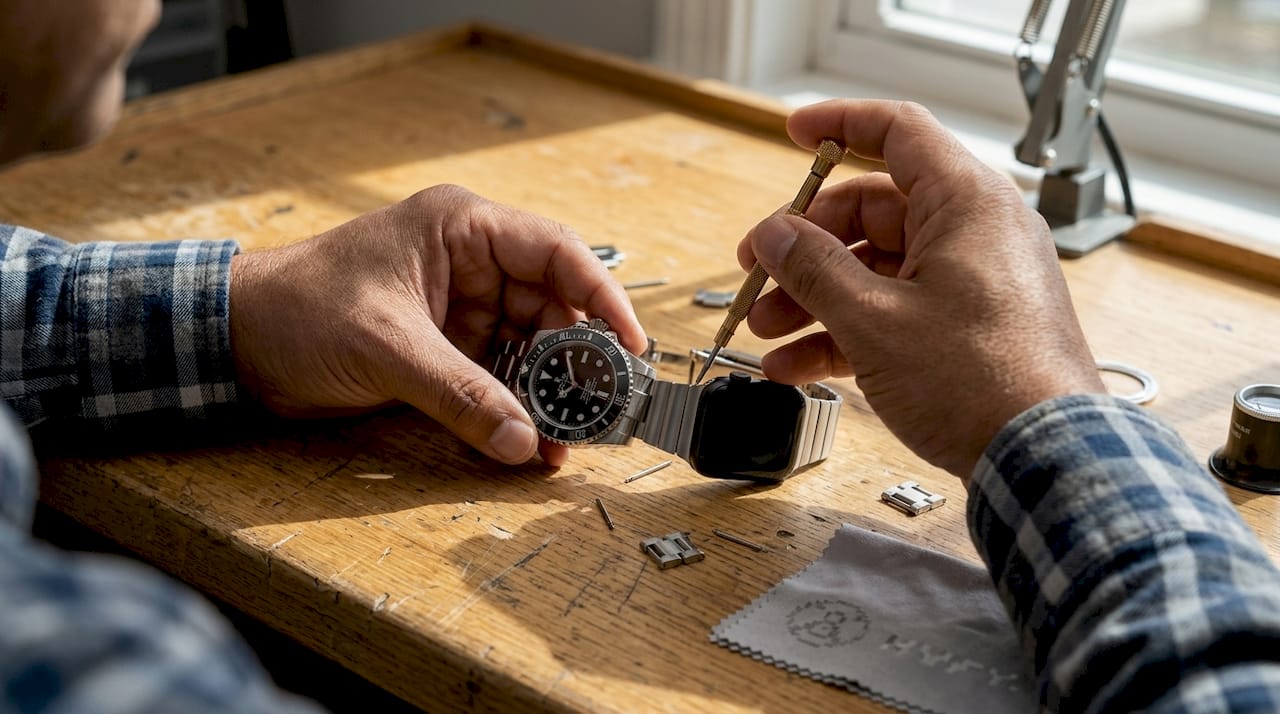
Material selection matters. The Classic version uses SS316L stainless steel, the same alloy grade found in Omega Speedmaster cases. The Shadow edition adds black PVD coating. The Titanium variant uses Grade 5 titanium alloy, delivering 45% less weight than steel with superior scratch resistance. All three maintain the structural integrity required to support a Rolex Submariner’s 148-gram case plus bracelet weight during daily activity.
Practical testing reveals the system adds 9-12mm of stacking height, noticeable when resting your wrist on flat surfaces like desks or steering wheels. Most users adapt within three days. The combined weight approaches 280 grams depending on Apple Watch model and Rolex bracelet configuration, comparable to wearing a dive computer.
Compatibility matrix for common configurations:
| Rolex Model | Lug Width | Apple Watch Series | Smartlet Version | Total Stack Height |
|---|---|---|---|---|
| Submariner 124060 | 20 mm | Ultra 2 (49mm) | Classic/Shadow/Titanium | 11.8mm |
| Datejust 41 | 20 mm | Series 10 (46mm) | Classic/Shadow/Titanium | 10.2mm |
| Daytona 116500 | 20 mm | Ultra 2 (49mm) | Classic/Shadow/Titanium | 11.8mm |
| GMT-Master II | 20 mm | Series 10 (42mm) | Classic/Shadow/Titanium | 9.4mm |
Pro Tip: Check spring bar tightness weekly during the first month. The adapter’s weight can gradually loosen improperly seated bars, risking your Rolex hitting the floor. Proper installation with included tools prevents this entirely.
Installation requires removing your Rolex bracelet, inserting spring bars through the adapter’s upper mounting points, and securing them into the case lugs. The Apple Watch attaches to the base plate using its standard strap mounting system. Total setup time runs eight minutes for first installation, three minutes for subsequent changes. Explore additional Smartlet accessories for different strap configurations.
Maintaining accurate heart rate monitoring while preserving style
Apple Watch PPG sensors demonstrate 95-99% accuracy at rest and 85-91% accuracy during moderate exercise when properly positioned. The key variable is consistent skin contact. Movement introduces artifacts. Loose fit creates gaps. Stacking watches under a Rolex maintains the proximal wrist position PPG sensors are calibrated for, with minimal accuracy degradation compared to standard wrist wear.
Research on sensor placement shows forearm and upper arm positions actually reduce motion artifacts during dynamic activities. The Apple Watch positioned under a Rolex approximates forearm placement due to the combined mass dampening rapid wrist movements. This configuration works well for walking, cycling, and resistance training. High-intensity interval training or contact sports introduce enough movement to potentially compromise readings, regardless of mounting method.
The sensor requires three conditions: direct skin contact, secure positioning preventing slide, and adequate pressure without constriction. Under-Rolex mounting satisfies all three during most daily activities. Resting heart rate, HRV overnight trends, and AFib detection algorithms function identically to solo Apple Watch wear. VO2 max estimates and workout heart rate zones remain reliable for moderate intensity exercise.
Alternative placement strategies for specific scenarios:
| Placement Method | Accuracy (Rest) | Accuracy (Exercise) | Confort | Style Impact |
|---|---|---|---|---|
| Under Rolex (Smartlet) | 98% | 88% | Good | Minimal |
| Opposite wrist | 98% | 90% | Excellent | Modéré |
| Bicep armband | 97% | 92% | Very Good | Élevé |
| Forearm band | 97% | 91% | Good | Élevé |
For maximum data quality during intense training sessions, consider switching to an armband like ActionSleeve that positions the Apple Watch on your bicep. This placement delivers improved accuracy during movement while freeing your wrist entirely for your Rolex. The trade-off is abandoning the dual-wrist aesthetic for workout periods.
Pro Tip: Calibrate your Apple Watch heart rate zones using a chest strap monitor during one baseline workout. This establishes accurate training thresholds regardless of subsequent wrist or bicep placement, improving all future workout data quality.
Continuous monitoring throughout the day matters more than perfect accuracy during isolated workouts. Cardiologists value 24-hour trend data showing resting heart rate patterns, overnight HRV recovery, and irregular rhythm detection. The under-Rolex configuration captures this data without requiring you to choose between health tracking and wearing the watch that defines your wrist. Review detailed smartwatch compatibility across different Apple Watch generations.
Alternative approaches to dual heart rate monitoring with luxury watches
Opposite wrist placement remains the simplest solution. Wear your Rolex on your left wrist, Apple Watch on your right. This eliminates bulk, prevents any scratch risk, and maintains full sensor accuracy. The limitation is aesthetic. Two watches communicate indecision to some observers, and collectors who invested in a Submariner specifically for left-wrist presence lose that visual statement.
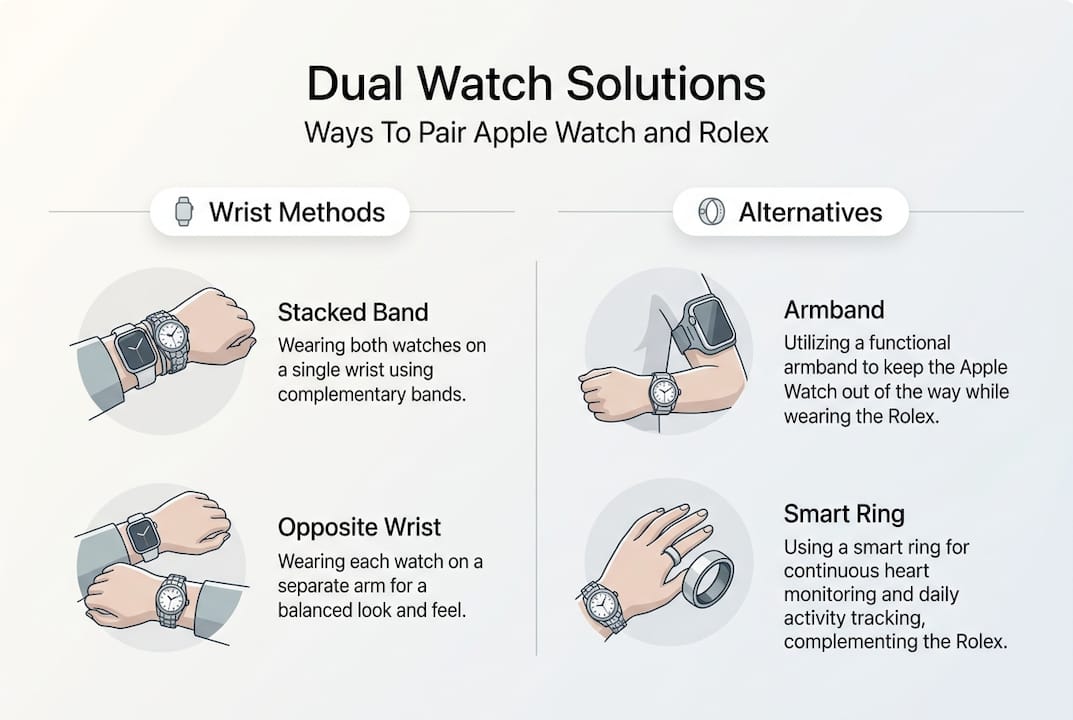
Armband solutions reposition the Apple Watch entirely. The ActionSleeve system secures the watch against your bicep using compression fabric, maintaining sensor contact while clearing your wrist completely. Accuracy during exercise improves due to reduced motion artifacts. The watch becomes invisible under long sleeves. The downside is losing quick glance access to notifications and complications, plus the unfamiliar sensation of wearing a device on your upper arm.
Smart rings like Oura offer passive monitoring in a form factor that doesn’t compete with wrist real estate. They track resting heart rate, HRV, and sleep stages using PPG sensors embedded in the ring band. Forum data suggests 17% of dual-watch users eventually migrate to ring-based monitoring. Limitations include 2-3 bpm lower accuracy for resting heart rate, no workout heart rate zones, and no ECG or AFib detection capabilities.
Comparative analysis of dual-monitoring approaches:
| Method | Setup Complexity | Daily Convenience | Health Data Completeness | Rolex Aesthetic Preserved |
|---|---|---|---|---|
| Under-Rolex modular band | Medium | Élevé | Complete | Yes |
| Opposite wrist | None | Élevé | Complete | Partial |
| Bicep armband | Low | Medium | Complete | Yes |
| Smart ring | None | Élevé | Limited | Yes |
Each approach serves different priorities. Collectors who refuse to compromise wrist presence choose modular bands or armbands. Those prioritizing convenience during travel or formal events prefer opposite wrist wear. Minimalists willing to sacrifice comprehensive metrics opt for smart rings. The correct choice depends on whether you value complete cardiac data more than single-wrist aesthetics, and whether you’re willing to adapt your wearing habits around specific activities.
The 17% of users wearing both watches on different wrists report no accuracy concerns but frequent questions from colleagues about the dual-watch setup. Under-Rolex configurations attract less attention because the Apple Watch remains largely hidden. Armband users appreciate the clean wrist aesthetic but dislike the setup time required before workouts. Smart ring adopters accept reduced data granularity in exchange for zero wrist interference. Explore how to wear a smartwatch with your Submariner using Smartlet’s compatibility system, or read WatchPro’s analysis of single-wrist solutions.
Practical tips for wearing an Apple Watch with your Rolex while prioritizing health and style
-
Verify compatibility before purchase. Measure your Rolex lug width using calipers. Submariner, Datejust 41, and Daytona models use 20mm. GMT-Master II uses 20mm. Older Datejust 36 models use 19mm, requiring adapter confirmation. Match your Apple Watch case size to ensure the modular band accommodates both devices without overhang.
-
Maintain consistent sensor contact by adjusting the Apple Watch strap to firm but comfortable tension. The watch should not slide more than 1cm during wrist flexion. Too loose creates gaps that corrupt PPG readings. Too tight restricts blood flow, ironically degrading the heart rate data you’re trying to capture. Check fit after the first hour of wear as straps settle.
-
Inspect spring bars monthly using a loupe or magnifying glass. Look for wear marks where the bar contacts the lug holes, and verify the bar’s tension by gently pulling the adapter away from the case. Reversible installation protects your Rolex finish, but only if the bars remain properly seated. Replace any bar showing deformation or reduced spring tension immediately.
-
Avoid high-impact activities while wearing stacked watches. The combined mass creates momentum during rapid direction changes. Tennis, boxing, and mountain biking introduce forces that can loosen spring bars or cause the Apple Watch to strike your Rolex case back. Switch to armband placement or opposite wrist wear for these specific activities, then return to dual-wrist configuration afterward.
-
Clean both watch surfaces weekly using microfiber cloths slightly dampened with distilled water. Avoid alcohol-based cleaners on PVD coatings. Remove any debris from the adapter’s recesses where the Rolex lugs sit. Accumulated dust acts as an abrasive, gradually wearing protective finishes despite the reversible spring bar design. This maintenance preserves both watches’ appearance across years of daily wear.
Pro Tip: Purchase spare spring bars and keep them in your travel kit. A failed spring bar away from home forces an immediate choice between wearing your Rolex without monitoring or your Apple Watch without style. Two backup bars cost $12 and eliminate this scenario entirely. Find quality connectors designed specifically for dual-watch configurations.
Explore smart modular solutions to wear your Apple Watch with your Rolex
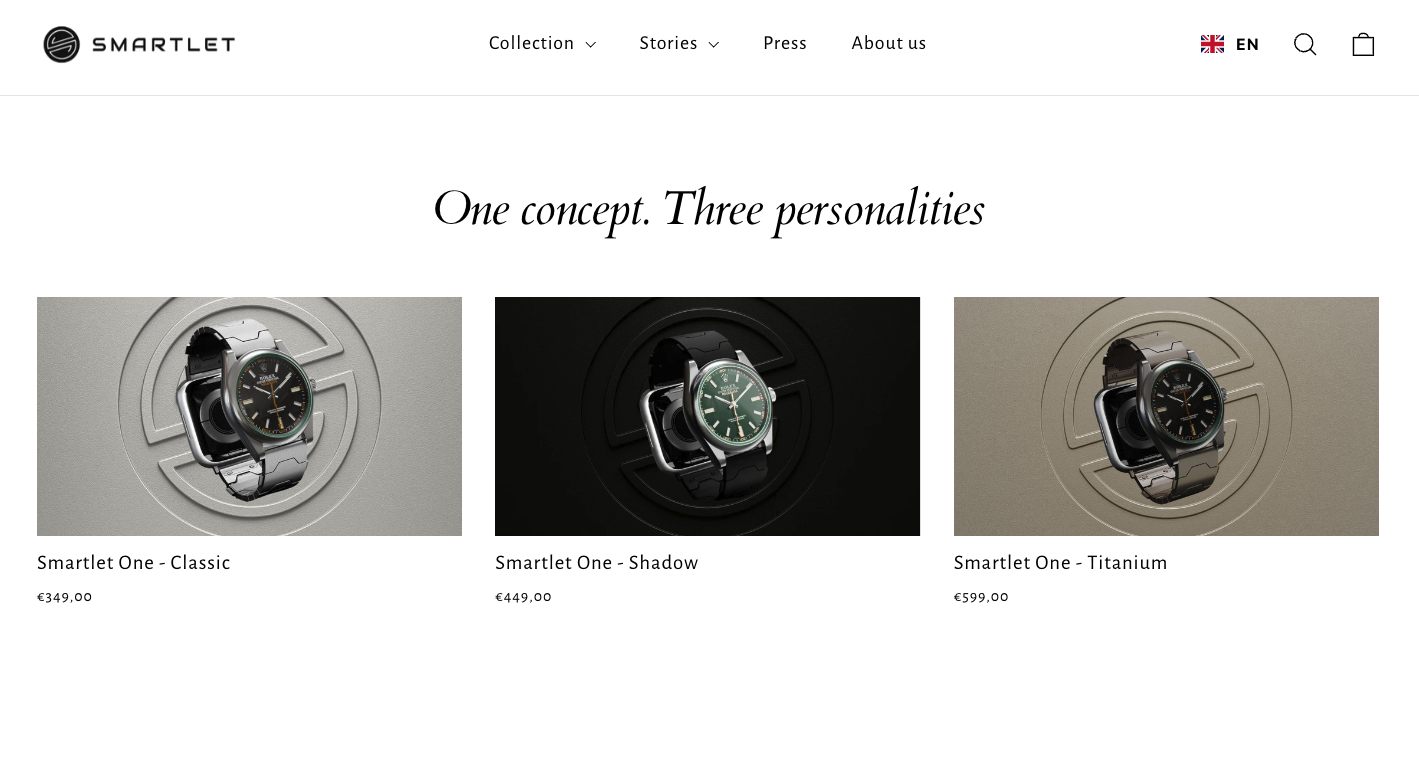
Smartlet’s patented modular band system represents three years of engineering focused on a single problem: enabling collectors to wear mechanical and smart watches simultaneously without compromise. The Classic version starts at €349, the Shadow edition at €449, and the Titanium variant at €599. Each includes reversible spring bars, installation tools, and compatibility with Apple Watch Series 0 through Ultra 3. The system works with Submariner, Datejust, Daytona, GMT-Master II, and other Rolex models using standard 20mm lug widths.
Bronze Medal recipient at Concours Lepine 2025, presented at CES 2026, and patented in the EU, US, and Japan. The Smartlet modular strap ships to the US, Canada, EU, and Japan with full compatibility documentation for your specific Rolex reference number. Additional accessories include alternative strap materials, quick-release connectors, and protective case storage designed for traveling with both watches mounted.
Verify your exact Rolex model compatibility using the detailed compatibility guide covering case dimensions, lug measurements, and recommended Apple Watch pairings. The system maintains your Rolex’s warranty status because installation requires no case modification, only standard spring bar insertion identical to changing any bracelet or strap.
FAQ
Can wearing an Apple Watch under a Rolex affect heart rate accuracy?
No, provided the Apple Watch maintains direct skin contact. The under-Rolex position preserves accuracy comparable to standard wrist wear for resting heart rate, HRV, and moderate exercise. Smartlet’s design ensures the sensor remains flush against skin, meeting the contact requirements for reliable PPG measurements. High-intensity workouts may benefit from alternative placement, but daily monitoring remains unaffected.
Is it safe to wear two watches on the same wrist without damaging the Rolex?
Yes, when using properly engineered modular bands with protective features. The reversible spring bar installation prevents metal-on-metal contact by positioning Rolex lugs in machined recesses rather than against raw steel. Regular inspection of spring bar seating and cleaning adapter surfaces preserves both watches’ finishes. Thousands of collectors wear this configuration daily without damage when following proper installation and maintenance protocols.
What are some alternatives if I don’t want to wear both watches on the same wrist?
Wear the Apple Watch on your opposite wrist for zero bulk and full accuracy. Use an armband like ActionSleeve for bicep placement, which actually improves exercise accuracy while clearing your wrist entirely for the Rolex. Smart rings provide passive resting heart rate and HRV monitoring without any wrist interference, though they lack workout zones and ECG capabilities. Each method trades specific benefits against convenience and aesthetic preferences.
How much does the Smartlet modular band cost and is it worth the investment?
Pricing ranges from €349 to €599 depending on material choice: stainless steel, PVD-coated steel, or Grade 5 titanium. The cost reflects precision machining, patented design, and materials matching luxury watch standards. For collectors who already invested five figures in a Rolex and want continuous cardiac monitoring without compromising wrist presence, the value proposition centers on eliminating the daily choice between health data and style identity. Most users report the system pays for itself by enabling them to actually use the Apple Watch they already own rather than leaving it in a drawer.


