


Double-wristing: Cultural origins and legacy in watch collecting

Founder & CEO, Smartlet - CentraleSupelec engineer - Concours Lepine 2025, Awarded - CES 2026
目次
- Origins: Function before fashion
- Celebrities and cultural moments: Documenting dual-wrist icons
- Why two watches? From GMT alternatives to status symbols
- Pro tip: Getting double-wristing right today
- The enduring appeal of double-wristing: What collectors often miss
- Explore modern double-wristing with Smartlet
- よくある質問
Key Takeaways
| ポイント | 詳細 |
|---|---|
| Origins are practical | Double-wristing began as a functional solution for military, aviation, and space operations. |
| Celebrity myths | Famous collectors like Brad Pitt and John Mayer have not regularly double-wristed despite rumors. |
| Multiple motives | People double-wrist for redundant timekeeping, multiple time zones, or as a collector's statement. |
| Modern reinventions | Today, style and modular accessories make double-wristing accessible and relevant for everyone. |
Two watches on one wrist. Before it had a name, before it had a hashtag, it was simply what you did when failure was not an option. Gemini astronauts wore one watch showing local time and another locked to Zulu. Military pilots did the same over hostile territory. The practice was not a style choice. It was an engineering solution worn on the body. Today, double-wristing carries cultural weight, collector credibility, and a surprising depth of history that most fashion conversations completely miss. This article traces where it truly started, who shaped its meaning, and why it still matters to serious watch enthusiasts in 2026.
Origins: Function before fashion
You might imagine double-wristing to be a fashion trend first starting off in a fashionable boutique or on a crowded red carpet. In reality, this has been happening for quite some time in cockpits, command tents and pressurised capsules where mechanical failures made a second watch not optional but essential.
Double-wristing has a longer history than most people realise. WWII pilots, soldiers and generals wore two watches to track multiple time zones simultaneously. General Norman Schwarzkopf wore two during the Gulf War, one for local time and one locked to command headquarters. Fidel Castro wore multiple watches as both operational tool and personal signature. Double-wristing originated in military
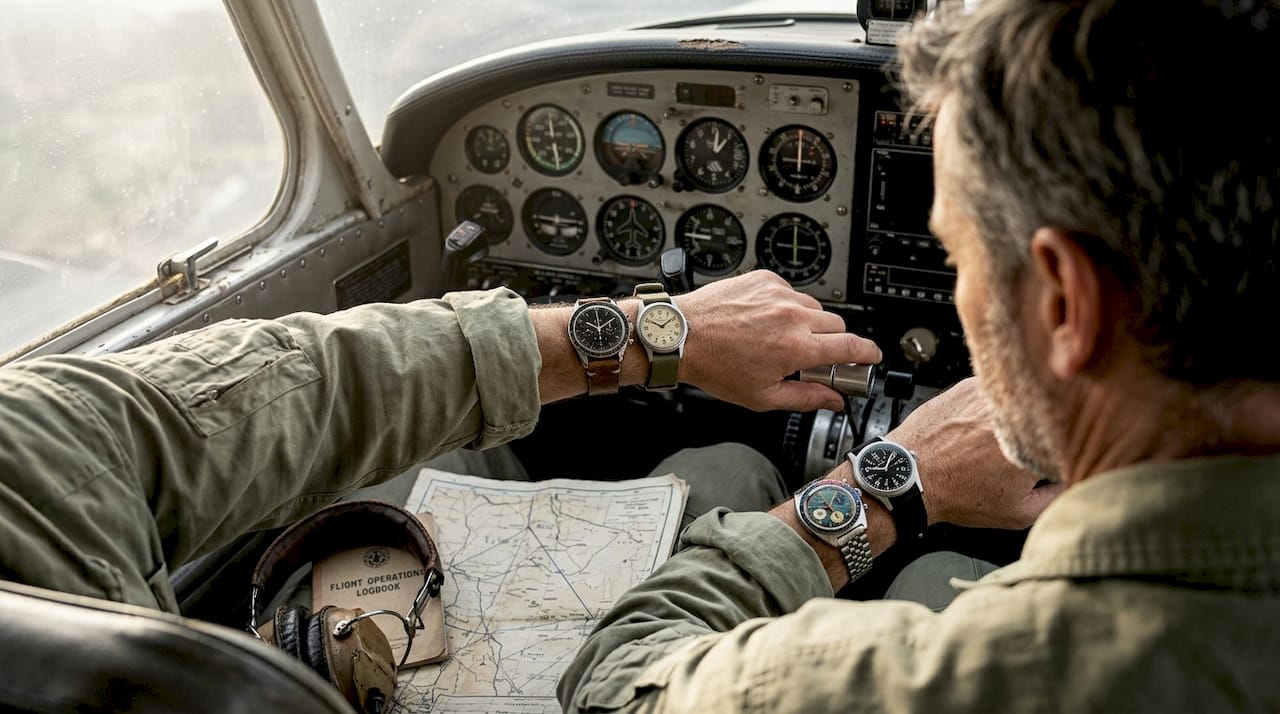
Ed White's Gemini 4 mission in 1965 remains the most documented moment in double-wristing history. During the first American spacewalk, White wore two Omega Speedmasters as NASA-mandated backup timepieces on a mission with no margin for error. The Speedmaster's place in horological history was cemented that day. Astronaut Ed White wore two Omega SpeedmastersOmega Speedmaster's dual-watch legacy
Here's a quick look at the functional origins of double-wristing across different fields:
| Era | Context | Purpose |
|---|---|---|
| WWII (1940s) | Military pilots and soldiers | Tracking multiple time zones |
| Cold War (1950s-60s) | Intelligence and command officers | Redundancy and mission timing |
| Space race (1965) | NASA astronauts, Gemini program | Backup timekeeping in zero gravity |
| Exploration (1970s-80s) | Mountaineers, deep-sea divers | Survival timing in extreme conditions |
The watch on your wrist is only as reliable as its last service. The watch on your other wrist is why you come home."The watch on your wrist is only as reliable as its last service. The watch on your other wrist is why you come home."
This was not romanticism. It was protocol. The Omega Seamaster paired with modern wearables today echoes the same logic: two sources of information, one wrist, zero compromise.
Celebrities and cultural moments: Documenting dual-wrist icons
After the protocol era defined double-wristing as a matter of operational survival, cultural icons gave it a new identity. Separating documented fact from mythology is the first step.
Double-wristing evolved from military and space origins into a collector's statement of intent. Brad Pitt appeared in two Rolexes at Cannes, and the watch press responded with near-unanimous attention. John Mayer has made it a genuine personal practice. Mark Zuckerberg may be the most visible current example, pairing an Audemars Piguet with an Apple Watch and pointing toward what high-end wristwear looks like going forward. prominent watch collector
Every example here is functional at its core. Zuckerberg wears his Apple Watch for notifications and health data, while the AP stays on his wrist as an object of serious collection. These are not arbitrary stacks built for a photograph.
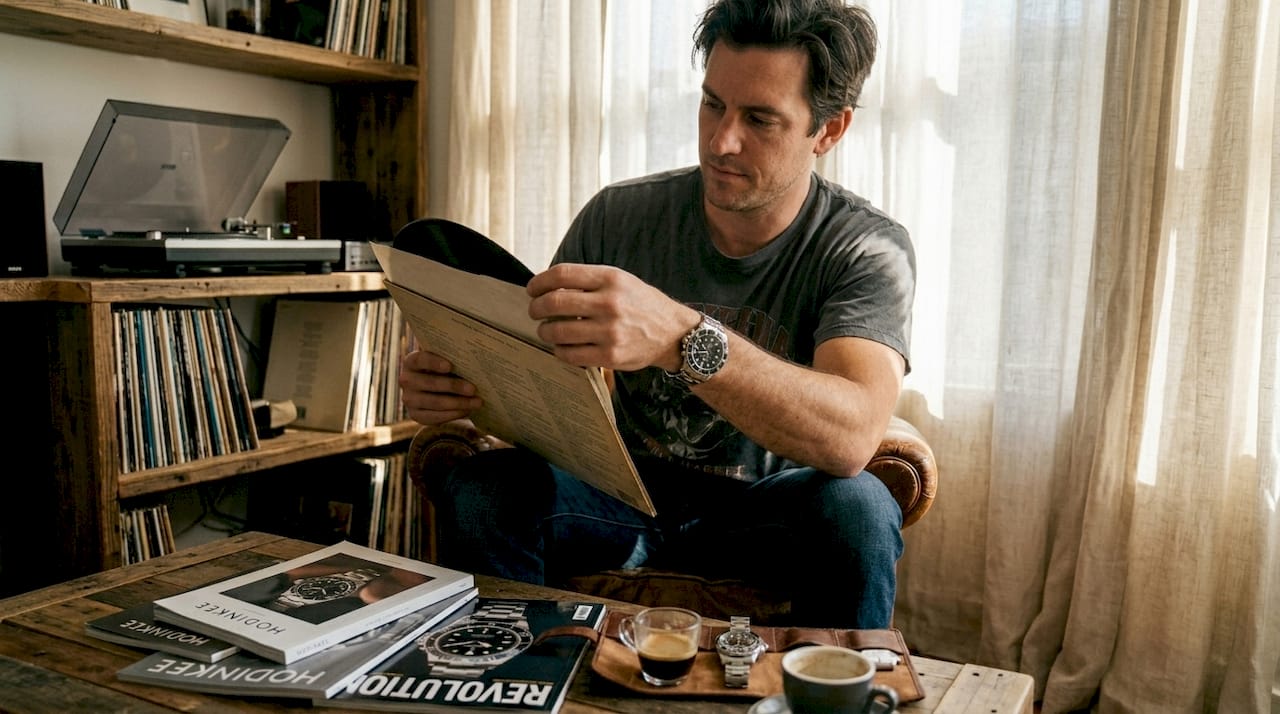
Here's how the cultural perception of double-wristing has shifted over time:
| Period | Primary association | Key figures |
|---|---|---|
| Pre-1970 | Military and aerospace necessity | Schwarzkopf, NASA astronauts |
| 1970s-1990s | Collector culture, GMT travelers | Diplomats, executives |
| 2000s-2010s | Celebrity visibility | Brad Pitt, John Mayer |
| 2020s | Mechanical + smartwatch fusion | Zuckerberg, collector community |
Double-wristing has seen a genuine resurgence among collectors, and the motivation goes beyond aesthetics. In 1965, two astronauts achieved a dual-wrist configuration that NASA later formalised with a spacesuit modification. What began as a field solution became institutional protocol. WatchPro hands-on review
- Astronauts: Local time vs. mission elapsed time
- Pilots: Home base vs. destination time zone
- Collectors: Mechanical heritage vs. digital utility
- Modern enthusiasts: Personal expression vs. practical function
Why two watches? From GMT alternatives to status symbols
Before exploring why collectors choose two watches, it helps to understand who they are. The phenomenon has its own evolution, shaped by broader shifts in watch culture over the past several decades.
The clearest practical reason for two watches is time zone management. One watch per region, each display dedicated to a single zone, eliminates the mental arithmetic that GMT complications and rotating bezels still demand. Frequent travellers, executives managing cross-continental teams, and families distributed across time zones share the same underlying need.
Redundancy remains a legitimate motivation even outside extreme environments. The case for a backup watch may be less dramatic than a 1965 space mission, but it holds in any situation where timing is critical and a single point of failure is unacceptable.
"Wearing two watches is not about having more. It is about losing nothing."
Here are the main reasons collectors and enthusiasts choose two watches:
- Time zone separation: One watch per zone, no mental math required
- Mechanical redundancy: Backup in case of failure during a critical event or expedition
- Mechanical plus digital: Combining a beloved timepiece with smartwatch health and notification features
- Collection display: Wearing two pieces from a collection to share or celebrate them
- Personal identity: A deliberate style statement rooted in horological knowledge
In 2024, global smartwatch shipments exceeded 150 million units, while mechanical watch exports from Switzerland surpassed 26 billion CHF. Both markets are growing. The wrist is becoming a platform, not just a display.
For dual time zone solutions that do not require two separate watches, a single GMT complication can handle most daily needs. But for collectors, that misses the point. The act of choosing two pieces, placing them together, and wearing them with intention is itself meaningful. The guide to wearing both mechanical and smartwatch covers how to approach this without compromise.
Pro tip: Getting double-wristing right today
Applying the lessons of history to the present, here is how you can master the art of double-wristing. The practice has evolved, and so have the tools available to do it well.
Double-wristing shifted from operational protocol to personal expression, and the best examples have always shared one quality: a clear reason behind them. Ed White's Gemini mission had one. Zuckerberg's AP and Apple Watch pairing has one. The aesthetic arrived later, once the function was already proven.
Scale matters when pairing two watches. A 44mm diver beside a 40mm dress watch creates visual tension that reads as accidental. A 42mm mechanical piece worn with a slim smartwatch or sports band signals deliberate choice. Context shapes the rest: a formal environment calls for restraint, a weekend outdoors invites more freedom.
Here is a practical checklist for modern double-wristing:
- Choose complementary sizes: Avoid pairing two large-case watches unless the look is intentional
- Consider the strap material: Leather on one wrist and rubber on the other can work well; matching metals creates cohesion
- Know your context: Formal settings favor subtlety; casual and outdoor settings allow more freedom
- Lead with function: Assign each watch a role, mechanical for heritage, smartwatch for data
- Use modern tools: Modular adapters and smart bracelets make stacking cleaner and more comfortable
Wearing a smartwatch alongside a mechanical piece is no longer seen as a betrayal of tradition. It is a practical acknowledgment that both serve different purposes. The full dual-wristing style guide for Rolex and Garmin covers specific pairings in detail, including how to mix mechanical and digital without either piece losing its identity.
The enduring appeal of double-wristing: What collectors often miss
But why does double-wristing still intrigue true enthusiasts? Here is a perspective often overlooked.
Double-wristing carries an undeserved reputation as the territory of the showy collector. That reading misses the point entirely. The collectors who practise it most thoughtfully are not broadcasting inventory. They are solving a familiar problem: no single watch does everything, and no single complication covers every need. They choose two pieces with intention, knowing exactly what each one is for.
The underlying logic is simple and old. A diver tracks elapsed minutes. A GMT traveller tracks a second time zone. Each knows what the other instrument provides and what it cannot provide. Together the two pieces form something more capable than either alone. That is the reasoning NASA applied in 1965, and the same reasoning a GMT traveller uses today.
Collectors who embrace double-wristing hold tradition and technology simultaneously without friction. That openness is what keeps horology relevant as a living practice rather than a preserved artefact. The endurance of double-wristing is not nostalgia. It is evidence that mechanical craft and modern utility have always belonged together. wearing a Rolex and Apple Watch together
Explore modern double-wristing with Smartlet
Ready to try double-wristing yourself? Here is how to make it effortless and personal with modern tools.
When most people picture double-wristing, they picture two separate watches, two separate straps, two separate buckles. Smartlet was built to change that. Founded by watch collector David Ohayon, Smartlet's modular strap adapter allows two timepieces to share a single wrist configuration without modification to either watch. The patented adapter is available in brushed SS316L steel and ultra-light Grade 2 titanium, the same grade used in Omega Speedmaster cases.
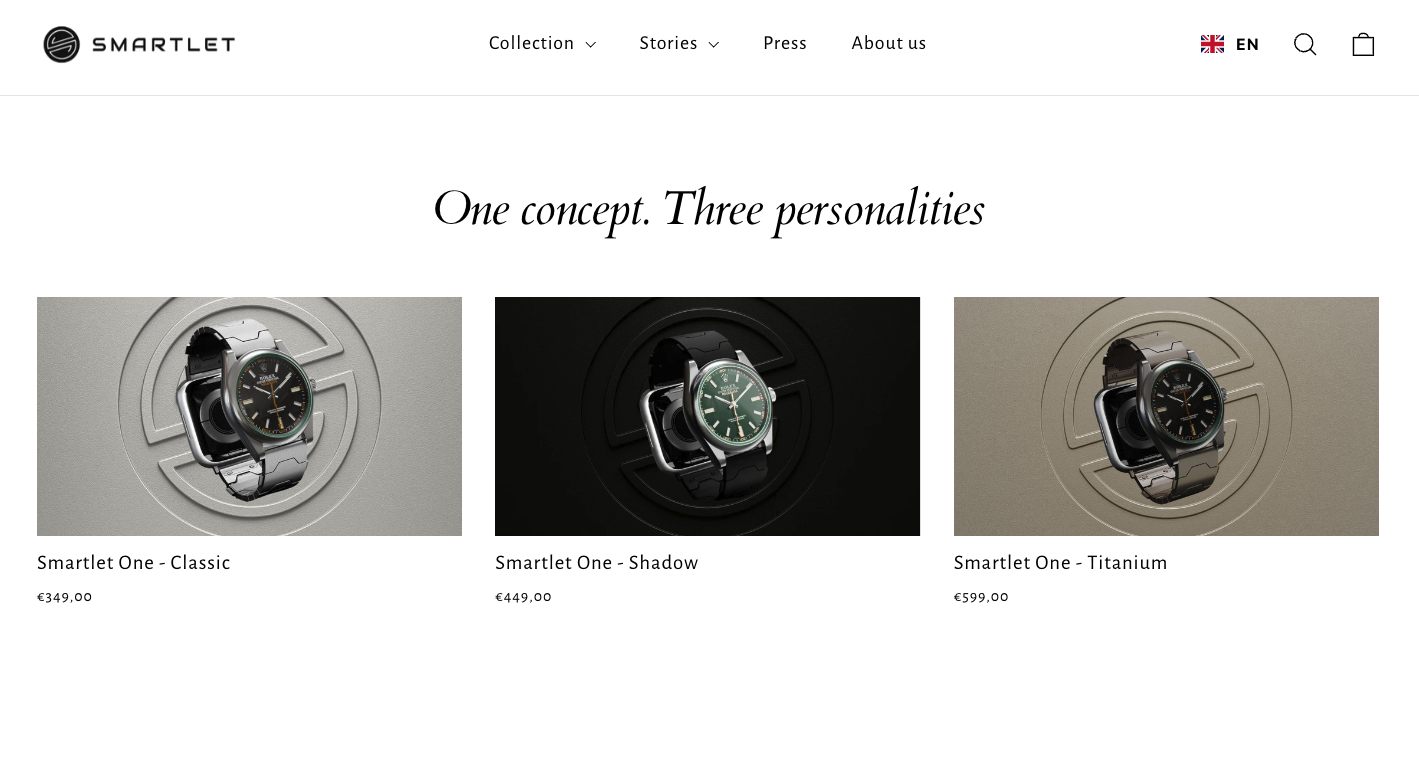
The Smartlet modular strap fits any watch with 18 to 24mm lug width and requires no modification to the timepiece. Three versions are available: Classic at 349 EUR, Shadow at 449 EUR, and Titanium at 599 EUR. The full accessories range and a compatibility guide covering all major watch brands are available on the Smartlet website. What two spring bars and a NASA mandate started in 1965, Smartlet continues with precision engineering. Smartlet modular strapSmartlet One accessoriescompatibility guide covering all major brands
よくある質問
Why did people double-wrist before smartwatches existed?
Before smartwatches, double-wristing provided backup timekeeping and allowed users to track multiple time zones simultaneously, a critical requirement for military operations, aviation, and space missions where a single point of failure was unacceptable.
Is double-wristing practical for collectors today?
Yes, it remains practical for backup reliability or as a deliberate statement, though for most daily use, a GMT or world-timer complication can handle multiple time zones without a second watch. Explore the complete lug width guide to find compatible combinations.
Which watches are most iconic for double-wristing?
Three references define the visual language of double-wristing: the Omega Speedmaster from the space programme, the Rolex GMT-Master from aviation, and the Patek Philippe Calatrava from classic collector culture. The Omega compatibility pages show exactly how the Speedmaster pairs with today's connected timepieces. space exploration, aviationOmega compatibility page
Did Brad Pitt or John Mayer ever double-wrist?
Brad Pitt photographed in two Rolex watches at Cannes brought double-wristing into mainstream consciousness in a single image. John Mayer has made it a consistent personal practice. Both treat their watches as objects of genuine collection, not accessories chosen for effect.
注目記事
該当する人物が見つかりませんでした
その用語では何も見つかりませんでした。もう一度お試しください。


