


El equilibrio entre el ECG del Apple Watch y el prestigio mecánico, resuelto

Fundador y CEO, Smartlet - Ingeniero CentraleSupelec - Concours Lepine 2025, Galardonado - CES 2026
Tabla de contenidos
- El dilema del cardiólogo: encanto mecánico frente a salud digital
- Cómo el ECG del Apple Watch mejora el monitoreo de la salud cardíaca
- Lo que los relojes mecánicos siguen ofreciendo
- Comparación entre el ECG del Apple Watch y los relojes mecánicos
- Usar ambos sin compromisos
- Cómo Smartlet lo resuelve
- Preguntas frecuentes
Conclusiones clave
| Punto | Detalles |
|---|---|
| Dos mundos en tensión | El prestigio mecánico y el monitoreo digital de la salud sirven necesidades diferentes pero igualmente válidas para los clínicos que coleccionan relojes |
| Utilidad del ECG del Apple Watch | Un ECG de una sola derivación de 30 segundos proporciona datos que impulsan una evaluación clínica oportuna - validado como dispositivo médico Clase II por la FDA |
| El uso dual resuelve la elección | Las correas modulares permiten a los profesionales sanitarios llevar ambos dispositivos a la vez sin renunciar a la función ni a la estética |
| Los relojes mecánicos señalan autoridad | Los relojes tradicionales transmiten experiencia y herencia en las interacciones con pacientes y colegas de una manera que ningún smartwatch replica |
Entras en la sala de consulta llevando un Patek Philippe Calatrava. Tu paciente te pregunta sobre el Apple Watch ECG que su vecino jura que funciona. Sabes exactamente cómo se ve la fibrilación auricular en un trazo de una sola derivación. También sabes lo que un movimiento mecánico señala sobre la precisión y la permanencia. La tensión es real: un reloj monitorea tu corazón, el otro define tu identidad profesional.
Un reloj mide tu pulso y el otro determina tu profesión. No tienes que elegir cuál usar.
El dilema del cardiólogo: encanto mecánico frente a salud digital
Todos esos años leyendo tiras de ritmo han valido la pena porque ahora tu reloj cuenta más que la hora. Representa un nivel de competencia, una comprensión de la mecánica, las técnicas de fabricación y la tradición. Una tradición que tiene siglos de antigüedad y es mucho más humana que la eficiencia fría del cuarzo. El reloj en tu muñeca, ya sea un Lange 1 o un Calatrava, dice que has logrado una precisión de funcionamiento que está más allá de toda medida.
El Apple Watch ECG captura electrocardiogramas de una sola derivación, identifica ritmos irregulares consistentes con fibrilación auricular y registra la variabilidad de la frecuencia cardíaca durante todo el día. Para un cardiólogo, estos son datos clínicamente relevantes - los mismos que ordenarías para un paciente, ahora disponibles continuamente en tu propia muñeca.
El reloj en tu muñeca es un artículo personal. Puede ser emocional y más que solo un accesorio de moda. La belleza de un reloj mecánico no puede ser reemplazada por la tecnología de un smartwatch. Recuerda tu primer tourbillon girando o girando el bisel de un reloj automático por primera vez. Ver la belleza de la decoración guilloché en la esfera mientras mueves el reloj una y otra vez.
Estas son las cosas que nos conectan con nuestro reloj y nos recuerdan sus muchas funciones más allá de solo mostrar la hora. Llevar el reloj en tu muñeca y a veces extrañarlo después puede ser parte de su encanto. Un encanto que te perderás cuando cambies a usar un smartwatch. Dejando una parte de ti atrás.
El Apple Watch ECG tiene utilidad clínica documentada. Un análisis publicado en JAMA encontró que detecta de manera confiable la fibrilación auricular paroxística en usuarios asintomáticos - facilitando el diagnóstico temprano y permitiendo ajustes en el plan de tratamiento. Como cardiólogos, recomendamos monitoreo ambulatorio a los pacientes. La disonancia cognitiva de no aplicar el mismo estándar a nosotros mismos vale la pena reconocer.
- Herencia y artesanía: los movimientos mecánicos representan siglos de refinamiento y habilidad manual
- Señalización profesional: los relojes tradicionales transmiten autoridad y atención al detalle en entornos clínicos
- Cultura coleccionista: las comunidades de relojería valoran la rareza, la procedencia y la complejidad mecánica
- Conexión emocional: cada reloj lleva historia personal y satisfacción estética
- Valor de inversión: los relojes mecánicos de casas establecidas se aprecian con el tiempo
El cardiólogo que usa tanto un Calatrava como un Apple Watch no está cubriendo apuestas entre dos mundos. Está reconociendo que la ingeniería de precisión existe en ambos lados de la esfera.
Cómo el ECG del Apple Watch mejora el monitoreo de la salud cardíaca
El Apple Watch ECG ha sido autorizado por la FDA como dispositivo médico Clase II. La aplicación ECG del Apple Watch utiliza los electrodos en la Digital Crown y la parte posterior del Apple Watch para registrar un electrocardiograma de una sola derivación de 30 segundos (ECG) que luego se analiza usando un algoritmo para determinar si hay patrones consistentes con fibrilación auricular, la arritmia sostenida más común y un factor de riesgo significativo para accidente cerebrovascular.
La tecnología para tomar un ECG ha estado disponible en el campo médico durante algún tiempo y la aplicación ECG del Apple Watch es una herramienta de detección validada que ha sido probada en múltiples estudios clínicos demostrando su valor en la práctica clínica.
Los casos del mundo real documentan el impacto del dispositivo. Los usuarios asintomáticos recibieron alertas, buscaron evaluación y descubrieron arritmias previamente no diagnosticadas.
Un estudio de 450,000 participantes encontró que las notificaciones de ritmo irregular llevaron a diagnósticos de fibrilación auricular en el 34% de aquellos que hicieron seguimiento con atención médica. Los datos del ECG del Watch son accionables.
Ya sabemos que el Apple Watch puede rastrear la VFC (variabilidad de la frecuencia cardíaca) y las tendencias de la frecuencia cardíaca en reposo, así como mediciones de aptitud cardiovascular como el VO2 máximo estimado. Ahora ha sido confirmado por Apple que el Apple Watch puede rastrear la variabilidad de la frecuencia cardíaca. Una caída rápida en la variabilidad de la frecuencia cardíaca (la variación entre latidos) puede ser un indicador de sobreentrenamiento, estrés o incluso que estés enfermándote.
Una frecuencia cardíaca en reposo elevada a lo largo del tiempo también puede ser un signo de infección activa o disfunción autonómica. Nuestros pacientes pueden obtener lecturas actualizadas de su VFC y frecuencia cardíaca en reposo cada día a través de su Apple Watch. Ahora tú también puedes beneficiarte de estas lecturas y ser más consciente de las señales de alerta de tu cuerpo sobre estrés fisiológico que pueden ayudarte a prevenir potencialmente problemas.
- El monitoreo pasivo elimina la necesidad de recordar verificaciones puntuales
- Los datos históricos revelan patrones invisibles en mediciones únicas
- La integración con registros de salud agiliza la documentación clínica
- Las alertas en tiempo real permiten una respuesta inmediata a cambios significativos
- Las tendencias longitudinales informan modificaciones del estilo de vida y ajustes de medicamentos
El Apple Watch no es un ECG de 12 derivaciones ni un monitor Holter. Se sitúa entre visitas a la clínica. Un argumento semántico para un cardiólogo - una herramienta de detección es diferente a una herramienta de diagnóstico - pero en el nuevo mundo del descubrimiento temprano, la capacidad de encontrar problemas antes de que se conviertan en síntomas es una ventaja.
Lo que los relojes mecánicos siguen ofreciendo
La relojería es una tradición europea que se remonta al siglo XVI. Un movimiento de reloj mecánico básico está compuesto por varios cientos de piezas mecánicas que todas deben ser cuidadosamente ensambladas a mano y luego reguladas a una precisión de segundos por día - una tolerancia de 12 segundos por hora o un minuto por 72 horas a menudo se busca, no tanto por practicidad sino para ejercer control sobre las fuerzas inevitables de la naturaleza, la ciencia de materiales y la fricción.
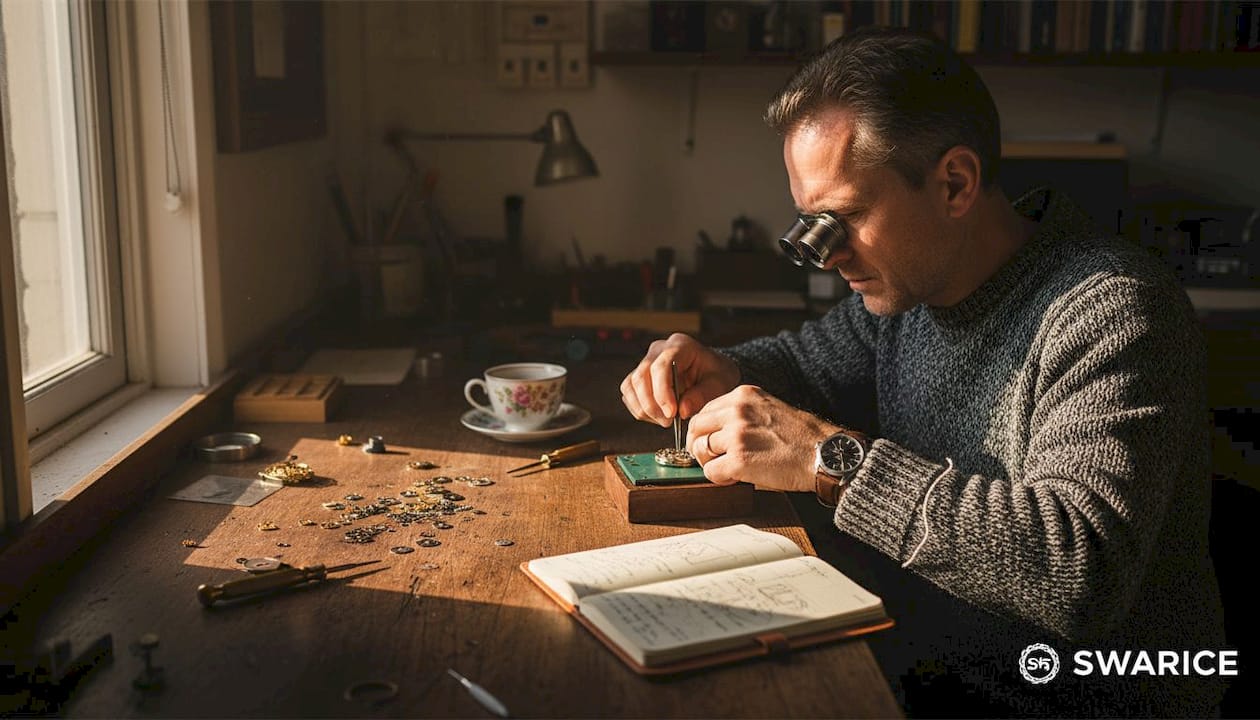
El prestigio se trata de escasez y herencia. Por eso la filosofía de Patek Philippe, A. Lange & Söhne y Vacheron Constantin se reduce a las mismas pocas palabras: menos relojes y más tiempo dedicado a su producción. Que este reloj exista en absoluto se debe a la tradición y al hecho de que muchas personas estuvieron dispuestas a renunciar a innumerables otros modelos para preservar este clásico. El Calatrava es, por lo tanto, un reloj para aquellos que desean demostrar su riqueza y estilo de una manera más discreta - en todos los aspectos, hasta el último detalle.
Así que la cultura coleccionista. A primera vista, esto es lo que viene a la mente: números de referencia, calibres y años de producción que son importantes para los coleccionistas. Pero también subastas, boutiques y foros en línea donde la relojería y toda su complejidad se discuten extensamente. En resumen, este es un entorno donde no es fácil entrar si no eres un conocedor. Y es precisamente aquí donde el reloj mecánico puede jugar un papel como abridor de puertas, por así decirlo, permitiendo la comunicación mutua entre coleccionista y no coleccionista.
Los relojes mecánicos pueden considerarse como reliquias familiares. El movimiento del reloj puede durar décadas y en el mejor de los casos siglos. Puedes darle tu Lange 1 a tus hijos y en 2076 seguirá marcando la hora perfecta. Un smartwatch será obsoleto en unos pocos años. Necesita actualizaciones, carga y está conectado al mundo digital para funcionar. El reloj mecánico no.
- Artesanía tangible: los movimientos visibles muestran la ingeniería como escultura
- Moneda social: las marcas reconocidas transmiten gusto y éxito en entornos clínicos
- Longevidad: los relojes mecánicos superan los dispositivos electrónicos por generaciones
- Autonomía: sin dependencia de baterías, software o conectividad de red
- Potencial de inversión: los modelos raros se aprecian significativamente con el tiempo
Comparación entre el ECG del Apple Watch y los relojes mecánicos
Un sistema de monitoreo fisiológico y un reloj mecánico no son intercambiables - son complementarios. Para el cardiólogo que valora ambos, reconocer esa distinción elimina el falso dilema de tener que elegir entre ellos.
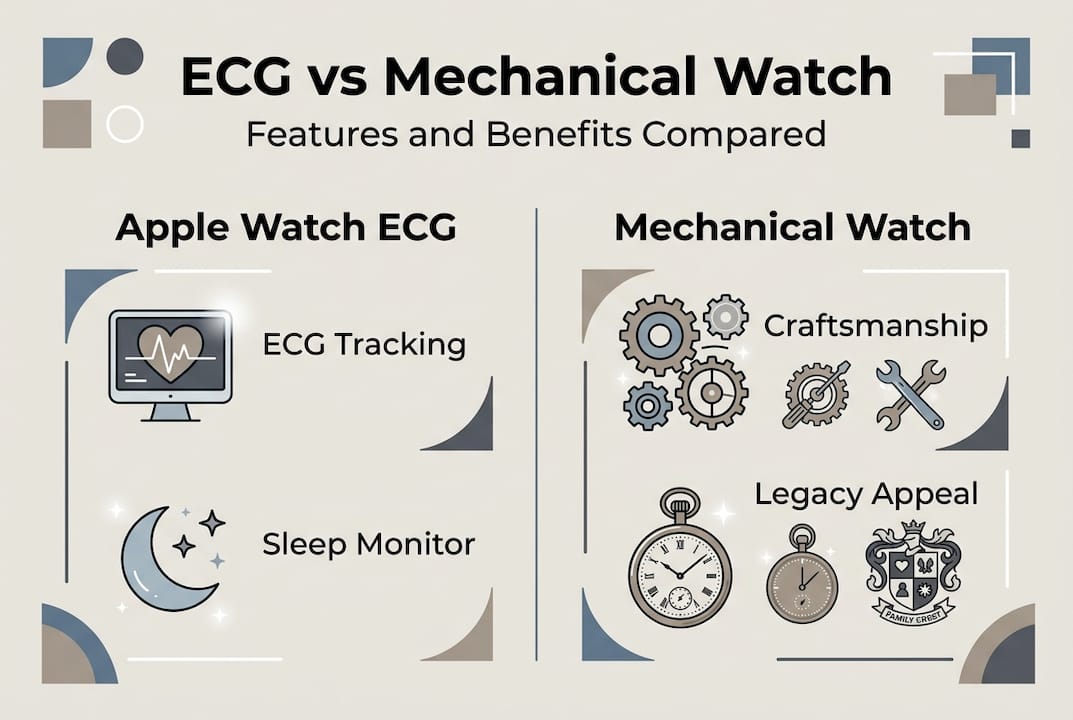
| Característica | ECG del Apple Watch | Reloj mecánico |
|---|---|---|
| Monitoreo de salud | ECG de una sola derivación, frecuencia cardíaca, VO2 máximo, alertas de ritmo irregular | Ninguno |
| Duración de la batería | 18-36 horas, requiere carga diaria | Infinita con cuerda o movimiento de muñeca |
| Precisión | Sincronización de reloj atómico vía celular/Wi-Fi | +/- 2-10 segundos/día según el movimiento |
| Prestigio | Orientado a la tecnología, funcional, producción en masa | Marcas de herencia, producción limitada, artesanía artesanal |
| Longevidad | 3-5 años antes de la obsolescencia | Décadas a siglos con mantenimiento adecuado |
| Valor cultural | Señala conciencia de la salud y modernidad | Señala gusto, éxito y apreciación por la tradición |
La comodidad es en gran medida un producto del diseño de la correa y la distribución del peso del reloj sobre la muñeca. Dos relojes podrían parecer una carga terrible de usar, pero con el diseño adecuado no deberían ser demasiado grandes. En última instancia, se reduce a la compatibilidad del ancho de las asas. La mayoría de los relojes de vestir tienen asas de 18 a 20 mm, y afortunadamente el sistema Smartlet acomodará anchos de asa de 18 a 24 mm, cubriendo todo desde un Rolex hasta un Lange.anchos de asa. La mayoría de los relojes de vestir usan asas de 18-20 mm. El sistema de Smartlet acomoda 18-24 mm, cubriendo marcas desde Rolex hasta Lange.
Las reglas de diseño en funcionamiento. El reloj mecánico encima del Apple Watch se ve solo y solo como un reloj mecánico normal. Sin importar la hora del día o de la noche, el Calatrava transmite datos de signos vitales las 24 horas. Los pacientes que usan un reloj Calatrava no son conscientes del hecho de que su sensor ECG del Apple Watch siempre está escaneando su muñeca.
Usar ambos sin compromisos
La correa modular Smartlet es un brazalete de eslabones de metal patentado que sujeta ambos relojes. El reloj mecánico recibe dos adaptadores de reloj en los orificios de sus asas, en lugar de los pasadores. El Apple Watch se desliza en su propio adaptador en la parte central del brazalete, de modo que sus sensores siguen en contacto con la piel y quien lo lleva conserva todas las funciones del Apple Watch.
El sistema funciona porque respeta ambos dispositivos. El Apple Watch necesita contacto con la piel para la precisión del ECG y la frecuencia cardíaca. El reloj mecánico necesita visibilidad y protección. La correa modular posiciona el Apple Watch en la parte inferior de la muñeca, el reloj mecánico en la parte superior - cada uno en su posición óptima.
- Elige un reloj mecánico con ancho de asa de 18-20 mm para máxima compatibilidad
- Verifica la compatibilidad de tu modelo de Apple Watch antes de seleccionar un adaptador
- Ajusta la tensión de la correa para asegurar el contacto del sensor sin restringir la circulación
- Rota las posiciones de uso si se produce fatiga de muñeca durante el uso prolongado
- Limpia ambos relojes regularmente para prevenir irritación de la piel por humedad atrapada
El resultado práctico: una esfera de reloj mecánico visible en todo momento en la clínica, mientras el Apple Watch recopila datos de frecuencia cardíaca, sueño, actividad y ECG continuamente debajo - sin interferir con el funcionamiento regular de ninguno de los dos dispositivos.
El seguimiento del bienestar y el monitoreo de la salud para ECG no son las únicas cosas que uno querría tener en un Apple Watch. El Apple Watch también puede rastrear tu sueño, la intensidad de los entrenamientos y tu quema diaria de calorías. Los cardiólogos ocupados tienen cargas de trabajo muy pesadas para manejar mientras equilibran el tiempo en el quirófano, el tiempo con pacientes y rondas en el hospital.
El Apple Watch puede ayudar a alertarlos sobre problemas que pueden necesitar ser abordados en la sala de recuperación antes de que surjan problemas. Mientras tanto, el humilde reloj mecánico continúa siendo el mismo reloj hermoso e inmutable que siempre ha sido: tan preciso como puede ser, tan elegante e imperturbable por la necesidad de actualizar.
Cómo Smartlet lo resuelve
Smartlet fue creado por David Ohayon después de años de usar un reloj mecánico en una muñeca y un smartwatch en la otra. Concours Lepine 2025, Galardonado - CES 2026. El sistema patentado se ajusta a relojes de 18 a 24 mm de ancho de asa - compatible con Omega, Patek Philippe, A. Lange & Sohne y la mayoría de marcas mecánicas de lujo.
Tres versiones del brazalete Smartlet responden a distintas prioridades de coleccionista. El Classic (299 EUR) en SS316L cepillado combina con cajas de acero. El Shadow (399 EUR) con PVD negro va con esferas oscuras. El Titanium (549 EUR) en titanio grado 2: a igual volumen, el titanio pesa unos 4,5 g/cm3 frente a 7,9 g/cm3 del acero 316. Medalla de bronce en el Concours Lépine 2025, CES 2026.
Recomendado
- Cómo el monitoreo cardíaco del smartwatch salva vidas
- Cómo funcionan los sensores del smartwatch: por qué la orientación es irrelevante
- Cómo usar un smartwatch con un reloj de lujo de forma segura
- Compatibilidad del Apple Watch con Smartlet
- Omega Seamaster y Apple Watch: uso dual 2026
- Descubre Smartlet One
Artículos destacados
No people found
We couldn’t find anything with that term. Please try again.


