


Cómo llevar un reloj vintage y un smartwatch juntos

Fundador y CEO, Smartlet - Ingeniero CentraleSupelec - Concours Lepine 2025, Galardonado - CES 2026
Tabla de contenidos
- Por qué los coleccionistas quieren relojes vintage y smartwatches
- Presentación de pulseras modulares: El sistema Smartlet
- Comparación de apilamiento, doble muñeca y adaptadores vintage
- Consejos prácticos, casos especiales y asesoramiento experto sobre llevar ambos
- Por qué las soluciones híbridas de relojes marcan una nueva era
- Explora soluciones Smartlet para coleccionistas
- Preguntas frecuentes
Puntos clave
| Punto | Detalles |
|---|---|
| Apila ambos relojes | Las pulseras modulares como Smartlet permiten a los coleccionistas llevar un reloj vintage y un smartwatch en una sola muñeca con estilo. |
| Comprende la compatibilidad | Smartlet se ajusta a la mayoría de relojes con asas de 18-24 mm y smartwatches principales, pero verifica el tamaño de la muñeca y las especificaciones del modelo. |
| Minimiza el riesgo | El apilamiento corre el riesgo de rayar y aumentar el volumen; utiliza consejos prácticos para mantener ambos relojes seguros y protegidos durante el uso diario. |
| Elige el método correcto | La doble muñeca mantiene los relojes impecables; el apilamiento modular equilibra la tradición, la tecnología y la conveniencia. |
El Rolex 5513 Submariner que se queda en un cajón tres días a la semana no es una colección. Es almacenamiento. Muchos coleccionistas conocen esta sensación: pasaste años buscando la esfera correcta, la pátina correcta, la procedencia correcta, y luego lo usas dos veces al año porque tienes miedo de rayarlo. Mientras tanto, tu Apple Watch se queda en tu muñeca porque necesitas los datos de salud, las notificaciones, el GPS. La elección parecía real y permanente. No lo es. La tecnología de pulsera modular, y específicamente el sistema Smartlet, ahora hace posible llevar tanto un reloj mecánico vintage como un smartwatch en la misma muñeca, todos los días, sin comprometer ninguno de los dos.
Por qué los coleccionistas quieren relojes vintage y smartwatches
Los relojes mecánicos vintage llevan algo que ningún algoritmo puede replicar. Un Omega Seamaster de los años 60, un Heuer Carrera 2447, un Rolex 1680 con esfera de texto Submariner rojo: estos objetos contienen historia en sus movimientos. Los coleccionistas no los compran por precisión en la medición del tiempo. Los compran por lo que representan.orígenes de la doble muñeca
Pero los smartwatches se han vuelto genuinamente útiles de formas que son difíciles de ignorar. Seguimiento del sueño, monitoreo de la frecuencia cardíaca, lecturas de ECG, conteo de pasos, alertas de mensajes: estas características afectan la calidad de vida diaria de formas medibles. Renunciar a ellas para llevar una pieza vintage es un compromiso real, no uno trivial.
Esto es lo que la mayoría de los coleccionistas realmente quieren:
- La artesanía y el patrimonio de un reloj mecánico en exhibición
- Las características de salud y conectividad de un smartwatch funcionando en segundo plano
- Cero modificación en su caja o pulsera vintage
- Una solución que se vea intencional, no improvisada
Las opciones tradicionales eran limitadas. Podías alternar relojes día a día, lo que significaba que tu pieza vintage se quedaba sin usar la mayor parte del tiempo. Podías intentar la doble muñeca, un reloj por muñeca, que funciona pero se siente incómodo para muchas personas y aún te obliga a elegir qué muñeca obtiene qué reloj.doble muñeca
Llevar ambos es común entre los coleccionistas para funcionalidad completa, pero requiere dos muñecas y aún deja un reloj sintiéndose secundario.
El cambio real llegó cuando los sistemas de pulsera modular entraron en juego.
Presentación de pulseras modulares: El sistema Smartlet
Smartlet no es un hack de correa. Es un sistema de pulsera de precisión construido en acero inoxidable SS316L cepillado o titanio de Grado 2, diseñado para sostener dos relojes en una sola muñeca simultáneamente. El sistema posiciona tu reloj mecánico en la parte superior y tu smartwatch debajo, asegurados por cierres de doble bloqueo que no requieren herramientas para operar.sistema de pulsera Smartlet
La física importa aquí. El smartwatch bajo la muñeca, en la parte central del brazalete, equilibra el peso del reloj mecánico que está encima, lo que reparte la carga de forma más uniforme que un solo reloj pesado.
Especificaciones clave que vale la pena conocer:
- Compatibilidad de asas: 18 mm a 24 mm, se ajusta mediante barra de resorte estándar sin modificación de caja.Compatibilidad de asas:
- Materiales: acero SS316L cepillado para las versiones Classic y Shadow, titanio de Grado 2 para la versión Titanium.Materiales:
- Espesor añadido: 9 a 12 mm en total
- Compatibilidad de smartwatch: Apple Watch, Garmin y la mayoría de marcas de relojes conectados principales.Compatibilidad de smartwatch:
- Precios: Classic a 299 EUR, Shadow a 399 EUR, Titanium a 549 EUR.Precios:
El sistema Smartlet incluye cierres de seguridad dual e intercambio sin herramientas en segundos, compatible con Rolex, Omega, Apple Watch y Garmin. El concepto fue presentado en CES 2026 y ganó una Medalla de Bronce en Concours Lepine 2025.intercambio sin herramientas en segundospulsera de reloj innovadora
| Versión | Material | Precio (EUR) | Peso añadido |
|---|---|---|---|
| Classic | Acero SS316L cepillado | 299 | ~80g |
| Shadow | Acero SS316L con PVD negro | 399 | ~80g |
| Titanium | Titanio de Grado 2 | 549 | ~60g |
Al colocar los adaptadores de reloj Smartlet en un reloj vintage, use la herramienta para pasadores incluida en la caja e inspeccione el desgaste de los orificios de las asas antes de la instalación. Las cajas vintage de los años 1960 y 1970 a veces tienen asas de metal más blando que las referencias modernas. Un ajuste preciso importa.
La reseña de CNET de Smartlet describe la experiencia como sorprendentemente cómoda. El sistema se siente más ligero en la muñeca de lo que la mayoría de la gente espera.reseña de CNET de Smartlet

Comparación de apilamiento, doble muñeca y adaptadores vintage
No todas las soluciones se ajustan a todos los coleccionistas. Comprender los compromisos reales te ayuda a elegir el enfoque correcto para tus relojes específicos y tu estilo de vida.
Los adaptadores heredados, del tipo que adjunta un módulo de smartwatch a una correa de reloj tradicional o a la parte posterior de la caja, están en su mayoría descontinuados y no son viables para piezas vintage. A menudo requerían modificaciones de caja, perforación o adhesión, ninguno de los cuales es aceptable para una referencia coleccionable.en su mayoría descontinuados y no viables para vintage
La doble muñeca es una alternativa común entre los coleccionistas que quieren funcionalidad completa de ambos relojes. Mantiene cada pieza impecable e intacta. La desventaja es que puede sentirse socialmente incómodo, y muchas personas encuentran incómodo llevar un reloj en su muñeca no dominante para tareas diarias.
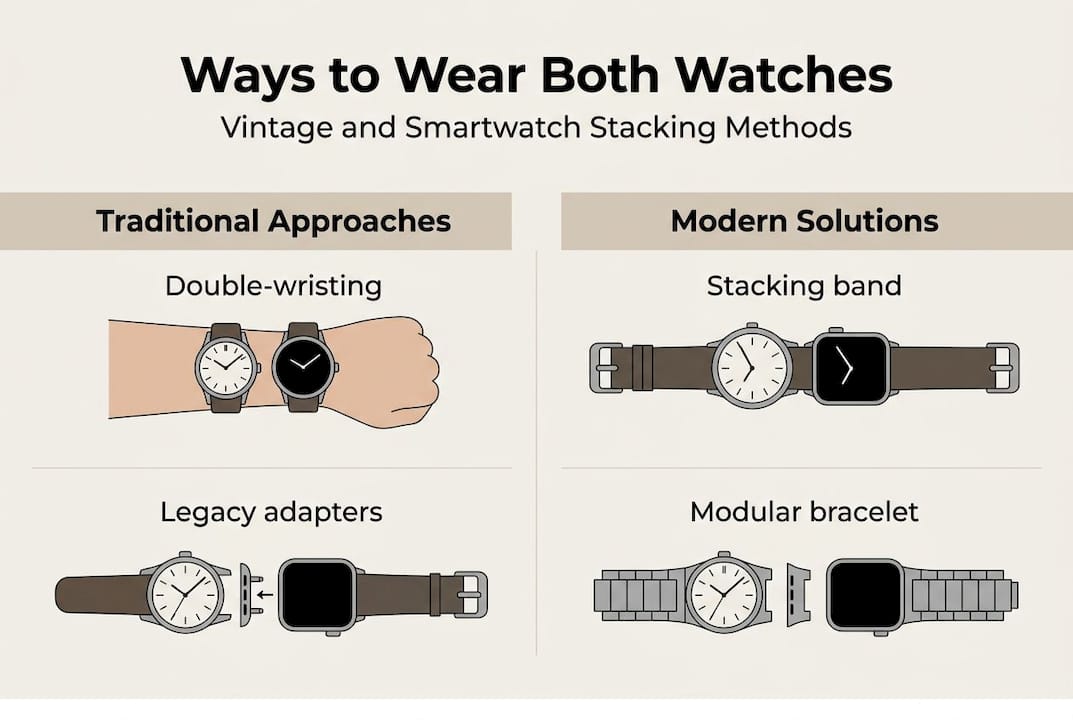
Así es como se comparan los tres enfoques principales:
| Método | Ventajas | Desventajas | Rango de precio | Riesgo para vintage |
|---|---|---|---|---|
| Pulsera modular (Smartlet) | Ambos relojes, una muñeca, uso diario | Añade 9-12 mm de espesor, 60-100 g | 299-549 EUR | Bajo, sin modificación |
| Doble muñeca | Cero volumen, ambos relojes impecables | Se necesitan dos muñecas, puede sentirse incómodo | Gratis | Ninguno |
| Adaptadores heredados | Bajo costo históricamente | Descontinuados, riesgo de modificación | Varía | Alto |
- Smartlet requiere una circunferencia de muñeca mínima de 16 cm para un ajuste seguro y cómodo.
- La doble muñeca funciona mejor cuando ambos relojes tienen anchos de asa y perfiles de correa similares.
- Los adaptadores heredados deben evitarse completamente para cualquier reloj con valor de colección o reventa.
"Protege tu pieza vintage y tu smartwatch eligiendo un método que no modifique permanentemente ninguna caja de reloj."reloj vintage y smartwatch de forma segura
La reseña de Smartlet en A Blog to Watch señala que el sistema está genuinamente diseñado para coleccionistas que quieren ambos relojes activos simultáneamente, no solo exhibidos.conectando relojes
Consejos prácticos, casos especiales y asesoramiento experto sobre llevar ambos
El uso diario con dos relojes apilados requiere un poco de atención, especialmente en la primera semana. Los riesgos son reales pero manejables una vez que sabes qué buscar.
El problema más común es el contacto con el escritorio. Cuando apoyas tu muñeca en una superficie dura, el reloj inferior puede presionar contra el borde del escritorio. Esto rara vez es un problema para el smartwatch en sí, pero verificar los cierres de seguridad antes de cada uso es un hábito sensato.
La funcionalidad del sensor es una pregunta común. El sistema se siente más ligero de lo esperado y los sensores funcionan correctamente siempre que el smartwatch no esté invertido. Las lecturas de ECG requieren contacto con la piel en el lado correcto, por lo que la orientación importa.
Lista de verificación práctica para uso diario de doble reloj:
- Verifica la compatibilidad del ancho de asa antes de comprar cualquier sistema modular.Verifica la compatibilidad del ancho de asa
- Inspecciona las barras de resorte en relojes vintage cada 3 a 6 meses
- Limpie el brazalete y los fondos de caja con regularidad para evitar acumulaciones bajo el smartwatch.
- Verifica que los cierres de seguridad estén completamente enganchados antes de salir de casa.Verifica los cierres de seguridad
- Para actividades de alto impacto, mantén tu Apple Watch en su correa estándar para esa sesión.Para actividades de alto impacto,
| Trampa | Nivel de riesgo | Prevención |
|---|---|---|
| Contacto con escritorio | Medio | Ajusta el ángulo de la muñeca, usa almohadilla de escritorio |
| Fallo de barra de resorte en vintage | Bajo con inspección | Verificaciones regulares, barras de calidad |
| Inversión de sensor | Bajo | Mantén la cara del smartwatch hacia la muñeca |
| Desajuste de asas | Medio | Verifica especificaciones antes de comprar |
La reseña de Yanko Design destaca que el enfoque de Smartlet hace que llevar ambos relojes se sienta natural en lugar de forzado. Para orientación específica sobre técnicas de Rolex y Apple Watch, la cobertura de prensa de Smartlet explora configuraciones reales en detalle.reseña de Yanko Designtécnicas de Rolex y Apple Watch
Por qué las soluciones híbridas de relojes marcan una nueva era
Hay un cierto tipo de coleccionista que ve cualquier adaptación como una traición del oficio. Esa posición es comprensible. La cultura de relojes vintage siempre ha valorado la pureza: esferas originales, cajas sin pulir, movimientos intactos. Pero ese marco pierde un punto clave.
Pero la etiqueta del coleccionista está evolucionando. El Heuer Carrera 2447 en tu muñeca no se ve disminuido por los datos de salud que se ejecutan debajo. Si acaso, llevarlo diariamente lo honra más que mantenerlo en un cajón.
Esquire llamó al concepto de Smartlet innovador pero señaló que se lee como incómodo o futurista para algunos observadores, posicionándolo como una solución de nicho para coleccionistas que quieren evitar la doble muñeca. Esa es una lectura justa. No todos los coleccionistas lo adoptarán. Pero los que lo hacen no están comprometiendo. Están componiendo.
Piensa en un sistema modular como moda funcional. Es una elección deliberada, no un arreglo temporal. El cambio real es cultural: el apilamiento refleja un nuevo equilibrio entre tecnología y tradición, uno que permite que ambas coexistan sin que ninguna se disculpe por la otra.
El uso diario es el único tributo verdadero a un reloj mecánico. Smartlet hace que ese uso diario sea posible sin sacrificar el monitoreo de salud que la vida moderna exige.
Explora soluciones Smartlet para coleccionistas
Si has estado guardando un Omega Seamaster vintage o un Rolex en su caja porque el uso diario parecía demasiado arriesgado, la correa modular Smartlet cambia ese cálculo. El sistema está diseñado específicamente para coleccionistas que se niegan a elegir entre artesanía y conectividad.correa modular Smartlet
La guía de compatibilidad de marca cubre anchos de asa, dimensiones de caja y emparejamientos de smartwatch en docenas de referencias, para que puedas confirmar el ajuste antes de comprometerte. La colección de accesorios ofrece opciones diseñadas con los mismos estándares de precisión que la pulsera en sí.guía de compatibilidad de marcaaccesorios para Smartlet
Recomendado
- Cómo llevar un smartwatch con un reloj de lujo de forma segura
- Reloj mecánico vs smartwatch: Lleva ambos sin compromisos
- Cómo llevar un Rolex y Apple Watch en una sola muñeca
- Doble muñeca: Orígenes culturales y legado en la colección de relojes
- Guía de reemplazo de barra de resorte para coleccionistas de relojes
Artículos destacados
No people found
We couldn’t find anything with that term. Please try again.


