


Wrist Blood Pressure Tech: Non-Invasive Guide & Trends

要約:
- Wrist-based blood pressure technology is advancing but is still mainly suitable for trend monitoring.
- Calibration, motion artifacts, and regulation gaps limit the clinical accuracy of wrist BP devices.
- Future breakthroughs aim for calibration-free, personalized wrist blood pressure monitoring solutions.
Many people assume that strapping a smartwatch to their wrist gives them clinically reliable blood pressure readings. That assumption is understandable, but it is not yet accurate. Wrist-based non-invasive blood pressure monitoring is advancing rapidly, with FDA-cleared devices, luxury design integration, and AI-powered sensors reshaping what is possible in 2026. But calibration requirements, motion artifacts, and clinical guideline gaps mean the technology sits firmly in the “trend monitoring” category rather than the “replace your doctor’s cuff” one. This guide unpacks how the technology works, what devices are worth your attention, and how to use wrist BP monitoring smartly alongside the watches you love.
目次
- How wrist-based non-invasive blood pressure works
- Accuracy, calibration, and clinical limits
- Current devices: Luxury plus smart, FDA status, and trends in 2026
- Challenges, pitfalls, and what’s next for wrist BP technology
- Our take: What luxury watch lovers and health seekers should know
- Luxury meets health: Solutions for the modern wrist
- よくある質問
主なポイント
| ポイント | 詳細 |
|---|---|
| Multiple wrist BP methods | PPG, PAT, and micro-cuff approaches all power non-invasive wrist blood pressure devices. |
| Calibration required for accuracy | Most wrist-based monitors need regular calibration with an upper-arm cuff to stay reliable. |
| FDA-cleared for trend monitoring | Devices like Samsung Galaxy Watch8 are authorized for tracking trends but not clinical diagnosis. |
| Luxury meets health in design | Today’s top wrist BP technology delivers health insights alongside luxury smartwatch aesthetics. |
| Calibration-free tech remains elusive | Despite advances, a truly calibration-free wrist BP solution is still in development. |
How wrist-based non-invasive blood pressure works
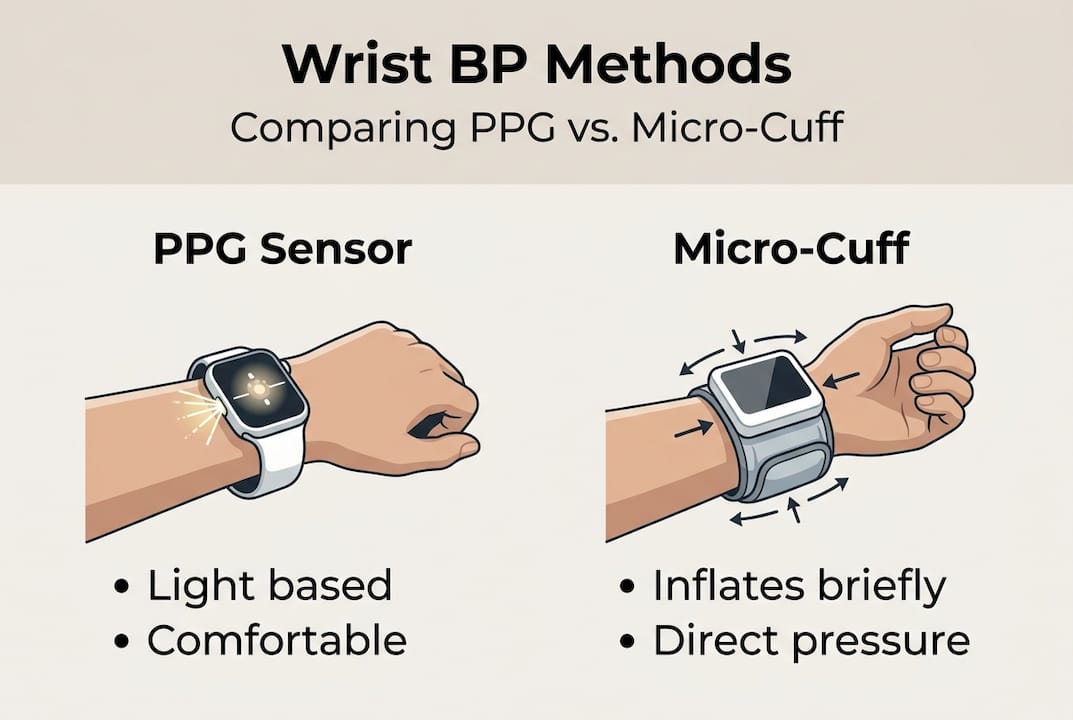
Wrist-based blood pressure monitoring relies on three primary methodologies: photoplethysmography (PPG), pulse arrival time (PAT), and micro-cuff oscillometry. Each takes a fundamentally different approach to capturing cardiovascular data from your wrist, and each carries its own strengths and trade-offs.
PPG (Photoplethysmography) is the most common method in mainstream smartwatches. A sensor shines light into the skin and measures how much is absorbed by blood vessels. As your heart beats, blood volume in the wrist changes, and these tiny fluctuations are translated into cardiovascular data. It is passive, continuous, and requires no inflation — which makes it ideal for comfort and discretion. The limitation is that PPG alone cannot produce a true blood pressure number without a mathematical model calibrated to your physiology.
PAT (Pulse Arrival Time) measures the time delay between an electrical signal from the heart (via ECG) and the pressure wave arriving at the wrist. Because blood pressure affects how fast that pulse travels, timing the gap can estimate systolic and diastolic values. This method is more precise than raw PPG but still depends on individual calibration and model accuracy.
Oscillometry (micro-cuff) is the closest to the traditional upper-arm monitor. A small cuff on the wrist briefly inflates, detects arterial oscillations as pressure releases, and calculates a reading. Devices like the Wellue and TimoHealth watches use this approach. It is the most clinically familiar method but adds bulk and requires periodic inflation.
According to primary methodologies for non-invasive wrist BP, these three methods represent the current landscape for cuffless wrist monitoring, each with distinct accuracy profiles. Ongoing research in wrist BP technology continues to refine sensor fusion techniques that combine PPG, PAT, and accelerometer data for better accuracy.
Key strengths and limitations at a glance:
- PPG: Continuous, passive, comfortable — but calibration-dependent
- PAT: More precise with ECG fusion — but requires dual sensors and calibration
- Micro-cuff: Clinically familiar oscillometry — but bulkier and intermittent
- All three: Not yet validated for standalone clinical diagnosis
| 方法 | 仕組み | Calibration needed | 快適さ |
|---|---|---|---|
| PPG | Light absorption changes | はい | 高 |
| PAT | ECG + pulse timing | はい | 中 |
| Micro-cuff | Wrist inflation oscillometry | Sometimes | Lower |
Pro Tip: If you are already using a smartwatch for heart monitoring, look for devices that combine PPG with ECG for better BP estimation accuracy than PPG alone.
Accuracy, calibration, and clinical limits
Knowing the technology, let’s assess how accurate and clinically useful wrist BP really is.
Accuracy is where enthusiasm for wrist BP monitoring runs into reality. Calibration is required for most cuffless wrist devices to produce meaningful readings. Samsung’s Galaxy Watch8, for example, requires users to calibrate against a traditional upper-arm monitor before the BP feature activates. Aktiia’s Hilo band uses a similar initial calibration process. Without it, the underlying algorithm lacks the personalized reference points it needs.
Oscillometry vs. PTT in brief: oscillometry measures arterial pressure directly via cuff inflation, making it more straightforward to validate clinically. PTT-based methods (including most PPG and PAT devices) estimate pressure indirectly through pulse wave physics, which introduces more variables and requires stronger individualized modeling.
How do wrist monitors compare to upper-arm devices?
| Factor | Wrist monitors | Upper-arm monitors |
|---|---|---|
| Accuracy (uncalibrated) | Lower | Higher |
| Accuracy (calibrated) | 中程度 | 高 |
| Clinical validation | 数量限定 | Extensive |
| Comfort for daily use | 高 | Lower |
| Portability | 素晴らしい | Good |
The motion and hydrostatic effects on PPG accuracy represent real-world challenges that lab benchmarks often understate. Even slight wrist movement can corrupt a reading, and the wrist being held above or below heart level changes hydrostatic pressure in ways that distort results.
“Wrist position relative to the heart can shift systolic readings by up to 10 mmHg — a clinically significant margin.” This is not a flaw in the device. It is simple physics that every user should understand before relying on a wrist reading.
The AHA/AMA recommendations are clear: upper-arm cuff monitors remain the gold standard for clinical blood pressure measurement. Wrist devices are not yet recommended for diagnostic use. That said, they are genuinely valuable for tracking trends over time, identifying patterns, and flagging changes worth investigating further.
For those integrating health tech with fine watchmaking, the same logic applies to Apple Watch ECG balance considerations — technology adds real value when you understand its boundaries.
Pro Tip: Always calibrate your wrist BP device at the same time of day, sitting quietly with your wrist at heart level. Consistency in calibration conditions directly improves the quality of your trend data.
Common pitfalls to avoid:
- Measuring while moving or walking
- Wearing the device too loosely
- Skipping recalibration after a firmware update
- Comparing wrist readings directly to clinical cuff numbers without accounting for position
Current devices: Luxury plus smart, FDA status, and trends in 2026
Accuracy matters, but so does style and practicality. Here is what is currently available.
The wrist BP device market in 2026 has stratified into three clear tiers: FDA-authorized smartwatches, FDA-cleared dedicated bands, and oscillometric watches that offer clinical familiarity in a wearable form.
Top devices to know in 2026:
- Samsung Galaxy Watch8 — FDA-authorized for blood pressure trend monitoring with calibration required against an arm cuff. Not cleared for clinical diagnosis. Strong ecosystem integration, sleek design.
- Aktiia Hilo — FDA-cleared cuffless band, designed with a refined aesthetic that sits closer to a luxury bracelet than a traditional smartwatch. Device integration with premium materials positions it well for style-conscious users.
- Withings ScanWatch 2 — CE-marked in Europe, hybrid analog-digital design, PPG-based health monitoring including cardiovascular data. Beloved for its classic watch appearance.
- Wellue / TimoHealth watches — Micro-cuff oscillometric readings on the wrist. Trending for users who want familiar methodology in wearable form, though not FDA-cleared for diagnosis.
- Apple Watch (Series 10 and Ultra 2) — Notable for what it does not include: blood pressure monitoring remains absent from Apple’s lineup in 2026, despite persistent speculation.
| デバイス | BP method | FDA/CE status | 利用可能性 |
|---|---|---|---|
| Samsung Galaxy Watch8 | PPG + calibration | FDA-authorized (trend only) | US, global |
| Aktiia Hilo | PPG cuffless | FDA-cleared | US, EU |
| Withings ScanWatch 2 | PPG | CE-marked | EU, select markets |
| Wellue / TimoHealth | Micro-cuff oscillometry | Not cleared for diagnosis | US, global |
| Apple Watch Series 10 | N/A (no BP feature) | 該当なし | Global |
Apple’s absence from the BP monitoring space is itself a data point. The company’s regulatory caution signals that wrist-based BP validation remains a genuine challenge, even for the world’s most resourced wearable team.
For collectors integrating health data with fine timepieces, solutions like Cartier Tank with health tracking show how aesthetic priorities and health data needs are converging. The luxury watch integration trend is accelerating precisely because consumers refuse to sacrifice one for the other.
Challenges, pitfalls, and what’s next for wrist BP technology
Even with stylish, FDA-cleared devices, real-world challenges persist — and the future is in advanced sensors and standards.
The core challenge for wrist BP technology is not ambition. It is physics and biology. Hydrostatic pressure and motion effects remain among the most significant unsolved problems. When your wrist drops below heart level during normal activity, the pressure in your radial artery increases simply due to gravity. Most algorithms do not fully compensate for this in real time.
The biggest current challenges:
- Hydrostatic pressure error from wrist position changes
- Motion artifacts corrupting PPG signal quality
- Population diversity: models trained on limited demographics perform worse across age, skin tone, and body composition variations
- Absence of a universal calibration-free standard
- Regulatory pathway uncertainty for new sensor modalities
Calibration-free wrist BP remains the industry’s most sought-after breakthrough. It would eliminate the biggest barrier to clinical utility. Several startups are working on multi-modal sensor fusion combining PPG, PAT, ECG, and even tonometry data, with AI models that adapt to individual users over time. The potential is real, but validated commercial products are not yet on market.
“The next generation of wrist BP devices will not just measure pressure — they will learn your cardiovascular signature and contextualize readings within your personal baseline.” This is the direction that makes wrist BP genuinely transformative rather than just convenient.
Updated validation standards from bodies like the IEEE and ANSI/AAMI are in development, which will create clearer benchmarks for device makers and regulators alike. This regulatory clarity will unlock faster, more confident market entry for next-generation devices.
Pro Tip: Curious about where wrist sensing is heading across multiple health markers? The progress in wrist-based glucose monitoring mirrors the BP journey closely — both are moving from “promising” to “practical” through the same combination of sensor innovation and regulatory maturity.
For consumers today, the most practical advice is straightforward: choose an FDA-authorized or FDA-cleared device, calibrate consistently, and use it for what it does well — tracking your personal trend, not replacing a clinical measurement.
Our take: What luxury watch lovers and health seekers should know
Here is what really matters for luxury watch fans and health seekers, based on where the technology actually stands.
Wrist BP monitoring is genuinely useful, but it is most useful when you stop expecting it to be something it is not. The best use case today is trend awareness. If your readings are consistently creeping upward over three weeks, that is a signal worth taking to your doctor with a traditional arm cuff for confirmation. That is real value.
The calibration-free breakthrough is coming. But it is not here yet, and the devices claiming otherwise deserve skepticism until independent clinical validation backs them up.
For collectors and style-focused individuals, the good news is that the integration of health tech with luxury wristwear has never been more sophisticated. You no longer have to choose between your Rolex and your health data. Solutions like the dual-watch bracelet concept show that the wrist is large enough for both craftsmanship and connected intelligence. The smartest move is treating your BP smartwatch as a health companion, not a diagnostic device. That framing makes it genuinely powerful.
Luxury meets health: Solutions for the modern wrist
Want to put these insights into practice? You do not have to retire your mechanical watch to track your cardiovascular health effectively.
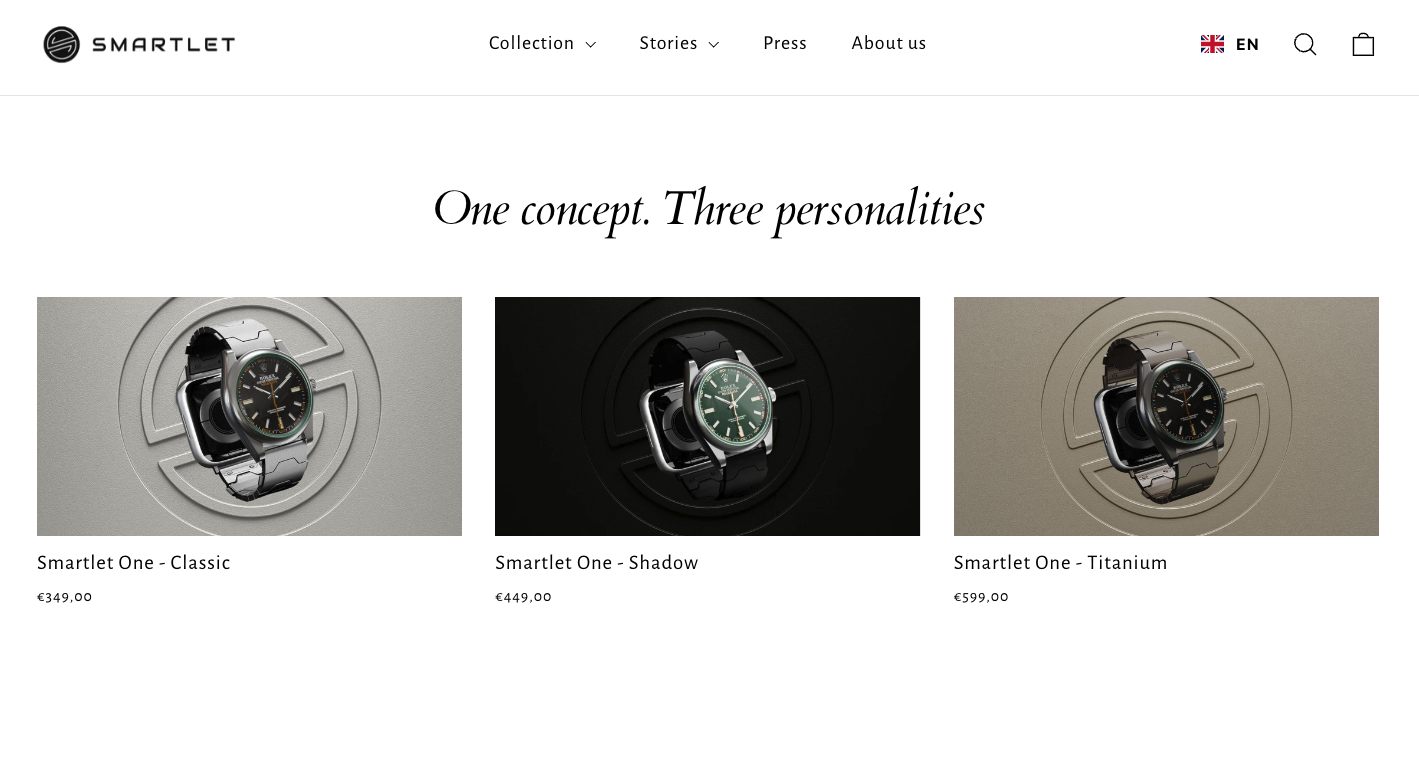
Smartlet’s patented modular strap adapter, engineered in SS316L steel and Grade 5 titanium, lets you wear your luxury watch and your health-tracking smartwatch on the same wrist, at the same moment. No modification to either watch. No compromise on style or data. Compatible with any watch from 18 to 24mm lug width. Check the smartwatch compatibility guide to find your pairing, or explore Samsung Galaxy Watch compatibility specifically. Available in Classic (349 EUR), Shadow (449 EUR), and Titanium (599 EUR). Don’t choose. Compose.
よくある質問
How accurate are wrist-based blood pressure monitors in 2026?
Wrist BP monitors are reliable for tracking personal trends over time, but calibration is required for meaningful readings, and they are not yet validated for clinical diagnosis.
Do luxury smartwatches replace traditional blood pressure cuffs?
No. Luxury smartwatches track cardiovascular trends effectively, but AHA/AMA recommendations remain clear that upper-arm cuff monitors are still required for any clinical or diagnostic health decisions.
What is the difference between PPG and micro-cuff wrist BP methods?
PPG uses light to detect blood volume changes in your wrist passively, while micro-cuff briefly inflates to capture oscillometric readings. Wrist BP methodologies each carry distinct accuracy profiles and calibration requirements that affect real-world performance.
Can I monitor blood pressure trends passively on my wrist?
Yes, passive trend monitoring is available on FDA-cleared devices like the Samsung Galaxy Watch8, but absolute reading accuracy still depends on proper initial and periodic calibration against a traditional monitor.
What are the biggest challenges for wrist BP monitoring?
Motion artifacts, wrist position hydrostatic pressure changes, and the absence of calibration-free technology are the primary barriers. These unsolved challenges are driving next-generation sensor fusion and AI-based approaches that are currently in development.


