


Life-saving smartwatch alerts: Real cases and what they mean

Smartlet 創業者兼CEO - セントラル・スーペルエック(CentraleSupelec)出身 - 2025年ルパンコンクール受賞 - CES 2026
目次
- How smartwatch alerts have saved lives: the documented cases
- What triggers a smartwatch alert and how reliable are they?
- Smartwatch health features for luxury and performance
- What these life-saving alerts mean for you
- Why the smartest watch is the one you actually wear
- Wear both worlds: style, safety, and the Smartlet advantage
- よくある質問
主なポイント
| ポイント | 詳細 |
|---|---|
| Documented lifesavers | Smartwatch alerts have directly led to life-saving interventions in surprising, real-world cases. |
| Know alert triggers | Understanding what prompts a smartwatch alert helps you respond wisely and avoid panic. |
| Combine form and function | Modern hybrid and modular options offer health monitoring without losing mechanical watch appeal. |
| Act on alerts | Always confirm smartwatch warnings with your doctor to turn early alerts into real help. |
A 68-year-old man named Brad Jackson felt completely fine. No chest pain, no dizziness, no warning signs. Then his Apple Watch flagged a resting heart rate of 32 beats per minute, a dangerous condition called bradycardia, and prompted him to seek care. Doctors fitted him with a pacemaker shortly after. Without that alert, he may never have known anything was wrong. This is not a rare anomaly. It is a pattern that keeps repeating across demographics, including among active, health-conscious adults who would never expect a wrist-worn device to stand between them and a cardiac event.
How smartwatch alerts have saved lives: the documented cases
The diversity of documented incidents is striking. These are not frail or sedentary individuals. Many are active, asymptomatic adults in the 30 to 65 age range who had no reason to suspect anything was wrong. Some practiced sport regularly and had recently undergone a health check-up. Yet their smartwatches caught what their bodies never communicated.
AFib in a 39-year-old: Daniel Smith's smartwatch notified him of atrial fibrillation, the most common serious heart rhythm disorder. AFib affects more than 10 million Americans and significantly increases stroke risk. Smith felt fine, with what he calls 'maybe a couple beats' of irregular heartbeats each day. Without the notification, his stroke risk would have continued to climb undetected. AFib in a 39-year-old:notified him of atrial fibrillation
Acute myeloid leukemia in a psychiatrist: Dr. Amanda Faulkner noticed her Apple Watch had recorded an elevated resting heart rate that peaked in the 90s. She was diagnosed with acute myeloid leukemia within hours of seeing her GP, and her doctors said a 48-hour delay could have been fatal. Acute myeloid leukemia in a psychiatrist:diagnosed acute myeloid leukemia
Takotsubo cardiomyopathy in a retired nurse: A 76-year-old retired nurse presented to her primary care physician complaining of chest pain after her daughter called her very upset. She wears her smartwatch at night to monitor her step count, and it revealed abnormal ECG readings. The single-lead ECG showed new T-wave inversions with low QRS amplitude. Hospital evaluation confirmed stress-induced takotsubo cardiomyopathy. Takotsubo cardiomyopathy in a retired nurse:confirmed takotsubo cardiomyopathy
Fall detection and SOS features have saved lives in a range of collapse scenarios. One woman was saved from a pulmonary embolism after her watch alerted emergency services - her doctors said she had a 50-50 chance of making it. In another case, a man poisoned by carbon monoxide lost consciousness, and his Apple Watch triggered an SOS call to emergency services for him. Collapse and SOS detection:50-50 survival chance
These real customer stories share one critical thread: the smartwatch was on the wrist at the right moment. real customer stories
Summary of documented cases
| アラートタイプ | 年齢 | Condition detected | Outcome |
|---|---|---|---|
| Low heart rate | 68 | Bradycardia | Pacemaker implanted |
| AFib notification | 39 | Atrial fibrillation | Stroke risk identified, treated |
| Elevated resting HR | ~40s | Acute myeloid leukemia | Diagnosed within hours |
| Single-lead ECG | 76 | Takotsubo cardiomyopathy | Treated successfully with medication |
| Fall / SOS | 場合による | Pulmonary embolism, CO poisoning | Emergency services dispatched |
The Apple Heart Study, developed by Apple and Stanford, enrolled over 400,000 participants and screened their hearts for irregular rhythms. Only 0.5% of participants received alerts through the Health app. For most of them, that single notification marked the start of life-changing actions.
When you remove your smartwatch to wear a prized mechanical timepiece, you create a window of zero data. For most wearers, that window is low-risk. But for the small percentage who experience an asymptomatic arrhythmia or a sudden cardiac event precisely during those hours, the absence of a sensor is the absence of a warning. This is not a hypothetical risk. It is the core reason continuous wearability is so important.
What triggers a smartwatch alert and how reliable are they?
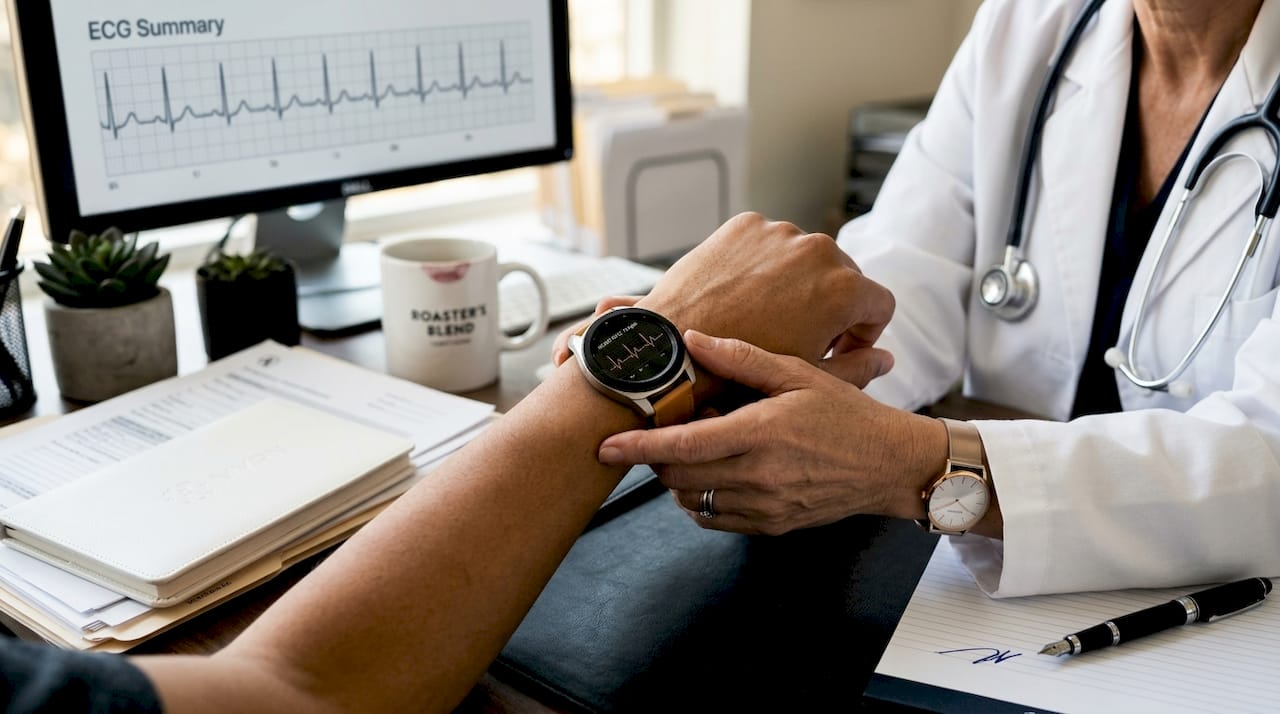
Modern smartwatches use photoplethysmography (PPG) signals and single-lead electrocardiography (ECG) signals to extract health information. Abnormal heart rhythms or events such as atrial fibrillation, sinus pause, bradycardia, tachycardia, and exercise-induced arrhythmia can be detected from the recorded heart signals.
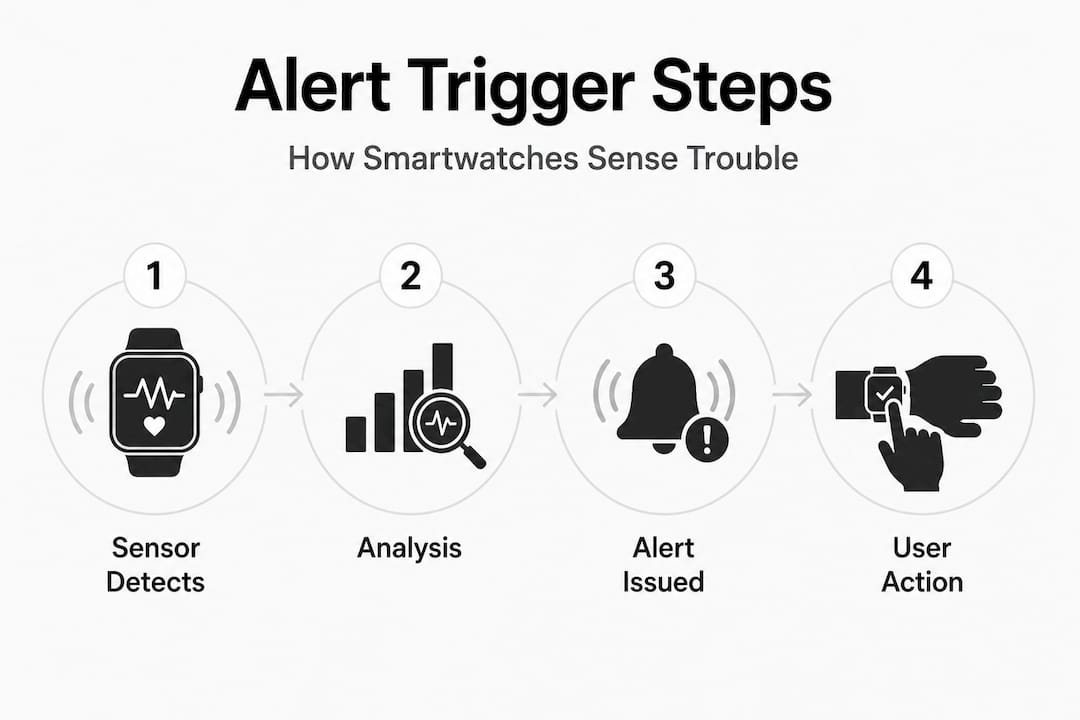
Common health triggers and smartwatch responses
| Health event | Detection method | Typical smartwatch response |
|---|---|---|
| Atrial fibrillation | PPG + ECG | Notification, log ECG reading |
| Bradycardia | PPG | Alert if HR drops below threshold |
| Tachycardia | PPG | Alert if HR exceeds set limit |
| SpO2 drop | Pulse oximetry | Low oxygen saturation warning |
| Fall / collapse | Accelerometer + gyroscope | Automatic SOS to emergency contacts |
| High resting HR | PPG (continuous) | Trend alert after extended elevation |
The Apple Heart Study found that reliability was a major issue. The 84% positive predictive value for AFib at the time of irregular pulse notification declined to 34% on patch monitoring, with many of the initial irregular pulse notifications reflecting transient or positional irregularities rather than persistent AFib.
ECGs obtained on smartwatches from a single lead are often uncertain or uninterpretable a significant percentage of the time. This problem becomes much more pronounced in the setting of multiple concurrent abnormal heart rhythms or with motion artifacts. Current smartwatches and mobile health applications are FDA-indicated only for the detection of AFib, not for the diagnosis of any other heart rhythm or medical condition.
For those exercising regularly, it is worth noting that fit individuals are likely to have high heart rate variability and a low resting heart rate, which can both affect the accuracy of low-HR readings. Combined with the likelihood of wearing the watch loosely during exercise, this further adds to inaccuracy. When reviewing data, remember the context in which it was recorded.
What to do if you receive a smartwatch health warning:
- Stay calm. A single alert is a prompt, not a diagnosis.
- Re-run the measurement once you are seated and still.
- Note the time, activity, and any symptoms you felt.
- Contact your doctor and share the alert data, including any ECG strip the watch captured.
- Follow medical guidance before drawing any conclusions. Never self-medicate or self-diagnose.
Most modern smartwatches let you export or share health data. Showing your cardiologist an actual ECG trace, even a single-lead one, can accelerate the diagnostic path considerably.
Understanding how the smartwatch sensors actually work gives you the literacy to read your own alerts with calibrated confidence rather than panic or dismissal. how smartwatch sensors work
Smartwatch health features for luxury and performance
The gap between a luxury mechanical watch and a health-monitoring device has narrowed dramatically. Not because mechanical watches have added biometric sensors, but because hybrid and modular timepieces have made it possible to access both worlds simultaneously without one undermining the other.
Here are the smart health features now available in refined or hybrid form factors:
- Continuous heart rate monitoring via PPG, running silently in the background
- Single-lead ECG on demand, accessible in seconds with a finger touch
- Irregular rhythm notifications for AFib and other arrhythmias
- SpO2 monitoring for blood oxygen saturation, relevant for both altitude athletes and respiratory conditions
- Fall detection with auto-SOS, especially valuable for solo trail runners or travelers
- Sleep tracking with HRV (heart rate variability) data to monitor recovery quality
- Activity and VO2 Max estimation for performance athletes tracking endurance benchmarks
The design world has responded to collector demand. Interfaces are now thinner, displays more restrained, and case profiles lower. Balancing Apple Watch ECG with mechanical prestige no longer requires compromise. You simply need the right system to make both work together. Balancing Apple Watch ECG with mechanical prestige
The question of luxury and health in watches is no longer an either/or discussion. It is a design and engineering challenge that has already been solved. For Rolex collectors curious about compatibility, there are now tested solutions covering the most iconic references, from the Submariner to the Datejust. luxury and health in watchesRolex smartwatch compatibility
If you need the Submariner on your wrist during a client meeting and health data during your Saturday trail run, a modular or dual-wear system is more practical than switching entirely to a smartwatch. Prioritize wearability across all your environments.
What these life-saving alerts mean for you
A common lesson from all of these stories is that the watch only protects you when it is on your wrist. No more overnight charging or leaving your Apple Watch on the table at dinner parties. Your Apple Watch is most useful on your wrist. the alert only matters if the watch is on your wrist.
"57% of the AFib episodes detected in the Apple Heart Study were asymptomatic. That means Apple Watch beat the patient to the punch and they reported no symptoms at the time of the alert. Smartwatch alerts are good because they work when you do not know you need them to."
This is what makes continuous wear so valuable. The conditions most worth catching are also the ones least likely to announce themselves through symptoms.
How to integrate smart alerts effectively into your health routine:
- Set your baselines. Wear your smartwatch consistently for at least two weeks so it can establish your personal normal ranges for resting heart rate, HRV, and SpO2. Set your baselines.
- Customize alert thresholds. Most devices allow you to set personal high and low heart rate thresholds. As an athlete with a resting rate of 45 bpm, you would expect different alert defaults than a sedentary user. Customize alert thresholds.
- Log and track trends, not just spikes. A single elevated reading is rarely meaningful unless it is part of a larger pattern. A sustained trend over three days warrants attention. Log and track trends, not just spikes.
- Communicate with your doctor proactively. Ask them what data they would find useful and in what format. Many cardiologists now welcome exported health reports from wearables. Communicate with your doctor proactively.
- Do not let false alarm anxiety stop you from acting. A false positive that leads to a checkup is never a wasted trip. A true positive ignored is the real risk. Do not let false alarm anxiety stop you from acting.
Major platforms now offer opt-in health data sharing, local storage options, and clear data access controls. It is worth reviewing your settings, but it should not be a reason to avoid wearing a potentially life-saving device.
Understanding smartwatch incentive programs from health insurers is also worth exploring. Several programs in the US and EU now offer premium discounts or wellness rewards directly tied to consistent smartwatch use, adding a financial argument to the health one.
Why the smartest watch is the one you actually wear
Every case in this article shares one quiet prerequisite: the person was wearing the watch when the alert came. Not the most advanced model. Not the most expensive. Just wearing it.
The question is not which watch is better. It is which one you will actually wear, consistently, across the full range of your day. The Patek Philippe Nautilus sitting in a case during a morning run is not monitoring your heart. The Apple Watch charging on a bedside table at 9 PM is not catching the arrhythmia that surfaces at rest.
Prestige and technology are not rivals. They are complements. A mechanical watch is an expression of craft, taste, and personal history. A smartwatch is a health instrument. Treating them as competitors makes no more sense than choosing between a tailored suit and a seatbelt.
The real innovation is not in picking one or the other. It is in building a system where you never have to. Hybrid, modular, and dual-wear designs let you have the best of both worlds without having to choose. For serious collectors, this means combining HRV monitoring with mechanical complications on the same wrist. Integrating HRV monitoring with mechanical watches
Wear what you love. Just make sure something is always watching.
Wear both worlds: style, safety, and the Smartlet advantage
Smartlet's patented modular strap adapter, built in brushed SS316L steel and Grade 2 titanium, lets you wear your mechanical watch and your smartwatch on the same wrist at the same moment. No modification to your watch. No compromise on aesthetics.
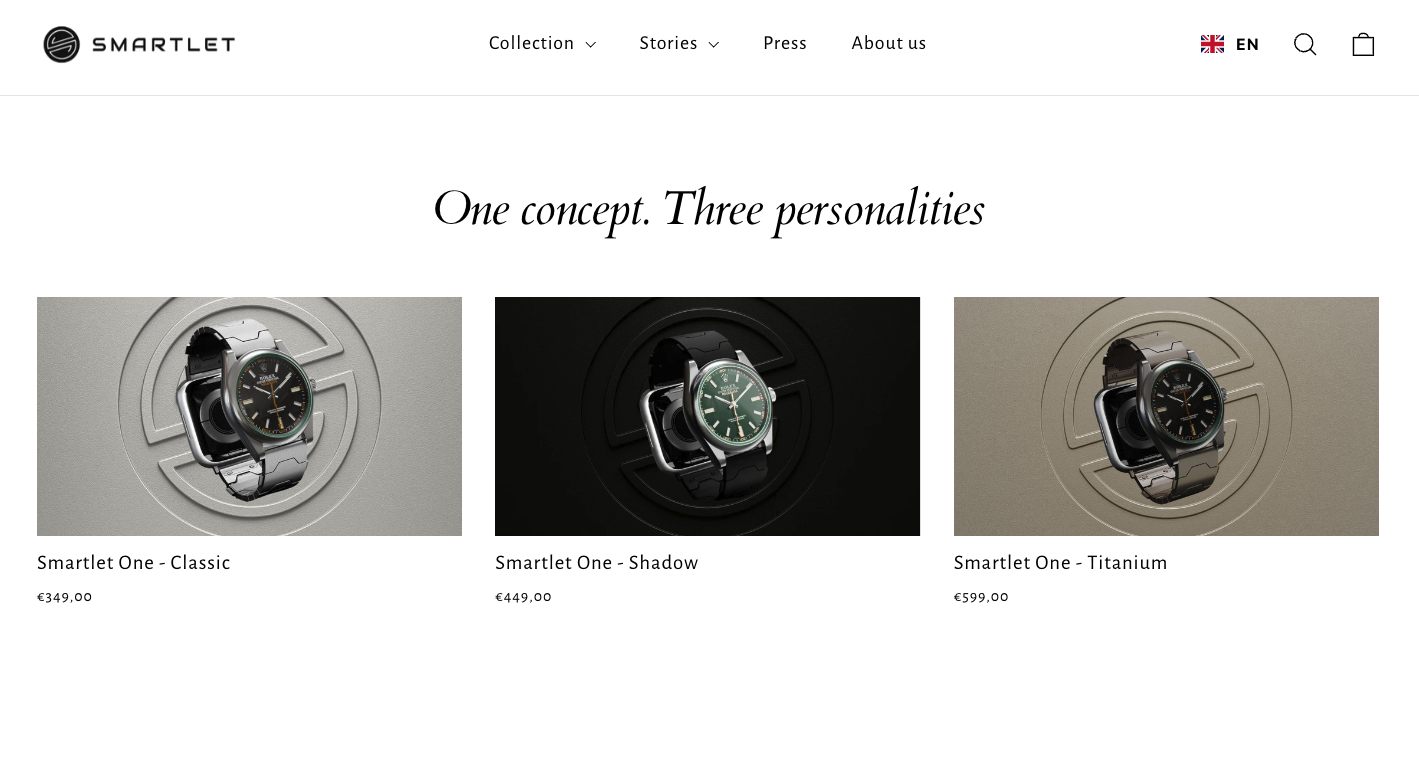
Smartlet is compatible with any watch that has a lug width between 18mm and 24mm with standard spring bars. The brand compatibility guide confirms fit with major brands including Rolex, TAG Heuer, and Omega. Three versions are available: Classic at 349 EUR, Shadow at 449 EUR, and Titanium at 599 EUR. brand compatibility guideClassicShadowTitanium
よくある質問
How do smartwatch alerts detect heart abnormalities?
Smartwatch sensors use existing hardware to monitor heart rhythms and detect irregularities. Large-scale data analysis found an 84% positive predictive value for recent AFib at the time of notification using combined PPG and single-lead ECG signals.
Are smartwatch ECG alerts as reliable as a doctor's test?
Single-lead ECGs on smartwatches are useful for initial screening, but may not confirm final clinical diagnosis 14 to 31% of the time. Abnormal readings should be confirmed with medical evaluation using a 12-lead ECG.
Can wearing a smartwatch really save my life if I am healthy?
Documented cases include a 68-year-old man who was found to have bradycardia but was entirely asymptomatic until his watch alerted him to a heart rate of 32 bpm between exercise classes. He required a pacemaker.
What should I do if I receive a smartwatch health warning?
Share alerts and stored ECGs with your doctor. Do not ignore any alert and self-diagnose. Review the manufacturer documentation for information on all device alerts.
Do smartwatches replace regular medical exams?
No. Smartwatches are meant to be a supplement, not a substitute for regular clinical visits, professional diagnosis, and standard diagnostic tools like 12-lead ECGs and blood panels.
注目記事
該当する人物が見つかりませんでした
その用語では何も見つかりませんでした。もう一度お試しください。


